The Path of the Gods Hike: What It Really Takes
Is the Path of the Gods a short, easy walk?
No. The Sentiero degli Dei is a multi-hour ridge hike linking Bomerano or Agerola, up in the hills, down to Nocelle above Positano, with real elevation change and narrow exposed sections. It is walked mostly one-way, which means arranging a bus or taxi back to the starting point.
Not the one-hour photo walk it looks like online
Search for the Sentiero degli Dei, the Path of the Gods, and the pictures do the talking: a narrow trail cut into a cliff face, the sea somewhere far below, Capri floating on the horizon. Those images make it tempting to imagine a short, flat panoramic stroll you can knock out between breakfast and lunch. That is not what this trail is.
The Path of the Gods is a genuine hike, typically several hours long, that runs along the mountainside above the coast rather than down at sea level. It links Bomerano, a hamlet that belongs to the town of Agerola, with Nocelle, a small settlement perched above Positano. The elevation lost along the way is substantial, the terrain underfoot ranges from graded path to uneven rock, and in places the trail narrows to a ledge with open drops on one side. None of that shows up clearly in a wide-angle photo, which is exactly why so many visitors arrive underprepared.
This guide sets out what the hike actually involves: where it starts and ends, why it is usually a one-way trip that requires planning a return, what the geology and views along the way explain about its reputation, and why no single duration or season guarantee applies to it.
Two starting points, one direction that matters
The trail is most commonly walked from Bomerano down toward Nocelle and then on into Positano. Starting high and descending toward the coast is the version most guides and most organized walks default to, because it means the bulk of the climbing happens before the hike rather than during it. Reaching Bomerano or nearby Agerola from the coast usually means a bus connection, since there is no direct train link anywhere on this stretch — a point covered in more depth in the guide to getting around the Amalfi Coast without a car.
Walking it in reverse, from Nocelle up to Bomerano, is possible and some hikers prefer it, but it changes the character of the day considerably. Instead of a long, largely downhill walk finishing near the coast, it becomes a climb that ends inland, away from Positano’s restaurants, transport links, and the option of a swim to finish the day. Either direction is valid, but they are not interchangeable, and choosing one over the other should be a deliberate decision rather than an afterthought.
The trail’s demands also make it a poor fit for parts of a family trip built around easier days out. Visitors travelling with young children, or looking for the gentler activities covered in the guide to Amalfi Coast with kids, will generally find the Path of the Gods too long and too exposed for anything but older, confident children. The same goes for anyone needing step-free or wheelchair-accessible routes; the practicalities are covered honestly in the Amalfi Coast wheelchair accessibility guide, and this trail does not fit that brief. None of that makes it a niche hike — plenty of reasonably fit travelers of all ages complete it — but it is worth ruling in or out early rather than discovering the mismatch partway along the ridge.
Why the hike is usually one-way, and what that means for your day
This is the detail that catches out the most visitors: the Path of the Gods is not a loop. Walking from Bomerano to Nocelle puts you a considerable distance, by road, from where you started. Unless the plan already accounts for this, hikers can find themselves at the end of a long walk with no easy way back to their car, hotel, or the town they left in the morning.
In practice this means building the return leg into the plan before setting out, not after. Typical options are a local bus back toward Agerola or Bomerano, or a taxi, both of which take considerably longer and cost more in high season when the coast road is congested. Anyone relying on a rental car left at the Bomerano end needs a workable way to retrieve it, which is one of several reasons many visitors choose the coast without a car rather than trying to manage a vehicle around a one-way hike. A private walking tour built around the route, such as an Amalfi: Coast Path of the Gods Private Walking Tour, often removes this headache entirely by handling transfers at both ends as part of the day.
For hikers assembling their own itinerary, it’s worth checking the SITA bus guide for the Amalfi Coast before the day of the hike, since bus frequency and last departures vary and are not something to discover only after finishing the walk.
The geology behind the view: sea below, mountain above
Part of what gives the Path of the Gods its reputation is the setting it runs through. The trail sits high on the mountainside that forms the spine of this stretch of coast, tracing a route between the peaks above and the Tyrrhenian Sea far below. This is limestone terrain, shaped over a long geological history into steep faces, terraces, and the kind of dramatic drop that makes the coastline south of Sorrento so distinctive.
From various points along the ridge, the trail opens onto views across the Bay of Salerno toward Capri, and down onto villages including Praiano and the coves near Conca dei Marini, covered in the guide to Praiano and Conca dei Marini. It is this vantage point, well above the towns that most visitors see from the water or the coast road, that separates the Path of the Gods from a beach walk or a stroll through a historic center. It is a mountain trail that happens to look out over the sea, not a seaside promenade with a view of the hills.
That same terrain also explains the exposed stretches. Where the trail narrows along a rock face, there is often little more than the path itself between the hiker and open air. These sections are not long, but they are enough to rule the hike out for anyone uncomfortable with heights, unsteady on uneven ground, or wearing anything other than proper walking shoes. Sandals, worn soles, or a sudden downpour turn a manageable trail into a genuinely risky one.
Weather, footwear, and why conditions decide more than fitness
Fitness matters on the Path of the Gods, but conditions matter just as much, sometimes more. Rain makes the rockier sections slick and increases the risk of a slip on stretches where a fall would not be a minor inconvenience. Wind on the exposed ridge can be stronger and more disorienting than it feels down at sea level. Full sun with no shade for long stretches is its own problem in the height of summer.
None of this means the hike should be avoided, but it does mean checking conditions on the day rather than assuming that a clear morning down in Positano guarantees the same weather up on the ridge. The guide on the best time to visit the Amalfi Coast covers the broader seasonal picture, but day-of judgment matters more than the calendar here. A packing list built for coastal sightseeing is not the same as one built for a mountain trail; the Amalfi Coast packing list is worth a look before a hiking day specifically, with grippy closed shoes, water, and sun protection as non-negotiables rather than nice-to-haves.
No fixed duration, and no guaranteed year-round access
It is tempting to want a single number: how many hours does the Path of the Gods take? There isn’t one honest answer. A fit, unencumbered hiker moving briskly with few stops might cover the main Bomerano-to-Nocelle stretch in a bit over two hours. A family group, a couple stopping often for photos of Capri and the coastline, or anyone starting later in the day and taking a long lunch break along the way can easily turn the same route into a four-hour outing once the walk down into Positano itself is added. Anyone promising a fixed duration is smoothing over a range that depends entirely on who is walking and how.
The same caution applies to availability. There is no single official closing time that governs the trail across every season, and conditions — landslide repairs, storm damage, or simple maintenance — can affect specific sections without much advance notice, particularly outside the main visitor season. Treat the Path of the Gods as a trail to check on rather than one that is automatically open and ready whenever a trip happens to fall.
Timing the hike around the calendar also affects the experience beyond weather alone. Midsummer sees the trail at its busiest, and pairing a hike with tips from the guide on how to avoid the crowds on the Amalfi Coast can make the difference between a solitary ridge walk and one shared with a steady stream of other hikers. For visitors who prefer that uncertainty handled by someone else, options range from a small-group Path of the Gods Loop Hike Punta Paipo with Shepherd Lunch that builds in food and a fixed plan, to simpler support like a Transfer Positano booked in advance to cover the return leg regardless of which direction the hike is walked.
Positano at the end of the trail — and after it
For most hikers finishing at Nocelle, the day isn’t quite over: a further descent, on foot or by local transport, leads down into Positano itself. Arriving into the town this way, from above rather than by boat or bus, is one of the more memorable ways to see it, and pairs naturally with a quieter look at the town once the legs have had a rest. An Old Town Positano Secret Walks tour the following morning, or a sunset outing back up along a gentler stretch of the same ridge with a Positano at Sunset Romantic Hike on the Path of the Gods, both make sense as a second look at terrain that felt like hard work the first time round.
It’s also worth remembering that Positano is not a beach-holiday base in the postcard sense some visitors expect; its own shoreline and lidos are covered separately in the guide to Positano’s beaches, and how the town compares to its neighbor is laid out in Positano vs Amalfi. Either is useful reading for building the rest of a stay around a day spent on the ridge above.
Anyone planning to base themselves near the trailhead rather than commute up from the coast each day should look at the wider lodging picture in where to stay on the Amalfi Coast, since a hillside town like Agerola or Praiano can cut the return journey considerably compared with staying down in Positano itself.
Other hikes nearby, for comparison
The Path of the Gods is the best known hiking route on this coast, but not the only one. The Valle delle Ferriere hike, above Amalfi, follows a stream through a shaded gorge and is a very different kind of walk — cooler, greener, and without the same cliff-edge exposure. Comparing the two before choosing which to prioritize on a short trip is worth doing, especially for travelers building a hiking-focused itinerary around the coast rather than a single day out.
Sights close to the trail’s western end are also easy to combine with a Path of the Gods day: the Emerald Grotto near Conca dei Marini and the dramatic cut of the Fiordo di Furore both sit along the same stretch of coast road below the ridge, and the hillside village of Praiano makes a quieter overnight base than Positano for hikers who want to start early.
Hikers weighing a full day on foot against something lower-impact might also consider a morning on the water instead: kayaking along the Amalfi Coast covers many of the same coves and cliffs from sea level, at a fraction of the physical effort, and works well as a rest-day alternative after tackling the ridge. For visitors chasing a different kind of dramatic landscape entirely, the Mount Vesuvius crater hike is a shorter, ticketed walk on an active volcano rather than a limestone ridge, and makes an interesting contrast on a trip that combines the coast with a day trip toward Naples.
Booking a guided option instead of going it alone
Not every visitor wants to plan bus times, check trail conditions, and pack for a mountain hike unassisted, and there is no penalty for choosing a guided route instead. A private option like the Amalfi: Coast Path of the Gods Private Walking Tour puts a local guide in charge of pacing, timing, and the practicalities of the one-way route, which removes most of the planning described above. For a shorter, more social version of the same ridge with lunch included, the Path of the Gods Loop Hike Punta Paipo with Shepherd Lunch is built around a fixed loop rather than the full point-to-point route, which sidesteps the return-transport question entirely.
The takeaway
The Path of the Gods earns its name from the views, not from being an easy stroll. It is a real hike, several hours long depending on who is walking it, run mostly one-way between Bomerano and Nocelle above Positano, along a ridge with genuine elevation change and stretches narrow enough to demand attention and proper footwear. Plan the return trip before setting out, check conditions and weather on the day rather than assuming access is guaranteed, and treat any quoted duration as a range rather than a promise. Do that, and the trail delivers exactly the reputation it has earned.
Path of the Gods Hikes on the Amalfi Coast on GetYourGuide
Verified deep-linked GetYourGuide tours. Book through these links and we earn a small commission at no cost to you.
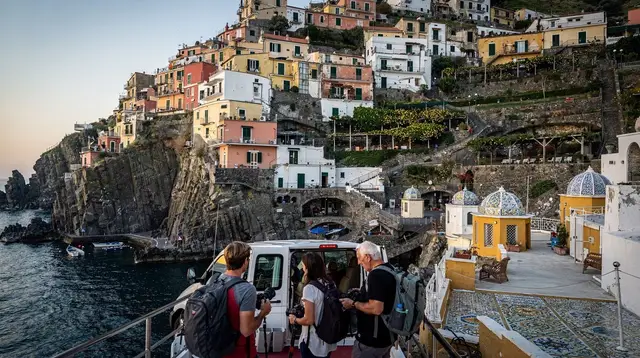
GetYourGuide does not provide a product photo for this activity — the image shows the meeting point, photographed by us.