Does Positano deserve its reputation, and what does it cost to visit?
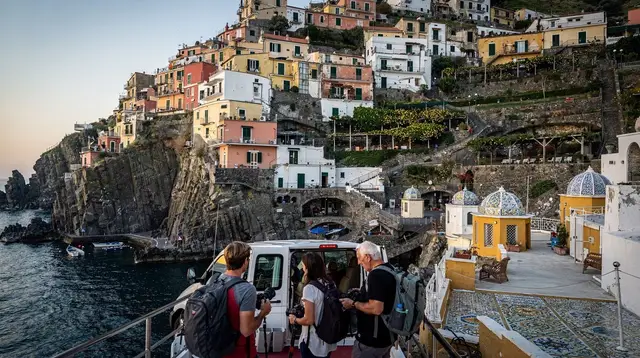
Positano is the image most people picture when they think of the Amalfi Coast: pastel houses stacked in tiers down a cliff face, a blue-domed church roof, boats bobbing below. The photographs are accurate. What they leave out is the logistics, and those logistics shape every part of a visit here.
Start with the most basic fact: Positano has no train station. Neither does any other town on this stretch of coast — see why there is no train on the Amalfi Coast for the geography behind that. The nearest railway stops are in Salerno or Sorrento, both over an hour away by road. From there, most visitors reach Positano by SITA bus along the SS163, by seasonal ferry from Amalfi, Sorrento, Salerno, or Capri, or by car — though driving in is the option we’d steer most people away from, for reasons below.
Getting to Positano: bus, ferry, or car
The SITA bus is the standard approach for anyone arriving from elsewhere on the coast or from Sorrento. It’s cheap and frequent in season, but the road itself is the constraint: the SS163 is not a highway, it’s a narrow, cliff-edge corridor with hairpin bends, and in July and August a summer traffic-alternation scheme and ZTL restrictions add further delay. Budget 40 to 75 minutes for a ride that covers barely 15-20 km, depending on where you start. Our SITA bus guide covers timetables and ticket logistics in detail.
Ferries run between Positano, Amalfi, Sorrento, Capri, and Salerno from roughly Easter through October, and they’re often the more comfortable option — no traffic, better views, and they dock close to Spiaggia Grande. But this is a seasonal service, not a year-round one: see why Amalfi Coast ferries stop in winter before assuming you can rely on a boat outside the warmer months. Check current schedules in our ferry guide.
Driving is possible but rarely advisable. Positano has almost no free parking, hotel garages charge accordingly, and once you’re in town a car becomes a liability rather than a convenience — see driving the SS163 and Amalfi Coast without a car for why most repeat visitors skip renting one altogether. If you’re arriving by air, the Naples airport transfer guide lays out the full first-mile options.
A town built as a staircase, not a street grid
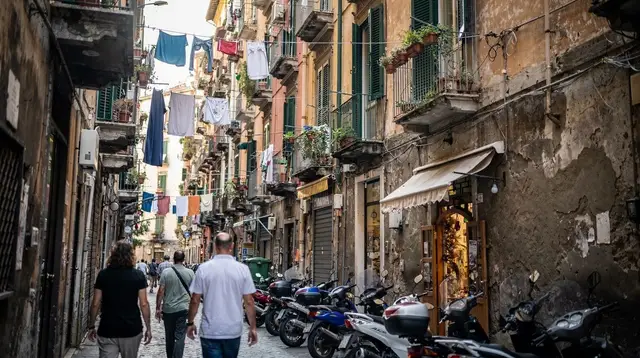
Positano’s defining feature isn’t a monument — it’s its shape. The town spills down a near-vertical amphitheater from the SS163 to the waterline, and the historic core has few, if any, roads that a car can actually use. Getting around means stairs: hundreds of them, connecting narrow lanes, boutiques, and guesthouses stacked on top of one another. This is charming in photographs and genuinely demanding in person, especially with luggage or mobility limitations — see our wheelchair accessibility notes if that’s a concern for your group.
In peak summer, a ZTL (limited traffic zone) restricts vehicle access further, funneling drop-offs to designated points outside the pedestrian core. Combined with the terrain, this means Positano rewards travelers who pack light and choose accommodation with realistic expectations about stair counts — hotel listings that say “sea view” often mean “sea view after 120 steps.”
Spiaggia Grande: not a free beach
The main beach, Spiaggia Grande, is Positano’s most photographed strip of shoreline, and it’s only partly public. Much of it is divided into paid lido concessions — sunbeds, umbrellas, and changing facilities rented by the day or half-day — with a limited free (spiaggia libera) section that fills up early in high season. This isn’t unique to Positano, but the ratio of paid to free space here is higher than at some other coastal towns, and the crowds are correspondingly denser. Our Positano beaches guide breaks down lido pricing and where the free strips actually are.
A smaller, quieter alternative is Fornillo, a 15-20 minute walk west along a coastal path from Spiaggia Grande, with its own mix of lidos and free space but noticeably fewer people.
| Beach | Character | Free access | Crowd level |
|---|---|---|---|
| Spiaggia Grande | Main beach, town views | Limited strip | Very high (peak season) |
| Fornillo | Quieter cove, 15-20 min walk | Larger free section | Moderate |
Where to stay in Positano, and what it costs
Accommodation is Positano’s biggest line item, and the daily budget noted above — roughly €90-220 per person — leans heavily on where and when you sleep here rather than what you eat or do. In July and August, rooms with any real sea view command a premium regardless of star rating, and availability tightens months in advance; late May, June, and the September-October shoulder season noted below bring both lower rates and a wider choice of rooms. Because the town is a staircase rather than a street grid, price isn’t the only variable worth checking before booking: a room a few steps from the SS163 bus stop saves real effort over one requiring a 15-minute climb from the harbor, and listings rarely make that distance obvious until after you’ve paid the deposit.
Our where to stay on the Amalfi Coast guide compares Positano against the coast’s other bases on exactly this cost-versus-convenience trade-off, and Sorrento vs. Amalfi Coast: where to stay is worth reading if you’re still deciding whether to sleep in Positano at all or commute in for a day from a cheaper, flatter base. For travelers pairing Positano with a second town to spread out cost and crowding, Praiano vs. Positano covers a quieter, less expensive neighbor a short SITA ride away, while Ravello vs. Positano contrasts the beach town against a hilltop retreat with no shoreline at all. Couples building a longer stay around Positano may also find our Amalfi Coast honeymoon itinerary useful for pacing romantic stops without over-scheduling the vertical walking each day here already demands.
Nocelle and the Path of the Gods: not a short stroll
Above Positano, reached by a local bus that climbs a series of switchbacks, sits Nocelle — a tiny hamlet perched at around 450 meters with sweeping views back down over the coastline. Nocelle is one end of the Sentiero degli Dei, the Path of the Gods, which is not a casual afternoon walk. The full route runs from Bomerano or Agerola down to Nocelle and Positano, and it takes several hours to hike end to end, with real elevation change and exposed sections. Our Path of the Gods hike guide covers route options, timing, and what footwear actually holds up on the terrain.
Travelers sometimes plan to “quickly see Nocelle and hike back down” as a half-day add-on; in practice, doing the trail properly means committing most of a day, plus transport back to wherever you started.
Positano isn’t a transport hub — plan accordingly
A common misconception is that Positano makes a convenient home base for exploring the whole coast, since it’s the name most visitors recognize first. In practice, it’s the opposite: a vertical village with limited parking, no rail connection, and bus/ferry schedules that thin out sharply outside peak season. Bases like Sorrento or Amalfi often work better for travelers who want to day-trip widely, while Positano itself rewards a short, focused stay — one or two nights — rather than a multi-stop itinerary radiating outward from it. See Positano vs. Amalfi for a direct comparison of the two as a base.
That said, Positano is an excellent launch point for boat-based excursions, since much of the coast and Capri are more scenic from the water than from the SS163. A half-day boat trip toward Capri is one of the most popular ways to see both the Faraglioni rock stacks and the Amalfi cliffline without touching a car. For a shorter outing that stays close to town, a two-hour speedboat run along the Positano-Praiano coastline covers the Emerald Grotto area and nearby coves in a single morning or afternoon slot.
Travelers based here who want to understand the town beyond the postcard views can join a guided walk through Positano’s back lanes and staircases, which tends to surface workshops, viewpoints, and history that aren’t visible from the main pedestrian route down to the beach. For a full day on the water that folds in Capri without giving up Positano as home base, a day trip to Capri with stops at sea grottoes is a practical way to combine both destinations without changing hotels.
Day trips inland are also common from here, particularly toward the archaeological sites near Naples. A private transfer and guided visit to Pompeii, routed via Sorrento, lets you see the ruins without navigating the Circumvesuviana train or driving yourself — worthwhile given how disconnected Positano is from the rail network described above. Our day trip to Pompeii from the Amalfi Coast and Pompeii vs. Herculaneum guides cover what to expect once you arrive.
Positano after dark, and where to point your camera
Positano’s daytime crowds thin noticeably after dinner, and the town shifts into a quieter, more atmospheric mode: restaurants along the harbor stay busy well into the evening, but the beach and staircases empty out enough to walk them without dodging tour groups on their way back to the last SITA bus or ferry. It isn’t a nightlife destination on the scale of Capri’s Piazzetta, but there are enough bars, wine spots, and late dinner tables to fill an evening comfortably — see Positano nightlife for where locals and repeat visitors actually go once the day-trip crowd has cleared out.
The same evening light that empties the lanes also produces some of the coast’s most photographed views: pastel houses catching the low sun from the water, or the majolica-tiled dome of Santa Maria Assunta framed between staircases and bougainvillea. Our Positano photo spots guide maps the specific viewpoints worth the climb, including several above the main pedestrian route down to the beach that most visitors never reach because they assume Spiaggia Grande is the only vantage point worth the walk.
When to visit Positano
Late May through June, and mid-September into early October, are the sweet spots: warm enough to swim, without the July-August crush that packs the SS163, the ferries, and Spiaggia Grande’s free section to capacity. Our best time to visit the Amalfi Coast and Amalfi Coast in May guides go deeper on month-by-month conditions, and avoiding crowds has specific timing tactics for Positano’s beach and staircases.
Winter (November-March) is a different town entirely: many lidos, restaurants, and ferry routes close or scale back, and the atmosphere turns quiet and slightly worn at the edges rather than postcard-bright. It can still be worthwhile for travelers who want the views without the crowds, but don’t expect the full range of boat trips or beach clubs to be running — see Amalfi Coast in winter for what actually stays open.
For planning a broader trip that includes Positano as one stop among several, our Amalfi Coast in 3 days and Amalfi Coast in 5 days itineraries show how to sequence it against Amalfi, Ravello, and Capri without excessive backtracking on the SS163.
Positano FAQ: access, beaches, and logistics
Does Positano have a train station?
No. Positano, like the rest of the Amalfi Coast, has no railway. The nearest stations are in Salerno and Sorrento, both reached separately by road, bus, or ferry before continuing on to Positano.
Is Spiaggia Grande a free beach?
Only partly. Most of Spiaggia Grande is divided into paid lido concessions with sunbeds and umbrellas; a limited free (spiaggia libera) section exists but fills up quickly in high season.
Can I drive to Positano and park easily?
Parking is scarce and expensive, and summer ZTL restrictions limit vehicle access to the pedestrian core. Most visitors arrive by SITA bus or seasonal ferry rather than by car.
How do I get around once I’m in Positano?
On foot, mostly by stairs. The historic center has few roads a car can use, so expect to walk — and climb — between the main road, your accommodation, and the beach.
What is Nocelle, and how do I get there?
Nocelle is a small hamlet above Positano, reached by local bus on a switchback road. It sits at one end of the Sentiero degli Dei (Path of the Gods), a multi-hour hiking trail rather than a short walk.
Is the Path of the Gods a good afternoon activity from Positano?
Not really. The full trail between Bomerano/Agerola and Nocelle/Positano takes several hours with real elevation change, so it’s better planned as a half-day or full-day hike than a quick add-on.
Is Positano a good base for exploring the whole Amalfi Coast?
It can work for short stays, but its limited transport connections and vertical layout make it less convenient as a hub than Sorrento or Amalfi. Many travelers visit Positano for one or two nights rather than basing there for a full week.
When should I visit to avoid the worst crowds?
Late May to June and mid-September to early October offer good weather with noticeably fewer visitors than the July-August peak, when the SS163, ferries, and beaches are at their busiest.