How to Avoid Crowds on the Amalfi Coast
How do you avoid crowds on the Amalfi Coast?
Travel in May-June or September-early October instead of July-August, use ferries instead of SITA buses at peak hours, and base yourself in quieter villages like Praiano, Minori, or Cetara rather than Positano or Amalfi. No single month or trick guarantees an empty coast, since Italian public holidays and cruise ship calls also drive local crowding.
Why the Amalfi Coast Feels More Crowded Than Its Size Suggests
The Amalfi Coast is a narrow, roughly 50-kilometer strip of cliffside villages served by a single road: the SS163. Amalfi, Positano, Ravello, Praiano, Conca dei Marini, Furore, Scala, Minori, Maiori, Vietri sul Mare, Cetara, and Atrani all sit along or just off this one corniche route, and none of them have a train station. Every car, tour bus, and rental scooter moving between villages funnels onto the same narrow, winding road, which means traffic and visitor density concentrate mechanically at the same hours, especially between Easter and the end of October, and above all in July and August. On top of the SS163’s physical limits, Amalfi, Positano, and Ravello run ZTL (limited traffic zone) restrictions in their historic centers during high season, adding another layer of congestion at the edges of those zones as vehicles queue or get turned back.
Understanding this structural bottleneck is the starting point for avoiding crowds here. You are not dealing with a large region where you can simply pick an off-the-beaten-path corner; you are dealing with one road and a chain of villages hanging off it. Crowd avoidance on the Amalfi Coast is less about finding secret places and more about timing, mode of transport, and choosing which link in the chain to spend your time on. For a broader planning overview before you commit to dates, see the amalfi coast first time visitor guide and amalfi coast how many days.
Shift Your Dates: Shoulder Season Over Peak Summer
The single most effective lever for avoiding crowds here is timing. High season runs from Easter through the end of October, with the sharpest peak in July and August, when the SS163 is at its most congested and ZTL zones in Amalfi, Positano, and Ravello are in full effect. Shifting your trip to May-June or September into early October keeps you inside the season when ferries, restaurants, and hiking trails are fully operational, while trimming a meaningful share of the crowding.
May and June bring warm days, blooming lemon groves, and noticeably thinner queues at spots like the amalfi cathedral duomo guide or villa rufolo ravello, compared to the packed piazzas of August. September through early October offers similarly favorable conditions, often with warmer sea temperatures than June and a calmer pace as summer tourist volumes taper off. For a month-by-month breakdown, see amalfi coast in may, amalfi coast in october, and amalfi coast weather by month, and weigh the trade-offs against peak season directly in best time to visit amalfi coast.
It’s worth being honest about what shoulder season does not solve. No single month guarantees an empty coast. Crowd levels here depend on more than the calendar: Italian public holidays and long weekends (ponti), such as those around Easter, April 25, May 1, and Ferragosto on August 15, pull in domestic visitors regardless of which “quiet” month you chose. Cruise ships calling at Naples or Salerno also send day-trip passengers surging into Positano, Amalfi, and Capri for a few hours at a time, even on an otherwise sleepy Tuesday in June. Build some flexibility into your itinerary rather than assuming any date is crowd-proof.
Why Winter Isn’t the Easy Answer It Looks Like
If shoulder season only partially solves the crowd problem, winter (November through March) looks tempting: minimal traffic, no ZTL queues, and villages that feel almost residential again. That calm comes at a real cost. Ferry services connecting the coastal villages, Capri, Naples, and Sorrento are dense in season but drastically reduced, and in many cases suspended entirely, once winter sets in. That removes one of the best crowd-avoidance tools covered below just when you might want it most. Beyond transport, a meaningful number of restaurants, shops, and boat tour operators close for the season, particularly in smaller villages like Furore and Conca dei Marini, and the weather turns changeable enough to disrupt hiking plans on routes like the path of the gods hike. If you’re weighing a winter trip specifically, read amalfi coast in winter before booking, since it lays out exactly which services you can and can’t count on.
Use the Ferry Instead of the Bus at Peak Hours
Because the SS163 is the only road serving the coast, the SITA bus network shares that same bottleneck: at midday and in the late afternoon during high season, buses can sit in queues at ZTL checkpoints or behind tour coaches for long stretches. From spring through autumn, ferries connecting Salerno, Amalfi, Positano, Sorrento, and Capri run as a genuine parallel network that bypasses the road entirely. Shifting a leg of your trip from bus to boat, especially between Amalfi and Positano or onward to Sorrento, often saves time and sidesteps the worst of the road congestion. Details on routes, schedules, and seasonal limits are in ferries amalfi coast sorrento capri; for the bus side of the comparison, see sita bus amalfi coast guide.
The same seasonal caveat applies here as with winter travel generally: ferry frequency drops sharply outside of roughly April to October, so don’t plan a winter itinerary around boat transfers between villages. If you’re avoiding a car entirely for your whole trip, the ferry-and-bus combination approach is covered in more depth in amalfi coast without a car.
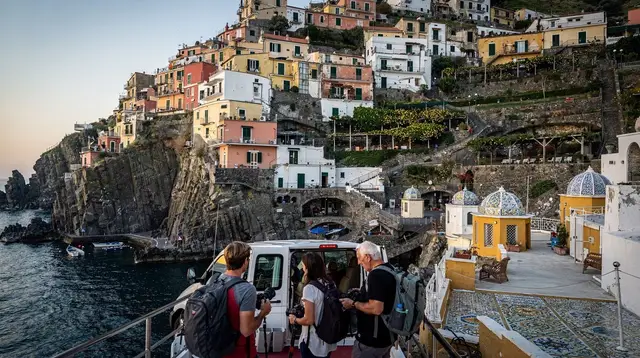
For a structured way to see the coast from the water while sidestepping road traffic altogether, a cruise built specifically around the less-congested stretch of coastline can work well. The boat cruise from Positano built around quieter coves and viewpoints covers this angle directly, moving along the coast rather than fighting the SS163 for it.
Choose Quieter Villages Over Positano and Amalfi
Positano and Amalfi draw the largest share of day-trippers, tour groups, and cruise passengers, which makes them the two most crowded stops on the coast during high season. The same coastline, the same cliffside architecture, and much of the same scenery are available a short distance away in villages that see a fraction of the foot traffic.
Praiano sits between Positano and Amalfi and offers similar sea views with noticeably thinner crowds and easier parking; see praiano traditional village and the direct comparison in praiano vs positano. Furore, known for its dramatic fjord, barely registers on the tour-bus circuit; read fiordo di furore guide. On the eastern side of Amalfi, Minori and Maiori combine longer, calmer beaches with a fraction of the visitors that pack Positano’s Spiaggia Grande; see minori maiori beaches. Further east still, Cetara remains a working fishing village built around its anchovy colatura tradition rather than tourism infrastructure, detailed in cetara anchovy colatura and cetara fishing village.
Basing yourself in one of these villages rather than Positano or Amalfi, and taking day trips into the busier towns early or late in the day, is one of the more reliable structural changes you can make. For lodging strategy across the whole coast, see where to stay amalfi coast.
A tour that deliberately routes around Amalfi and Ravello rather than through their busiest hours can help here too. The Amalfi and Ravello tour timed to avoid peak traffic is built around exactly this kind of scheduling, moving between the two towns outside the worst congestion windows.
Flip the Route: Start From Sorrento Instead of Naples
Most day-trip traffic funnels toward the coast from Naples via Salerno or Sorrento, arriving at the popular villages in the late morning, right as local traffic peaks. Starting from the Sorrentine Peninsula side and moving along the coast in the opposite direction from the bulk of the day-trip traffic can mean arriving in Positano or Amalfi before or after the heaviest waves. Sorrento is also the only town in the area with a direct rail connection to Naples via the Circumvesuviana, making it a practical base for this kind of reverse-direction planning; see circumvesuviana train guide and sorrento old town walking tour.
A guided option that’s specifically structured around this reverse routing is the Amalfi Coast tour from Sorrento that runs the coast in reverse to dodge the crowds, which times stops to land ahead of the typical wave of day-trippers arriving from Naples and Salerno.
Get on the Water for a Different Kind of Quiet
Beyond ferries as transport, getting on the water for its own sake is one of the most effective ways to put physical distance between yourself and the SS163 traffic and village crowds entirely. Kayaking or paddling along the base of the cliffs, or a longer boat tour that explores coves and grottoes inaccessible from the road, shifts your entire day away from the bottleneck. See kayaking amalfi coast and boat tour from amalfi for options.
If you’d rather paddle at your own pace than join a scheduled tour, the kayak tour along the Amalfi Coast’s cliffs and hidden coves is worth considering as a half-day escape from both the road and the village piazzas.
Timing Your Day Within the Villages Themselves
Even in shoulder season, and even in quieter villages, the middle of the day (roughly 11am to 4pm) tends to be the busiest window, when day-trippers from Naples, Salerno, and cruise ports converge with independent travelers. Visiting landmarks like the villa cimbrone ravello or walking through atrani traditional village early in the morning or in the early evening, after tour groups have moved on, often means having viewpoints largely to yourself, even in July. This same principle applies to hikes: starting the path of the gods hike at dawn avoids both the heat and the midday trail traffic between Bomerano and Nocelle.
A Realistic Planning Table
| Strategy | What it solves | What it doesn’t solve |
|---|---|---|
| Travel May-June or Sept-early Oct | Lower baseline traffic and crowd density vs. July-August | Public holidays, ponti, and cruise ship days still cause spikes |
| Travel in winter (Nov-Mar) | Lowest crowds and traffic overall | Ferries drastically reduced or suspended; many shops and tours closed |
| Use ferries instead of SITA buses | Bypasses SS163 road congestion and ZTL delays | Ferry frequency drops sharply outside roughly April-October |
| Base in Praiano, Minori, Maiori, or Cetara | Avoids the densest crowds of Positano and Amalfi | These villages still get busier in peak summer than in shoulder season |
| Start from Sorrento, move counter to day-trip flow | Arrives at popular spots ahead of the main wave | Doesn’t remove crowds once the wave does arrive later in the day |
| Visit landmarks early morning or evening | Avoids the 11am-4pm crowd peak within a village | Doesn’t change overall seasonal or holiday crowd levels |
What Won’t Work: False Promises to Watch For
Be skeptical of any claim that a specific month or trick “guarantees” a crowd-free Amalfi Coast. The coast’s crowd levels are shaped by several independent factors at once: the fixed capacity of the SS163, ZTL schedules, the general shoulder-versus-peak season pattern, Italian public holidays that don’t move with the tourist calendar, and cruise ship itineraries set months in advance by lines calling at Naples and Salerno. A quiet-looking date on a shoulder-season calendar can still turn busy if it lands on a ponte weekend or a day when three cruise ships are in port. The realistic goal is meaningfully thinner crowds and easier logistics, not solitude, and combining several of the strategies above (season, transport mode, village choice, and time of day) stacks the odds in your favor more than relying on any single one.
For a fuller comparison of how the coast stacks up against other options if crowding is a dealbreaker for your trip, see is amalfi coast worth it and amalfi coast vs cinque terre.
Frequently Asked Questions About Avoiding Crowds on the Amalfi Coast
What is the least crowded month to visit the Amalfi Coast?
May, June, and the second half of September into early October are generally quieter than July and August, with milder weather and thinner traffic on the SS163. They are not guaranteed to be crowd-free, since Italian long weekends and cruise ship days still bring surges.
Is the Amalfi Coast crowded in winter?
Winter (November-March) is by far the calmest period for foot traffic and road congestion, but ferry services between villages, Capri, and Naples are drastically reduced or suspended, and many shops, restaurants, and boat tours close for the season.
Which Amalfi Coast towns are less crowded than Positano and Amalfi?
Praiano, Furore, Minori, Maiori, and Cetara see far fewer visitors than Positano or Amalfi while sitting on the same coastline, with the same sea views and easier parking or bus boarding.
Can I avoid the SS163 traffic entirely?
Not by road, since the SS163 is the only route connecting Amalfi, Positano, Ravello, and the other coastal villages. Ferries between Salerno, Amalfi, Positano, Sorrento, and Capri offer a seaborne alternative during the April-to-October season, but they thin out or stop in winter.
Do Italian public holidays affect Amalfi Coast crowds?
Yes. Italian national holidays and long weekends (ponti), especially around Easter, April 25, May 1, and Ferragosto on August 15, bring domestic visitors to the coast on top of the usual international summer traffic, regardless of which month you picked to avoid crowds.
Do cruise ships affect crowd levels on the Amalfi Coast?
Yes. Cruise ships docking in Naples or Salerno regularly send day-trip passengers to Positano, Amalfi, and Capri, which can crowd a village for a few hours even on a date that would otherwise be quiet.
Is the ferry a good way to avoid bus crowds on the Amalfi Coast?
Yes, ferries connecting Salerno, Amalfi, Positano, Sorrento, and Capri run in parallel with the SITA bus network from spring through autumn and often move faster than a bus stuck on the SS163 during peak hours, though they operate a reduced or suspended schedule in winter.
Does visiting the Amalfi Coast by boat instead of bus help avoid crowds?
It helps with transit crowding and ZTL-related delays, since boats bypass the SS163 and village center restrictions entirely, though the villages themselves can still be busy once you land, particularly in Positano and Amalfi at midday.
Best Amalfi Coast Tours on GetYourGuide
Verified deep-linked GetYourGuide tours. Book through these links and we earn a small commission at no cost to you.
GetYourGuide does not provide a product photo for this activity — the image shows the meeting point, photographed by us.