Cetara: The Amalfi Coast Village Where Fishing Is Still a Living
Is Cetara a real fishing village or is it staged for tourists?
Cetara has an active fishing fleet that lands anchovies and bluefin tuna according to real fishing seasons, unlike ports that have shifted entirely to tourism. Boats go out when the sea and the catch allow, not on a fixed tourist schedule, so there is no guaranteed daily viewing window for a landing.
A working harbor, not a backdrop
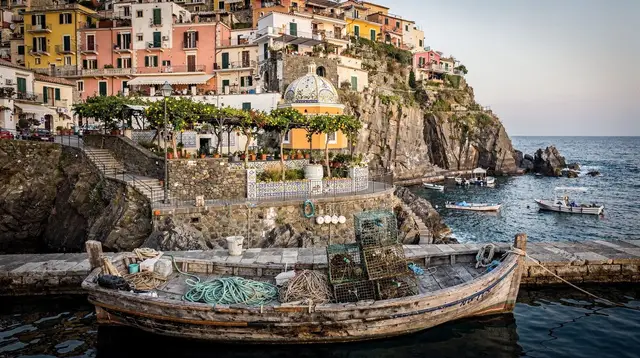
Most visitors who arrive on the Amalfi Coast expecting to see fishermen at work are disappointed. The harborfronts at Positano and Amalfi are lined with sunbeds, gelato counters, and day-trip boats, not working trawlers. That shift happened decades ago, as both towns built their economies around beach tourism and pleasure boating. Cetara took a different path. Tucked into a narrow inlet a few kilometers past Vietri sul Mare and Amalfi, it never became a stop on the main tourist axis in the same way, and its fishing fleet kept working through the decades that turned its neighbors into resort towns.
That distinction matters if you are trying to plan a visit around actually seeing fishing rather than a boat ride dressed up as one. Cetara’s boats go out to catch anchovies and, in season, bluefin tuna, using methods and schedules shaped by the sea rather than by a tourist timetable. This guide explains what that means in practice, how the village fits into the wider Amalfi Coast, and how to tell a genuine fishing experience from a standard sightseeing boat tour.
Where Cetara sits, and why it has no train station
Cetara lies on the eastern end of the Amalfi Coast’s cliffside stretch, between Vietri sul Mare and Maiori. Like every village along this roughly 50-kilometer stretch of coastline, it has no railway station. The Amalfi Coast proper is served by the SS163 coastal road, seasonal ferries, and SITA buses, not by rail. If you’re arriving by train, the nearest stations are in Salerno or Sorrento, and the journey to Cetara continues by road from there.
From Salerno, SITA buses run along the SS163 toward Amalfi and stop in Cetara, a ride of roughly 20 to 25 minutes depending on traffic. From Amalfi, the same road runs the other direction, with Cetara reachable in a similar timeframe. Driving is possible, but the SS163 is a narrow corniche road with switchbacks and, in high season, one-way traffic regulation through the busier villages — see our guide to driving the SS163 before renting a car. Many visitors find it easier to rely on the SITA bus network or, where seasonally available, coastal ferries rather than drive themselves.
There is no dedicated Cetara train connection to invent here: if a source or itinerary implies otherwise, treat it as a mistake. Plan around the bus or the road, and build in flexibility, since coastal traffic in July and August can slow a short hop considerably.
What “still fishing” actually means
Cetara’s identity as a fishing village isn’t a marketing label. It’s tied to two products that depend on real fishing seasons rather than being available on demand year-round.
Anchovies are the base of the village’s best-known product, colatura di alici, an amber fish sauce pressed from anchovies cured in salt for months. The anchovy season and the curing process are tied to traditional methods passed down through Cetara’s fishing families. If you want the full picture on this product and its history, see our dedicated guide to colatura di alici in Cetara.
Bluefin tuna is the other pillar, caught seasonally by Cetara’s boats using techniques suited to a small, artisanal fleet rather than industrial trawling. Because both catches follow natural cycles, there’s no way to guarantee in advance that boats will land a specific catch on a specific day.
This is the central fact to build any visit around: Cetara’s fishing activity is small-scale and weather-dependent. There is no daily fixed slot for watching a landing, no ticketed viewing platform, and no guarantee that a boat will come in during the hours you happen to be in the harbor. Early morning is generally the best window, since that’s when boats that went out overnight or before dawn tend to return, but this is a pattern, not a schedule.
A fishing trip is not a tourist boat tour
It’s easy to conflate “boat” experiences on the Amalfi Coast, so it’s worth being explicit about the difference.
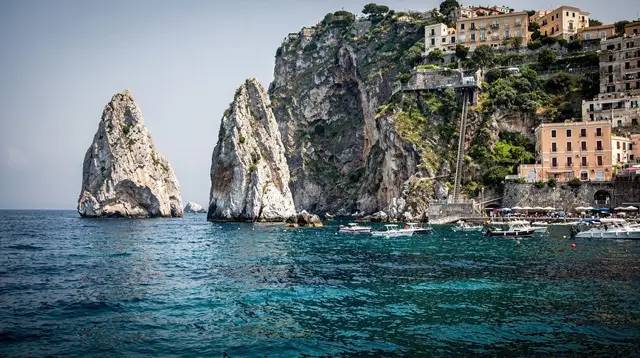
A tourist boat tour — the kind that heads out from Amalfi or the coast toward Capri and the Faraglioni sea stacks — runs on a fixed route and schedule, built around swimming stops, photo opportunities, and sightseeing. These trips are reliable in the sense that they depart and return on time and follow a known itinerary, covered in more detail in our guide to boat tours from Amalfi.
A traditional fishing outing, by contrast, is built around local working knowledge: reading the sea conditions, knowing where a catch is likely, and adjusting the route and timing accordingly. It has no fixed itinerary and no guarantee of a specific outcome. If you join or observe this kind of activity in Cetara, expect the schedule to bend to conditions rather than the other way around.
| Tourist boat tour (e.g. Capri) | Traditional fishing outing (Cetara) | |
|---|---|---|
| Schedule | Fixed departure and return times | Depends on weather and catch |
| Route | Set itinerary, known stops | Adjusted to sea conditions |
| Purpose | Sightseeing, swimming | Working catch (anchovies, tuna) |
| Guarantee | Reliable timing | No guaranteed outcome or slot |
For visitors who want time on the water around Cetara and Vietri without needing a fishing boat to actually go out, sea kayaking is a practical alternative that still keeps you close to this stretch of working coastline.
Paddle a sea kayak from Vietri toward Cetara, tracing the same coastline the fishing fleet works, with stops along the cliffs that a larger tour boat can’t reach. A guided version with snorkeling is also available if you want to get into the water along the way: join a Vietri-to-Erchie kayak and snorkeling tour that covers a longer stretch of this coast. For a smaller group or a private pace, book a private kayak tour from Vietri sul Mare instead.
None of these are fishing trips in the traditional sense — they’re a way to see the coastline Cetara’s boats work without displacing an actual fishing outing, which isn’t something sold as a fixed tourist product.
Walking Cetara itself
Cetara is small enough to see on foot in an hour or two, built around a narrow inlet with a working harbor at its center rather than a beach club row. The village center has a handful of restaurants built around the local catch — anchovies and tuna feature heavily on menus here in a way that reflects what actually comes off the boats, not a generic coastal seafood formula. If you’re staying nearby, this makes Cetara a natural stop for a meal built around colatura di alici rather than a tourist-facing seafood platter.
For a broader view over the village and the coastline, the Mount San Liberatore area above Vietri and Cetara offers a hiking route away from the harbor. Hike Mount San Liberatore above Vietri and the Amalfi Coast for coastal views that take in this stretch from above, a useful contrast to the sea-level pace of the harbor itself.
When to time a visit around the fishing calendar
Because Cetara’s fleet works to the sea’s schedule rather than a tourist one, the time of year shapes what you’re likely to see far more than the time of day does. Bluefin tuna fishing is seasonal, concentrated in the warmer months when the fish move through this stretch of the Tyrrhenian Sea, while anchovy fishing and the colatura curing cycle follow their own separate calendar tied to the anchovy season and the months-long salting process described in our guide to colatura di alici. Visiting in high summer means more daylight hours and more boat traffic in the harbor, but it doesn’t guarantee a landing any more than a quieter shoulder-season morning does — the deciding factors stay the weather and the catch, not the calendar month on its own.
That said, shoulder-season visitors get one practical advantage: the SITA bus and the SS163 itself carry far less traffic outside July and August, so getting to Cetara and back is faster and less stressful. If you’re weighing when to build this stop into a wider trip, our month-by-month weather guide and best time to visit the Amalfi Coast both cover how the coast’s climate and crowd levels shift across the year, and either is worth checking before you fix dates around a village whose main draw doesn’t run on a fixed schedule anyway.
Eating what actually comes off the boats
The restaurants clustered around Cetara’s small harbor draw their menus directly from what the fleet lands, which is a different proposition from the seafood restaurants found in more tourism-driven ports along the coast. Colatura di alici turns up here as a pasta condiment, tossed simply with spaghetti, garlic, and parsley, in a dish considered a local specialty rather than a coastal seafood staple you’d find identically presented in every town. Fresh anchovies appear marinated, fried, or grilled depending on the season and the day’s catch, and when bluefin tuna is running, it shows up on menus in ways that track the actual landing rather than a supply chain built around year-round availability. For more on the product itself, and how it differs from generic bottled anchovy sauces, see our companion piece on why Cetara’s anchovy sauce isn’t interchangeable with other condiments.
This is also a useful contrast to villages further along the coast: in Minori and Maiori, the beaches and lidos take center stage over the working harbor, which is a fair trade for visitors who came for exactly that, but a different experience from a stop built around Cetara’s fishing identity.
Why Cetara isn’t interchangeable with Positano or Amalfi
It’s tempting to treat every Amalfi Coast village as offering a version of the same experience — a harbor, a beach, some boats. For this specific kind of visit, that framing doesn’t hold. Positano’s harborfront is built around Spiaggia Grande and its lidos; Amalfi’s around its cathedral square and day-trip boat departures. Both are shaped by decades of tourism investment, and both are worth visiting for what they are — see our comparisons of Positano versus Amalfi and where to stay on the Amalfi Coast for that context.
Cetara’s harbor never went through that same transformation, largely because it sat slightly off the main coastal tourist route that runs through Positano, Amalfi, and Ravello. That relative distance from the busiest stretch is precisely why its fishing economy stayed intact rather than being replaced. If your goal is to see something closer to a working Amalfi Coast village rather than its tourism-facing version, Cetara is the more accurate stop, not an interchangeable alternative to Positano or Amalfi.
Ceramics next door, for context
Cetara sits close enough to Vietri sul Mare that many visitors combine the two in a single day: Vietri’s majolica ceramic tradition on one side, Cetara’s fishing economy on the other. They’re genuinely distinct crafts tied to different villages along this same short stretch of coast, and pairing them gives a clearer sense of how specialized each Amalfi Coast village actually is, rather than treating the coastline as one undifferentiated strip. The neighboring village of Atrani offers a third variation worth the same day if time allows.
Planning a realistic visit
Given the unpredictability of watching an actual landing, the most reliable way to plan a Cetara visit is to treat the fishing village atmosphere — the boats, the harbor, the menus built around the local catch — as the main draw, rather than betting on witnessing a specific landing. If seeing boats come in matters to you, arrive early in the morning and build slack into your schedule, since the SITA bus timetable and the fishing schedule don’t run on the same clock.
Combine the stop with Vietri sul Mare for ceramics, or with a short kayak outing along the coast, rather than trying to schedule a fishing encounter as if it were a ticketed attraction. That flexibility is, in a sense, the point: Cetara’s economy runs on the sea’s schedule, not a tourist board’s.
Frequently asked questions about visiting Cetara’s fishing village
Can I watch fishing boats unload in Cetara every day?
No. Landings depend on the weather, the season, and the catch, so there is no fixed daily schedule. Early morning is the best window, but a visit built around watching a landing needs flexibility, not a fixed itinerary slot.
Does Cetara have a train station?
No. Like the rest of the Amalfi Coast proper, Cetara has no railway station. It is reached by the SS163 coastal road or by SITA buses running from Salerno or Amalfi.
What is the difference between a fishing trip and a boat tour in Cetara?
A traditional fishing outing follows local working methods and depends on sea conditions and the catch, with no fixed itinerary or guaranteed stops. A tourist boat tour, such as those heading to Capri or the Faraglioni, runs on a set route and schedule built for sightseeing rather than for landing fish.
What kind of fish does Cetara’s fleet actually catch?
The two anchors of Cetara’s fishing economy are anchovies, cured into the traditional colatura di alici, and bluefin tuna, caught seasonally. Both follow natural fishing seasons rather than a year-round guarantee.
Why is Cetara different from Positano or Amalfi for this kind of experience?
Positano and Amalfi shifted their harborfronts toward beach tourism and pleasure boating decades ago. Cetara stayed off that main tourist axis, which is exactly why its fishing economy remained a working activity rather than a recreated backdrop.
How do I get to Cetara without a car?
SITA buses connect Cetara to Salerno and to Amalfi along the SS163. There is no train and no year-round scheduled ferry service to rely on, so bus timetables should be checked in advance, especially outside high season.
Is colatura di alici the same as regular anchovy sauce?
Colatura di alici is a specific amber fish sauce pressed from anchovies cured in salt over months, tied historically to Cetara. It is a distinct product of the village’s fishing tradition, not an interchangeable condiment found the same way in every coastal town.
Fishing Trips on the Amalfi Coast on GetYourGuide
Verified deep-linked GetYourGuide tours. Book through these links and we earn a small commission at no cost to you.
GetYourGuide does not provide a product photo for this activity — the image shows the meeting point, photographed by us.