Amalfi Coast Weather by Month: A Season-by-Season Guide
Does the Amalfi Coast have the same weather all year?
No. The coast follows a Mediterranean pattern shared with the rest of Campania, with a long high season from Easter to late October and a quieter, more changeable stretch from November to March. Sea conditions during the cooler months directly affect ferry schedules and access to weather-dependent sights like the Blue Grotto.
Why the Amalfi Coast Doesn’t Have Just One Climate
Travelers often picture the Amalfi Coast as a single postcard image, sunlit cliffs, turquoise water, and assume the weather stays that way year-round. It doesn’t. The coast sits within the same broader Mediterranean climate zone as the rest of Campania, and it runs on the same CET/CEST time zone as Rome, not some separate island time or microclimate of its own. What actually varies, sharply, is the rhythm of the seasons: a long stretch of warm, settled, tourist-ready conditions from Easter through late October, followed by a quieter, more unpredictable period from November to March.
That seasonal swing matters more here than in many destinations because so much of daily life on the coast depends on the sea and on narrow infrastructure. There is no railway running along villages like Amalfi, Positano, or Ravello; the coast relies on the SS163 corniche road, SITA buses, and seasonal ferries. When weather and sea conditions shift, so does how easily you move between towns, and whether certain experiences are even available that day.
This guide won’t hand you a table of average temperatures or rainy-day counts, those aren’t figures we treat as verified facts for this site. Instead, it walks through how the season you choose changes what a trip to the coast actually feels like and what you can realistically plan around.
High Season: Easter Through Late October
The Amalfi Coast’s high season stretches from Easter to the end of October, with July and August marking the busiest, most intensely trafficked weeks. During this stretch, the region is at full operating capacity: hotels, restaurants, boat operators, and transport all run on their fullest schedules of the year.
This is also when the coast’s infrastructure is put under the most pressure. The SS163, the coastal road connecting Amalfi, Positano, Praiano, and the villages beyond, is narrow and cliff-hugging even in quiet months. In peak season, expect ZTL traffic restrictions and alternating one-way regulation in towns like Amalfi, Positano, and Ravello. Many visitors sidestep the driving question entirely and rely on SITA buses or ferries instead; if you’re weighing that trade-off, Amalfi Coast Without a Car and Driving the SS163 both go into more detail.
Ferries are at their most useful during these months. Routes connecting Sorrento, Positano, Amalfi, and Capri run with real frequency, making it possible to island-hop or day-trip by sea rather than by road. For the details on which routes actually run and how to plan around them, see Ferries Between Amalfi Coast, Sorrento, and Capri.
Warm-season conditions are also when most boat-based and coastal activities make the most sense. A guided run along the coastline, for instance, is a straightforward way to see towns that are otherwise hard to string together without a car, and this is the kind of outing where an organized coastal sightseeing tour tends to fit naturally into a high-season itinerary. If you’d rather stay on the water at a slower pace, a kayaking outing along the Amalfi Coast is another option that depends on the calmer sea conditions more typical of these months.
Within high season, though, the experience still shifts. Late spring (April, May, June) and early autumn (September, October) tend to offer a gentler version of the same conditions as full summer, still warm, still busy, but without the sharpest crowd peaks of late July and August. If you’re trying to choose a specific month within the high season window, Amalfi Coast in May, Amalfi Coast in August, and Amalfi Coast in October each look at that trade-off in more depth, and Amalfi Coast: Avoiding the Crowds is worth reading if timing around peak congestion is your main concern.
The Shoulder Turn: Late October Into November
The transition out of high season isn’t a hard switch flipped on November 1st. It happens gradually as October ends: ferry schedules start thinning, some seasonal businesses begin winding down, and the settled patterns of summer give way to more variable conditions. This is also roughly when the coast’s infrastructure starts to loosen its peak-season grip, ZTL restrictions ease, and the SS163 becomes noticeably calmer to drive.
For travelers weighing whether to squeeze in a late-season visit, this window can be appealing: fewer crowds, a slower pace, and still enough operating services to see the coast properly. But it comes with a trade-off worth naming clearly: the reliability of ferries and some open-air activities starts to decline as the shoulder season progresses, which we cover in more detail below.
Low Season: November Through March
From November to March, the coast settles into a genuinely different rhythm than the rest of the year. This isn’t simply “the same coast, but cooler.” Multiple ferry routes reduce their schedules significantly and some are suspended altogether, several shops, restaurants, and boat operators close for the season, and weather becomes considerably more changeable and harder to predict day to day. Amalfi Coast in Winter covers what actually stays open and what doesn’t during these months.
The direct consequence for planning is that ferries should never be treated as a guaranteed, always-available service on the Amalfi Coast, especially outside the Easter-to-October window. Sea conditions determine whether a given crossing runs on a given day, and that can change with very little notice. If your itinerary depends on getting from Sorrento to Capri, or from Amalfi to Positano, by boat during the cooler months, it’s worth having a backup plan built around SITA buses or the road, rather than assuming the ferry will simply be there.
This is also the season where a private, road-based way of moving between towns can make more sense than trying to rely on boats. A private tour of the Amalfi Coast sidesteps the ferry-availability question entirely by keeping you on land, which can be a more dependable option once winter schedules take effect. Travelers who’d rather stick with public transport can also look at getting between towns by SITA bus, covered in Amalfi Coast by Bus, or via an organized bus tour along the coast that doesn’t depend on sea conditions at all.
None of this makes winter a bad time to visit, it simply changes what kind of trip you’re planning. Off-season visitors tend to prioritize a quieter atmosphere and lower costs over having full access to every boat-based activity; if that trade-off appeals to you, it’s worth reading further before booking.
How Weather and Sea Conditions Shape Specific Activities
Two of the coast’s best-known experiences are directly tied to conditions rather than to a fixed calendar date, and it’s worth understanding both before you plan around them.
The Sentiero degli Dei (Path of the Gods). This is a multi-hour hike along an exposed ridge between Bomerano or Agerola and Nocelle or Positano, not a short scenic stroll. How you prepare for it, footwear, water, layers, timing, changes with the season. In the heat of high summer, an early start matters more to avoid exposure on an unshaded trail; in the shoulder or low season, shifting daylight hours and the chance of sudden weather changes matter more. Either way, this is not a hike to approach the same way regardless of month. Path of the Gods Hike and Amalfi Coast Hiking Itinerary both go into the seasonal planning in more detail.
The Grotta Azzurra (Blue Grotto) on Capri. Access to this sea cave depends entirely on tide and sea state, not on the season printed on a calendar. It can close without warning at any time of year if conditions aren’t right, and light conditions inside are generally considered more favorable later in the morning. This means a Blue Grotto visit should always be treated as conditional, not guaranteed, whether you’re visiting in August or January. Blue Grotto Capri Guide explains how access actually works.
Both of these examples point to the same underlying idea: on the Amalfi Coast, “the weather” isn’t just a comfort question, it’s an access question. Whether a boat runs, whether a cave opens, whether a hike is sensible that day, all of it traces back to sea and weather conditions that shift with the season and, day to day, with the specific conditions on the water.
Planning a Trip Around the Season, Not the Date
Because the coast’s rhythm swings so clearly between a long warm season and a quieter cool one, the most useful planning question isn’t “what will the weather be like on this exact date” but “which season am I building this trip around, and what does that mean for ferries, hikes, and weather-dependent sights.” A trip planned for late July should assume full services, heavy crowds, and reliable ferries, paired with ZTL driving restrictions. A trip planned for January should assume a slower pace, reduced or suspended ferry routes, and activities like the Blue Grotto or the Sentiero degli Dei that need to be checked rather than assumed.
If you’re still deciding when to go at all, Best Time to Visit the Amalfi Coast is the broader companion piece to this guide, and Is the Amalfi Coast Worth It is useful if you’re weighing the coast’s more demanding, season-dependent logistics against the payoff. For a full-day look at the coastline that works well across most of the year, a combined day trip covering Pompeii and the Amalfi Coast pairs an indoor, weather-resistant archaeological site with a coastal outing, which can be a practical way to hedge against an uncertain forecast on any given day.
Amalfi Coast Weather by Month, Season by Season
| Period | General pattern | Ferries (Sorrento–Positano–Amalfi–Capri) | Notes |
|---|---|---|---|
| Easter to June | Warming, settling into high season | Frequent, expanding schedule | ZTL and crowd levels rising toward summer |
| July–August | Peak high season | Fullest schedule of the year | Heaviest SS163 traffic, ZTL fully active |
| September–October | Still high season, easing crowds | Frequent, gradually thinning late in October | A common shoulder-season sweet spot |
| November | Transition into low season | Reduced, less predictable | Some businesses beginning to close |
| December–February | Low season | Reduced or suspended, sea-dependent | Quietest, most changeable weather window |
| March | Early transition back | Still limited, improving toward Easter | Gradual return of services ahead of high season |
Frequently Asked Questions About Amalfi Coast Weather
Is the Amalfi Coast in a different time zone or climate zone from Rome?
No. The coast runs on the same CET/CEST time zone as Rome and the rest of Italy, and it shares the broader Mediterranean climate pattern of Campania rather than having a distinct microclimate of its own.
When does the Amalfi Coast high season start and end?
High season generally runs from Easter through the end of October, with the busiest weeks in July and August. Outside that window, the region shifts into a noticeably slower, low-season rhythm.
Will ferries between Sorrento, Positano, Amalfi, and Capri run in winter?
Not reliably. Ferry routes are dense during the high season but are reduced, and often suspended altogether, from roughly November to March depending on sea conditions. Ferries should never be treated as a guaranteed service outside the warmer months.
Does rough weather affect the Blue Grotto on Capri?
Yes. Access to the Grotta Azzurra depends on tide and sea state, not on the calendar. It can close without notice at any time of year, and conditions are generally considered more favorable later in the morning.
Is the Path of the Gods hike affected by the season?
Yes. The Sentiero degli Dei is a multi-hour hike along an exposed cliffside trail, and how it should be approached, timing, layers, water, footing, changes with the season rather than staying constant year-round.
Is winter a bad time to visit the Amalfi Coast?
It depends on what you’re looking for. Winter brings a slower pace, fewer crowds, and more changeable weather, along with reduced ferry service and some closures. It suits travelers prioritizing quiet over full access to boat-based activities.
Should I plan my Amalfi Coast trip around specific temperatures or rainfall totals?
This guide intentionally avoids listing specific temperature or rainfall figures for the coast, since those aren’t verified details we publish. Plan instead around the broader seasonal pattern: high season conditions and activity availability versus the quieter, more variable low season.
Popular Amalfi Coast Tours on GetYourGuide
Verified deep-linked GetYourGuide tours. Book through these links and we earn a small commission at no cost to you.
GetYourGuide does not provide a product photo for this activity — the image shows the meeting point, photographed by us.
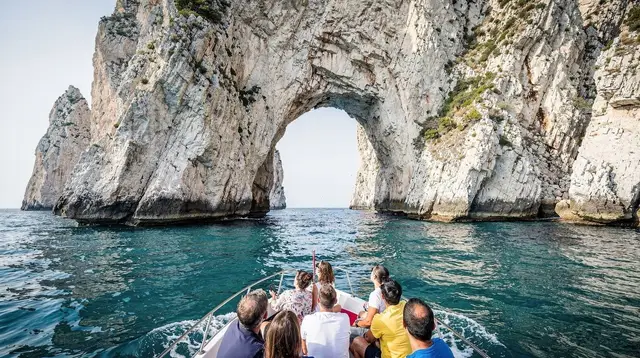
Capri by Yacht from Marina di Stabia Mochi Craft 33 8 Person Maximum

Private Cruise from Naples to Capri and Amalfi Coast - yacht 50'