4-Day Amalfi Coast Hiking Itinerary: Path of the Gods, Fiordo di Furore, Valle delle Ferriere
Four days is enough to hike the three trails that define this coastline, but only if you resist the urge to combine them. The Path of the Gods, the descent to the Fiordo di Furore, and the Valle delle Ferriere gorge walk are each substantial outings on their own — several hours of walking, uneven stone steps, and, in the case of the Path of the Gods, a genuine early start. This itinerary keeps them on separate days and treats travel between villages as part of the plan, not an afterthought.
Why this itinerary keeps the three hikes apart
It’s tempting to look at a map of the Amalfi Coast and assume you can walk from one village to the next along the coast road. You can’t, at least not comfortably or safely: the SS163 has no continuous pedestrian path, it’s narrow, blind-cornered, and shared with tour coaches and scooters. Read why driving the SS163 isn’t for everyone before you assume a rental car simplifies any of this — for a hiking trip, it usually doesn’t. Movement between villages happens by SITA bus or, seasonally, by boat, and both run on limited schedules that need checking before you leave your accommodation, not assumed to be frequent all day. For the full picture on getting around without a car, see the guide to visiting the Amalfi Coast without a car — note this itinerary assumes exactly that approach.
Basing yourself in Positano for all four nights avoids repacking and gives you a central point for SITA connections in both directions.
Day 1: Arrival in Positano, orientation and an easy first day
Spend day one settling in rather than hiking. After checking in, walk down through Positano’s stacked lanes to Spiaggia Grande and get a feel for the town’s layout — where the bus stop is, where the ferry dock is, and how steep the return walk to your accommodation will be after a day on the trail. This orientation matters more here than in most destinations, because Positano has no flat ground: every errand is a climb.
Use the afternoon for a gentle introduction to the coastline from the water rather than the trail. A short boat outing shows you the cliffs, coves and villages you’ll be viewing from above over the next three days, and it costs you no hiking fatigue before Day 2’s early start.
seeing the coastline from the water on a boat trip out of Positano is a low-effort way to spend the afternoon and get your bearings before the harder days ahead.
In the evening, walk the old town’s quieter lanes and have dinner early — Day 2 requires leaving before the heat and the crowds arrive.
Practical notes for Day 1:
| Task | Where | Why it matters |
|---|---|---|
| Locate the SITA bus stop | Near the main coast road, Positano | You’ll use it for Days 2 and 4 |
| Check tomorrow’s bus timetable | Posted at the stop or via the local transit guide | Departures are infrequent, especially early morning |
| Buy bus tickets in advance | Tobacco shops (tabaccherie) | Tickets are often not sold on board |
| Confirm trail conditions | Your accommodation or a local tourist office | The Path of the Gods can close after heavy rain |
For a wider view of bus logistics across the whole coast, see the SITA bus guide.
Day 2: The Path of the Gods to Praiano
This is the itinerary’s longest and most demanding day, and it deserves to stand alone. The Path of the Gods (Sentiero degli Dei) is a multi-hour trail, not a short scenic walk, and treating it as a quick detour before or after another activity is the single most common planning mistake hikers make on this coast.
Take an early SITA bus from Positano toward Nocelle or up to Bomerano/Agerola, depending on which trailhead the current timetable serves — confirm this the evening before, since routing can shift by season. Starting early matters for two reasons: the trail gets exposed and hot by midmorning in summer, and the narrow sections near the start fill with day-trippers later in the day.
The trail itself runs along a limestone ridge with the coastline dropping away below, connecting toward Nocelle above Positano. Expect uneven stone paths, some exposed edges, and no shade for long stretches — proper footwear and water are not optional here. Budget the better part of a day, including the descent into Nocelle or onward toward Praiano, and the return leg.
Plan your return by SITA bus from Praiano back to Positano, and check the timetable before you start walking in the morning — afternoon departures from smaller stops can be sparse, and missing one on a hiking day with tired legs is worse than missing one on a rest day. If timing allows and you’d rather see Praiano’s coastline from the water on the way back rather than immediately queue for a bus, a short local boat trip is an option:
a short boat trip along the coast from Praiano can be a scenic way to unwind after the hike, if your legs and the schedule allow it.
Dinner in Positano tonight should be simple — Day 3 is another full outing, even if it’s shorter than Day 2.
Day 3: The Fiordo di Furore descent
Treat the Fiordo di Furore as its own destination for the day, not a stop tacked onto yesterday’s hike. The fjord — really a narrow gorge cut into the cliffs near Conca dei Marini — is reached by descending a long staircase from the coast road down to a small pebble cove wedged between rock walls. It’s a different kind of walking from Day 2: shorter in distance but steep, with an equally steep climb back up at the end.
Take the SITA bus from Positano toward Amalfi and get off at the Furore fjord stop; again, confirm the schedule before leaving, since this stop is a request stop on some routes rather than a guaranteed one. The descent itself takes twenty to thirty minutes each way, but budget time at the bottom to actually enjoy the cove — it’s a pebble beach, not sand, and swimming is possible in season but the water is cool and the entry is rocky.
Because this is a lighter day than Day 2, it pairs well with a slower-paced activity on the water in the afternoon if you want to see the fjord and the coastline from below as well as from the steps:
a boat tour that runs along the coast past Furore and the villages beyond it gives you the reverse perspective of what you just walked down into.
Return to Positano by SITA bus in the late afternoon, again checking the timetable rather than assuming an evening departure will be waiting.
Day 4: Valle delle Ferriere, the gorge walk near Amalfi
The last hiking day shifts from cliffside trails to a wooded gorge. The Valle delle Ferriere is a shaded valley walk near Amalfi, following a stream past disused paper and iron mills toward waterfalls, with a noticeably cooler, greener microclimate than the exposed coastal paths of Days 2 and 3.
Take the SITA bus from Positano to Amalfi, then a connecting local bus or a short taxi toward the trailhead near Scala or the valley entrance above town — this leg genuinely requires a bus connection rather than a direct route, so allow extra time and don’t schedule anything immediately afterward that depends on a tight bus window. Amalfi’s own paper-making history, tied to this same valley’s old mills, is worth a stop afterward at the paper museum if you have energy left.
The walk through the gorge is shorter and less strenuous than the Path of the Gods but still involves uneven, sometimes slippery stone paths near the waterfalls, particularly after rain. Depending on the access point chosen and how far into the reserve you go, plan for two to four hours.
Finish the day back in Amalfi rather than rushing straight for the bus — the town’s cathedral and seafront make a natural wind-down after four days of hiking. From here, if you’d rather return to Positano by water instead of by road, a short evening cruise is a relaxed alternative to the bus:
a short evening cruise between Amalfi and Positano is a pleasant way to close out the trip if the timing works with your bus alternative as a backup.
Planning notes: buses, timing and what to check before each day
| Day | Hike | Approx. duration | Transport |
|---|---|---|---|
| 1 | None (orientation) | — | On foot within Positano |
| 2 | Path of the Gods to Praiano | 5–7 hours including descent | SITA bus out, SITA bus back |
| 3 | Fiordo di Furore descent | 2–3 hours including climb back | SITA bus both ways |
| 4 | Valle delle Ferriere | 2–4 hours | SITA bus to Amalfi, then connection |
A few points worth repeating because they change how this itinerary works in practice:
- The SS163 has no continuous walking path between villages — always plan transfers by bus or boat, never on foot along the road itself.
- SITA bus timetables are limited, especially outside July and August, and schedules can shift by season — check the current timetable the evening before each hiking day, not on the morning of.
- Ferry service between the villages is seasonal and can be sparse or suspended outside the Easter-to-October window, so don’t build this itinerary around boats as a guaranteed backup in winter.
- None of these three trails should be combined into a single day. Each one, done properly, fills most of a day on its own.
Frequently asked questions about this Amalfi Coast hiking itinerary
Can I do the Path of the Gods and the Fiordo di Furore on the same day?
It’s possible in terms of raw distance, but not recommended: the Path of the Gods alone takes most of a day including transfers, and adding the Furore staircase afterward means tackling a steep descent and climb on already tired legs, with less daylight margin if a bus is delayed.
Do I need to book SITA bus tickets in advance?
You don’t book seats, but you do need to buy tickets before boarding, typically from tobacco shops (tabaccherie) or authorized resellers, since tickets are often not sold on board. See the SITA bus guide for where to buy them along this route.
Is the Path of the Gods suitable for beginners?
It’s a multi-hour trail with uneven stone paths and some exposed sections, so a reasonable fitness level and proper footwear matter more than technical hiking experience. It is not a short or flat walk, and shouldn’t be attempted in sandals or without water.
How do I get down to the Fiordo di Furore?
By a long staircase from the coast road down to the pebble cove; there’s no other pedestrian access. The SITA bus between Positano and Amalfi stops near the top, though confirm it’s a scheduled stop rather than a request stop before relying on it.
Is the Valle delle Ferriere hike as strenuous as the Path of the Gods?
No — it’s shorter and shadier, following a stream through a wooded gorge rather than along an exposed ridge, but the paths near the waterfalls can be slippery, especially after rain, so it’s not a casual stroll either.
What should I pack for four days of hiking on this coast?
Sturdy walking shoes rather than sandals, water for each hike, sun protection for the Path of the Gods in particular, and a light layer for the cooler Valle delle Ferriere gorge. A full checklist is in the packing list guide.
Is a rental car useful for this hiking itinerary?
No — this itinerary is built around SITA buses precisely because none of the three trailheads benefit from a car, and the SS163 itself is narrow and congested in season. See Amalfi Coast without a car for the reasoning behind this approach.
What’s the best time of year for this itinerary?
Spring (April–June) and early autumn (September–October) offer cooler hiking temperatures than midsummer, along with steadier SITA bus service than the winter off-season. Details by month are in the weather by month guide.
Best Amalfi Coast Tours on GetYourGuide
Verified deep-linked GetYourGuide tours. Book through these links and we earn a small commission at no cost to you.
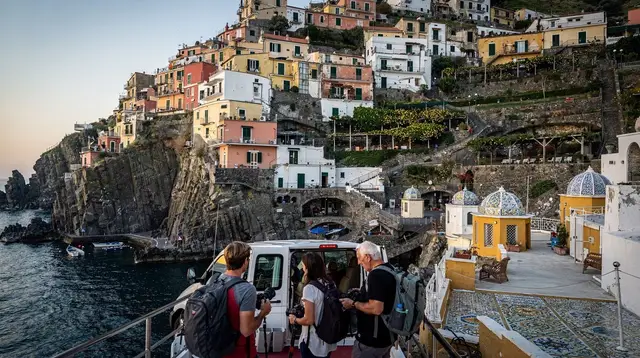
GetYourGuide does not provide a product photo for this activity — the image shows the meeting point, photographed by us.