Amalfi Coast Packing List: What to Bring for Stairs, Sun, and Sudden Rain
What should I pack for the Amalfi Coast?
Pack sturdy, closed-toe walking shoes for steep stairs and cobbled lanes rather than flat sandals, a lightweight layer that covers shoulders and knees for churches and archaeological sites, a European type F/L plug adapter for 220V outlets, and a packable rain layer if traveling outside the Easter-to-October window. A swimsuit is useful for paid lidos rather than natural sand beaches.
Why packing here is different from a beach trip
The Amalfi Coast rewards a very specific kind of packing list, because the terrain and the culture both push back against a generic beach-holiday suitcase. This is a cliffside coastline of steep stairways, narrow lanes, and centuries-old churches, not a flat resort strip with sand underfoot. What works in the Caribbean or on a Greek island beach often works poorly here, and a few small choices in what you bring can change how comfortable your days actually feel.
Before building your list, it helps to read how many days you actually need and check the best time to visit, since your packing priorities shift depending on the season and how many villages you plan to cover. If you are still deciding on a base, where to stay on the Amalfi Coast is worth reading first, since a hillside room reached by stairs changes what luggage makes sense.
It also helps to think about your list in layers rather than as one fixed packing dump. A base layer of clothing that works for walking, eating, and stairs; a second layer of church- and site-appropriate coverage; a third layer for water time; and a fourth for the rain and cooler evenings outside high summer. Most travelers overpack the first layer and underpack the second and fourth, which is exactly backward for how the days here actually unfold.
Footwear: the single most important category
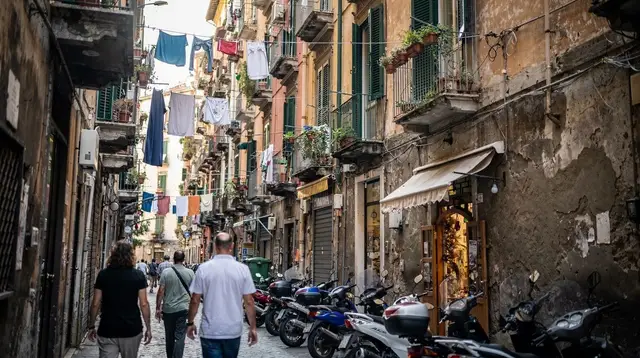
Villages such as Positano, Amalfi, and Ravello are built on a cliff, and getting around means climbing and descending long flights of stairs, sloped cobbled alleys, and uneven stone paths almost everywhere you go. Flat sandals, flip-flops, and thin-soled shoes slip easily on worn, polished stone, especially after rain or in the early morning dew.
Pack at least one pair of closed-toe shoes with a real tread: a comfortable sneaker, a light trail shoe, or a walking shoe you have already broken in. These will carry you through a normal day of sightseeing, market streets, and restaurant hopping far better than dress shoes or beach sandals. A second, lighter pair of shoes or sandals for evenings is a reasonable addition, but it should not replace sturdy daytime footwear.
If your itinerary includes the Sentiero degli Dei, the Path of the Gods, footwear needs to step up again. This is a multi-hour hike along an exposed cliffside route between Bomerano/Agerola and Nocelle above Positano, with uneven rock, loose gravel sections, and real elevation change. City sneakers are not enough for this trail; bring proper hiking shoes or trail runners with ankle support and solid grip, along with enough water, since shops are scarce along most of the route.
| Activity | Recommended footwear |
|---|---|
| Village sightseeing, stairs, cobbled lanes | Closed-toe walking shoe or sneaker with tread |
| Sentiero degli Dei hike | Hiking shoes or trail runners, broken in |
| Boat trips, lidos, kayaking | Sandals with a back strap, or water shoes |
| Evenings out, restaurants | Lightweight second pair, comfortable over stone |
Clothing for churches, archaeological sites, and hot afternoons
The Amalfi Coast mixes beach-adjacent leisure with religious and archaeological sites where a dress code matters. Churches such as Amalfi Cathedral and the Duomo in Ravello generally expect shoulders and knees to be covered for entry, and the same modest approach is a practical habit at Pompeii and Herculaneum, where sun exposure is intense and shade is limited across the excavated streets.
A lightweight, long-sleeve shirt or a large scarf that can be draped over the shoulders solves this without adding real weight to your bag. For bottoms, breathable trousers or a knee-length skirt or dress are easy to switch into before visiting a church, then swapped back out for shorts or a lighter outfit once you are back on the waterfront. Packing two or three of these versatile, coverable pieces is usually enough for a week-long trip, since laundry or a quick rinse in your room covers the rest.
Sun protection matters year-round in high season: a hat, sunglasses, and a high-SPF sunscreen are essential from late spring through early autumn, particularly on exposed sites like Pompeii and during a day on Mount Vesuvius, where there is almost no shade along the crater path.
Packing for a family trip
Traveling with children adds a few items to the list without changing the basic logic: stairs and uneven stone are still the main obstacle, so footwear rules apply to kids just as much as adults. Skip flip-flops and light-up sandals for sightseeing days, and pack a closed-toe shoe for every child old enough to walk on their own. A lightweight carrier or a compact stroller with sturdy wheels works better than a full-size stroller, since many lanes and staircases in Positano and Amalfi cannot take a large frame at all. For more on which activities suit which ages, the Amalfi Coast with kids guide covers beaches, boat trips, and easier walks in more detail.
A refillable water bottle per child, a small first-aid kit with blister plasters, and snacks for between-meal stretches on longer excursion days are worth the extra bag space. Sun protection matters even more for kids than adults: a wide-brim hat, high-SPF sunscreen, and a rash guard for swim time reduce the risk of sunburn on days spent at a lido or on a boat with little shade.
Documents, money, and connectivity
Carry a printed or digital copy of your passport, accommodation confirmations, and any pre-booked tour vouchers, since some ferries, boat tours, and archaeological sites check a printed or phone-displayed ticket before allowing entry. A small amount of cash in euros is worth carrying at all times: many smaller trattorias, some lidos, and a handful of village shops in Positano, Amalfi, and Ravello still prefer cash or have a minimum for card payments, and ATMs are not evenly distributed across every hamlet.
A local SIM card or an international data plan is useful given how much of a day here depends on checking bus and ferry schedules on the move; connectivity can be patchy in tunnels along the SS163 and on some stretches between villages, so downloading offline maps before you set out is a sensible backup. A portable charger, mentioned above, becomes more important once your phone is also acting as your ticket, map, and translator for the day.
A rain layer, especially outside the Easter-to-October window
The high season here runs from Easter through the end of October, peaking in July and August, and this stretch is generally dry, warm, and reliable for outdoor plans. Outside that window, the weather turns noticeably more unpredictable: showers can appear with little warning, temperatures swing between mild and chilly, and services slow down. For a full month-by-month breakdown, see the Amalfi Coast weather by month guide, and if you are traveling in the colder months, read visiting in winter before you finalize your list.
A packable, lightweight waterproof jacket earns its space in the bag for any trip from November through March, and is a sensible extra even in shoulder months like April or October. It folds small, adds little weight, and saves a day of sightseeing from being cut short by an unexpected downpour on the SS163 corridor or during a walk through Amalfi’s historic center.
Swimwear for lidos, not sandy beaches
It is worth resetting expectations before packing beachwear: this is not a destination of soft, white sand. Most shoreline access here is through paid lidos, which provide sun loungers, umbrellas, and changing facilities for a fee, alongside a smaller number of free pebble or shingle coves. Positano’s best-known beaches, Spiaggia Grande and Fornillo, are largely organized as paid lido space in high season, with limited free areas and very little free parking nearby, as covered in the Positano beaches guide.
Bring a swimsuit, a quick-dry towel or lido-friendly beach wrap, and reef-safe sunscreen for time at a lido, on a boat, or on a kayaking trip or paddleboard session. Water shoes or sandals with a secure strap help on pebble coves, where bare feet can struggle with the uneven stones underfoot.
Packing for a Capri day trip
A day trip to Capri deserves its own quick mental checklist, since it adds a ferry crossing and a funicular ride to the usual walking and stairs. Pack light for this specific day: a small daypack rather than a full bag, a light layer for the breeze on the open-water crossing, and closed-toe shoes for the walk up from Marina Grande. If the Blue Grotto is on the plan, a swimsuit under your clothes and a change of dry layer make the small-boat entry into the cave more comfortable, since visitors sometimes get lightly splashed climbing in and out.
What to leave at home
A few categories are safe to cut from an Amalfi Coast bag. Formal dress shoes rarely earn their space, since even nicer restaurants are used to travelers arriving from a day of walking, and the cobblestones make heels genuinely impractical. A hair dryer or styling tools that are not dual-voltage are usually better left behind or replaced with a travel-size, dual-voltage version, since most accommodations already provide a hair dryer. Oversized beach umbrellas and folding chairs are unnecessary given how much of the coastline’s swim access runs through paid lidos that already supply loungers and umbrellas for the day.
The plug adapter and other small essentials
Italy runs on 220-230V power with type F and type L sockets, which differ from the plugs used in the UK, North America, Australia, and much of Asia. Visitors from outside continental Europe should pack a plug adapter before arrival; most electronics such as phones and laptops are dual-voltage and only need the physical adapter, but it is worth checking each device’s rating label if you are unsure, since older hair styling tools and some appliances are not dual-voltage and would need a separate converter.
A few smaller items round out a practical list:
- A crossbody bag or small daypack that keeps your hands free on stairs.
- A refillable water bottle, since public fountains are common in most villages.
- A portable phone charger for long sightseeing days away from your room.
- A printed or downloaded copy of key bus and ferry times, since connectivity can be patchy on some stretches of the coast; see the SITA bus guide and ferry guide for planning.
- A light day bag that compresses flat, useful for a day trip to Capri or Pompeii where you will want less to carry.
Luggage: think stairs, not wheels
Large rolling suitcases struggle badly on the Amalfi Coast. Many hotels and rentals in Positano, Amalfi, and Ravello are reached by stairways rather than a drivable street, and porters or luggage carts are not always available. A smaller suitcase, or better yet a soft duffel bag with backpack straps, is far easier to manage over cobblestones and steps, particularly if you are also connecting via the Circumvesuviana train or arriving via Naples airport.
Putting it together with a guided day
Once your bag is packed for stairs, sun, and unpredictable weather, a guided day trip is a comfortable way to see the coast without also worrying about driving the narrow SS163. A half-day coastal tour along Amalfi’s most scenic villages takes the driving decisions off your plate entirely.
For a more active day that suits quick-dry clothing and water shoes, a kayak tour along the Amalfi coastline or a self-guided paddleboard rental session makes good use of swimwear packed for the water rather than a sandy beach. If you would rather explore on two wheels, a bike tour through the coastal towns is another way to cover ground while keeping your daypack light.
Final packing checklist
| Category | Key items |
|---|---|
| Footwear | Closed-toe walking shoes, hiking shoes for the Path of the Gods, sandals for lidos |
| Clothing | Shoulder/knee coverage for churches and Pompeii, breathable layers, swimsuit |
| Weather | Packable rain layer outside Easter-October, hat and sunscreen for high season |
| Electronics | Type F/L plug adapter, portable charger |
| Luggage | Small case or soft duffel rather than a large rolling suitcase |
Whatever the season, the coast rewards travelers who pack for walking and weather changes rather than for a flat beach resort. Pair this list with the first-time visitor guide and the budget guide to round out your trip planning before you leave.
Best Amalfi Coast Tours on GetYourGuide
Verified deep-linked GetYourGuide tours. Book through these links and we earn a small commission at no cost to you.
GetYourGuide does not provide a product photo for this activity — the image shows the meeting point, photographed by us.