Amalfi Coast with Young Kids: What Actually Works
Is the Amalfi Coast good for families with young children?
Yes, but expectations need adjusting first: beaches are pebble or coarse sand with paid lidos rather than free white sand, and steep terrain rules out long hikes. Boat trips, the Capri funicular, and sheltered-cove kayaking are the activities that consistently work well with young kids.
Setting Expectations Before You Book
The question families ask most often is simple: is the Amalfi Coast actually good for young kids? The honest answer is yes, but only once you drop the mental image of a Caribbean-style vacation with soft white sand and a gently sloping shoreline. This is a cliffside coast, and its terrain shapes everything about what works and what doesn’t with toddlers and young children in tow.
The single biggest expectation to reset is about the beaches themselves. Coves along the coast are pebble or coarse, often dark volcanic sand, not fine white sand. Walking barefoot on some of them is uncomfortable for small feet, and water shoes make a real difference. In Positano, the two best-known beaches, Spiaggia Grande and Fornillo, are largely occupied by paid lidos: rows of sunbeds and umbrellas you rent by the day, with a much smaller strip of free public sand squeezed alongside. Free parking near these beaches in high season is scarce to nonexistent, so most visiting families either walk in from where they’re staying or arrive by boat or bus.
None of this makes the coast a poor choice for families. It means the best days here are built around boats, short scenic rides, and calm water rather than sprawling sandcastle afternoons. Once that’s the plan, the coast has plenty that genuinely delights young kids.
Activities That Actually Work With Young Kids
Boat Trips From Amalfi
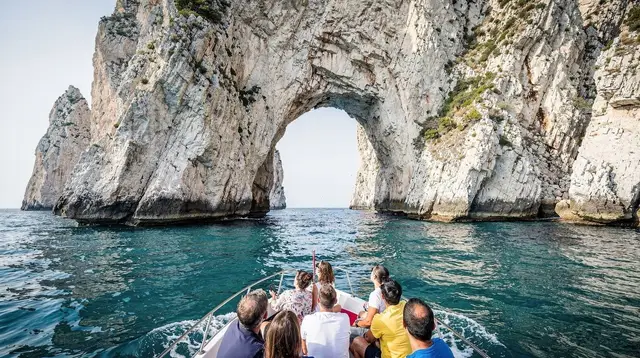
A short boat tour from Amalfi is the single easiest activity to build a family day around. Kids sit in a boat, watch the cliffs, colorful villages, and sea caves slide past, and there’s no walking on uneven cobblestones or steep staircases involved. For a private, kid-paced version with drinks included, an Amalfi Coast and Capri private family boat tour with drinks on board lets you set the pace and skip the queues of a group departure. If you’d rather stay closer to shore for a shorter outing, see this guide to boat tours from Amalfi for more options by length and route.
The Capri Funicular
The short funicular ride from Marina Grande up to Capri town is a reliable hit with kids: it’s brief, visibly climbs the cliff, and delivers a dramatic view at the top without requiring any hiking. It pairs naturally with a relaxed walk through Capri town’s pedestrian lanes, which are flat and stroller-manageable once you’re up top. Reaching Anacapri afterward means a separate bus or chairlift connection up Monte Solaro, which is a nice add-on for slightly older kids but optional with toddlers in the group.
Sheltered-Cove Kayaking
Guided kayak trips that stick to calm, sheltered coves near Amalfi and Conca dei Marini are far more forgiving than open-water paddling, with short distances and minimal current. An Amalfi Coast kayak tour through the coves works well for children who are old enough to sit steady and wear a life vest, generally from around six or seven depending on the operator’s own age policy. For families who’d rather paddle at their own pace without a group, a standalone SUP or kayak rental is worth checking directly with a local outfitter near the marina.
Slow-Paced Village Time
Not every activity needs to be an excursion. Wandering the flat lanes of Atrani, the coast’s smallest and quietest village, or letting kids explore the little squares of Minori and Maiori, which have some of the coast’s flattest, most stroller-friendly waterfronts, gives young children a break from car seats and boat seats alike.
What to Skip With Young Kids
The Path of the Gods (Sentiero degli Dei) is the activity most likely to disappoint families who don’t realize what it actually involves. This is a multi-hour ridge-line trail between Bomerano/Agerola and Nocelle/Positano, with real elevation change, exposed drop-offs in places, and long stretches without shade. It is not a short scenic overlook walk, it is not stroller-compatible, and it is a poor match for toddlers or children who tire quickly on foot. Save it for a trip without young kids, or a day when grandparents or a babysitting arrangement lets the adults hike alone.
Similarly, Villa Cimbrone and Villa Rufolo in Ravello are beautiful but reached by fairly steep pedestrian approaches from where cars and buses can park, since Ravello itself sits roughly 350 meters above sea level with no beach of its own. They’re doable with kids in a carrier or a sturdy stroller pushed carefully, but budget extra time and expect some uphill walking either way.
Getting Around: Why the SS163 Is Harder Than It Looks
Families planning to rent a car often underestimate the SS163, the coast’s single road connecting every village. It’s narrow, cut into the cliffside, full of switchbacks, and in high season it moves at a crawl through village centers with buses, delivery vans, and scooters all sharing the same lane width. A drive that looks like twenty minutes on a map can easily take three times as long, and stop-and-go movement on a winding road is a rough combination for carsick-prone toddlers.
Seasonal ferries between the villages, Capri, Naples, and Sorrento are often the more comfortable choice for families in season: kids can move around on deck, the ride is smoother than a bus stuck in coastal traffic, and there’s a view for the whole ride. The catch is that ferry schedules are genuinely seasonal, dense from roughly Easter through October and considerably reduced or suspended over winter, so never treat ferry service as a year-round guarantee when planning a trip outside high season. For a full rundown of your options, see this guide to getting around without a car and the SITA bus guide for the alternative when ferries aren’t running.
Keeping the Coast and Day Trips Separate
One planning mistake families make repeatedly is trying to combine the coast’s own activities with a distant day trip in the same day. Naples, Pompeii and Herculaneum, and even Capri from a coastal base each involve a transfer of an hour or more each way, whether by ferry, train, or bus. Layering a boat trip from Amalfi in the morning and a Pompeii visit in the afternoon usually means a rushed, exhausting day for adults and an overtired, cranky one for young kids.
It helps to think of the coast in two separate buckets. The coast itself, meaning Amalfi, Positano, Ravello, Praiano, Minori, Maiori, Atrani, and the sheltered water around them, is where the boat trips, kayaking, and village wandering above all happen. Day trips to Naples, Pompeii, Herculaneum, Vesuvius, Paestum, or Capri are their own separate outings, each deserving its own full day rather than a rushed half-day tacked onto something else. A useful reference for splitting these is this guide to Pompeii day trips from the Amalfi Coast, which lays out realistic transfer times.
Comparing the Main Family-Friendly Activities
| Activity | Typical duration | Terrain difficulty | Best age range |
|---|---|---|---|
| Boat tour from Amalfi | 2–4 hours | Very easy (seated) | All ages |
| Capri funicular + town walk | Half day | Easy, mostly flat | All ages |
| Sheltered-cove kayaking | 1–2 hours | Easy, calm water | ~6+ |
| Village wandering (Atrani, Minori) | 1–2 hours | Easy to moderate | All ages |
| Ravello villas | Half day | Moderate (uphill approach) | 4+ |
| Path of the Gods hike | 4–6 hours | Difficult, exposed | Not recommended for young kids |
Choosing a Base With Kids
Where you sleep matters more with young children than on a trip without them, since it sets how much stair-climbing and winding road you deal with every single day rather than just once. Clifftop towns like Positano and Ravello are beautiful but often mean long staircases between the road, your accommodation, and the water, which gets old fast with a stroller or a tired toddler in your arms. Villages with flatter waterfronts, particularly Minori and Maiori, tend to be easier day to day: shorter walks from where you’re staying to the water, and less up-and-down than the coast’s steeper towns.
Basing in Sorrento instead of on the coast itself is another option many families choose, trading a short daily transfer for flatter streets, a train connection to Naples, and generally easier logistics; this comparison of Sorrento versus the Amalfi Coast for where to stay walks through the trade-offs in more detail. Whichever base you pick, this where-to-stay guide breaks down the coast’s villages by what each one actually suits.
Best Time of Year to Bring Young Kids
Timing changes the experience for families more than almost any other single decision. August is the coast’s busiest and hottest month, with crowded beaches, packed ferries, and a slow-moving SS163 that turns short drives into long ones; it’s workable with kids but requires patience and early starts to beat the worst of the heat and the queues. May tends to be gentler: warm enough for boats and sheltered-water activities, without the peak-season crush, and the guide to visiting in May covers what that shoulder-season timing looks like in practice. Whatever month you’re weighing, the month-by-month weather guide is worth checking before booking, since sea temperature and daylight hours both affect how much a young child can comfortably do outdoors each day, and the August guide is useful if that’s the only window your family has.
What to Pack for Young Kids
A few packing choices make a real difference on this particular coast. Water shoes matter more here than on a soft-sand beach vacation, since so many coves are pebble or coarse volcanic sand that’s uncomfortable for bare feet. A sturdy, compact stroller travels better than a bulky one given the narrow lanes, staircases, and boat boarding involved in a typical day, and a carrier is worth having as a backup for the steeper approaches to places like Ravello’s villas. Motion-sickness remedies are worth packing too, given how much winding road and boat movement a coast day can involve. The full Amalfi Coast packing list covers the rest of what’s worth bringing, beyond the family-specific items above.
A Simple Two-Day Family Rhythm
For a coast-only stretch with young children, a workable rhythm is a boat morning one day, using either the private family tour or a shorter group departure from Amalfi, followed by an easy village afternoon in Atrani or Minori. On the second day, take the funicular up in Capri for a scenic, low-effort outing, saving longer hikes and distant excursions like Pompeii or Vesuvius for a trip without toddlers, or for a day when older kids and adults can split off separately. If you want a more detailed day-by-day structure, this Amalfi Coast with kids itinerary builds on the same logic across a full week.
For families weighing whether the coast fits their travel style at all, an Amalfi Coast sightseeing tour by bus or a slower-paced Amalfi Coast bus tour along the coastal road can be a useful low-commitment way to see several villages in one day before deciding where to base yourselves for longer. And if a private, kid-paced approach across multiple stops sounds better than a fixed group schedule, a private Amalfi Coast tour lets you skip the parts that won’t suit young children and linger where they’re happiest.
Frequently Asked Questions About Family Activities on the Amalfi Coast
Are there sandy beaches on the Amalfi Coast for kids?
Not white sand in the Caribbean sense. Most coves are pebble or coarse, dark volcanic sand, and the best-equipped stretches in Positano (Spiaggia Grande, Fornillo) are largely paid lidos with sunbeds, umbrellas, and shallow entry points that suit toddlers.
What is the easiest boat activity for young children?
A short private or small-group boat tour from Amalfi is the most forgiving option: kids sit, watch the coastline and grottoes go by, and there is no walking on uneven terrain involved.
Can toddlers do the Path of the Gods hike?
No. The Sentiero degli Dei is a multi-hour ridge-line trail with drop-offs and no shade for long stretches; it is not stroller-friendly and is a poor fit for young children.
Is kayaking safe for kids on the Amalfi Coast?
Guided kayak tours generally stick to sheltered coves near Amalfi and Conca dei Marini with calm water and short paddling distances, which makes them workable for children old enough to sit still and wear a life vest, typically from around age six or seven depending on the operator.
Should we rent a car with young kids on the Amalfi Coast?
Most families are better off without one. The SS163 is narrow, congested in summer, and involves frequent stop-and-go traffic through village centers, which is harder on carsick-prone toddlers than a ferry ride or a SITA bus with sea views.
Can we visit Pompeii and the Amalfi Coast in the same day with kids?
Not comfortably. Pompeii, Naples, and Capri are separate day trips from the coast itself, each requiring transfers of an hour or more; combining the coast’s own activities with a distant excursion in one day usually means a rushed, overtired day for young children.
Is Capri a good day trip for families?
Yes, in a scaled-down form: the Marina Grande funicular up to Capri town is short, scenic, and popular with kids, but the Blue Grotto and longer boat circuits around the Faraglioni depend on sea conditions and queues, so keep expectations flexible.
What is the easiest way to move between Amalfi Coast villages with a stroller?
Seasonal ferries are generally easier than the SITA bus or a rental car, since they avoid the SS163’s tight switchbacks and let kids move around and see the coastline instead of being buckled into a winding, stop-and-go ride.
When is the best time to visit the Amalfi Coast with young kids?
Late spring (May) and early autumn generally work better for families than peak August, since the heat is milder, the SS163 and ferries are less congested, and toddlers tolerate the slower village pace more easily outside the busiest weeks.
Where should families base themselves on the Amalfi Coast?
Villages with flatter waterfronts and easy ferry or bus access, such as Minori, Maiori, or Sorrento just outside the coast itself, tend to be more manageable for families than clifftop towns with long staircases between the road and the sea.
Family-Friendly Tours on the Amalfi Coast on GetYourGuide
Verified deep-linked GetYourGuide tours. Book through these links and we earn a small commission at no cost to you.
GetYourGuide does not provide a product photo for this activity — the image shows the meeting point, photographed by us.
Capri by Yacht from Marina di Stabia Mochi Craft 33 8 Person Maximum

Private Cruise from Naples to Capri and Amalfi Coast - yacht 50'