Amalfi Coast with Kids: What Families Should Know Before Booking
Is the Amalfi Coast a good destination for families with young children?
Yes, but with adjusted expectations: Positano and Amalfi are built on cliffs with stepped lanes that are hard on strollers, beaches are pebble or coarse sand rather than fine sand, and the SS163 coastal road is winding enough that ferries are often the more comfortable way to move between towns with young kids.
Cliffs, Stairs, and Stone Coves: The Honest Picture
Parents researching the Amalfi Coast often picture gentle seaside towns with flat promenades and sandy beaches. That is not quite what is waiting on this stretch of the Campania coastline, and setting expectations correctly before you book makes the difference between a trip that feels magical and one that feels like a daily obstacle course with a stroller.
The truth is simpler than it sounds: the Amalfi Coast is one of the most beautiful regions in Italy for a family trip, but it rewards families who travel light, walk comfortably with kids on uneven terrain, and plan transport around ferries and buses rather than a rental car. This guide walks through what actually works, town by town, so you can build an itinerary that matches how your family really travels.
Positano and Amalfi Are Built on a Cliff, Not a Flat Seafront
Both Positano and Amalfi are stacked vertically against the cliffside, and their centers are connected by narrow stepped lanes rather than level sidewalks. In Positano especially, getting from a hillside hotel down to the main beach, Spiaggia Grande, can mean several hundred steps each way. There is a local shuttle bus that runs the main switchback road, but it does not eliminate the stairs entirely, since many hotels and vacation rentals are only reachable on foot via steps from the nearest bus stop.
For families with a baby or toddler, this generally means:
- A soft carrier or a compact, foldable stroller works far better than a full-size pram, since you may need to lift it over steps or squeeze through narrow passages.
- Book accommodation as close to the main pedestrian route or bus stop as the budget allows, and read reviews specifically for mentions of stairs.
- Budget extra time for anything involving a walk between your accommodation and the waterfront; a ten-minute walk on a map can become thirty minutes with young children on stairs.
Amalfi’s town center is comparatively flatter than Positano’s once you are down at sea level, which is one reason many families choose it as a base — see our comparison of where to stay for more on this trade-off.
Ravello’s Elevation Means a Real Climb to the Sea
Ravello sits roughly 350 meters above the coastline, perched on a ridge with sweeping views rather than direct beach access. It is a wonderful stop for its gardens and quiet piazzas, but families expecting to walk down to the water for an afternoon swim should know this is not a short stroll. Reaching the sea means descending to Amalfi or Minori, usually by road, bus, or a long staircase path, and then making the same climb back up later, tired, sandy, and likely carrying a sleeping toddler.
Ravello works well as a day-trip destination from a coastal base, or as an overnight stop for families prioritizing scenery and calm over swimming access. It is not the right base if a beach every day is the plan.
What the Beaches Are Actually Like
This is one of the most common surprises for first-time family visitors. Amalfi Coast beaches are coves of pebbles or coarse sand, not the fine white sand many people associate with Mediterranean postcards. Little feet may need water shoes, and building sandcastles is mostly out unless you head to specific stretches with finer sand.
The upside is that the best-known beaches, like Spiaggia Grande in Positano, are largely organized paid lidos. For many families, this is actually reassuring rather than disappointing: a lido typically rents sun loungers and umbrellas, often has a snack bar, restrooms, and sometimes a roped-off shallow swimming area, which removes a lot of the logistics of hauling gear down hundreds of steps. Free stretches of beach exist too, but they tend to have less shade, no facilities, and can fill up fast in July and August.
| Beach type | What to expect | Best for |
|---|---|---|
| Paid lido (e.g. Spiaggia Grande) | Loungers, umbrellas, snack bar, restrooms | Families wanting convenience and shade |
| Free public stretch | No facilities, first-come basis, often pebbly | Short visits, budget-conscious families |
| Boat-access cove | Reached only by boat tour or rental | Older kids, calmer water, novelty factor |
For a deeper breakdown by town, see our Positano beaches guide and the coverage in things to do for families.
Getting Around: Why the SS163 Can Be Rough on Young Kids
The coastal road, the SS163, is narrow, cliff-hugging, and full of hairpin turns, with traffic that can crawl to a standstill in peak summer. It is not a relaxed scenic drive with children in the back seat; motion sickness is a real and common complaint on the switchbacks between towns, and traffic congestion means a supposedly short 20-minute hop can take over an hour in August.
Most families do better relying on:
- Ferries between Sorrento, Positano, Amalfi, and Capri in season — steadier than a winding road, and kids generally enjoy the open-deck views far more than a car ride. See our ferry guide for routes and timing.
- SITA buses, which are cheaper than taxis and run along the coast road, though they share the same winding route and can still be uncomfortable for a child prone to car sickness.
- Private transport with a driver, useful for transfers with luggage, strollers, and tired kids, without needing to navigate parking or the ZTL restrictions active in Amalfi, Positano, and Ravello during high season.
If a full day of moving between towns and swimming spots sounds appealing without renting a car, an eight-hour private transport tour along the coast takes the road logistics off your hands entirely.
For families weighing whether to rent a car at all, our guide to visiting without a car and the SS163 driving guide both go into more detail on why most visitors skip it.
Boats and Ferries: Often the Family-Friendly Choice
Because the coast road is so demanding, many families end up preferring boats for both transport and entertainment. A short ferry hop or a relaxed cruise along the coastline lets kids watch the cliffside towns from the water, which tends to hold their attention far better than a car seat on switchbacks.
A gentle option worth considering is a mini-cruise along the coast that includes a limoncello tasting for the adults while kids enjoy the views and the open water. For families who want more flexibility to stop at their own pace, a self-drive boat rental that requires no license lets you choose a quieter cove for swimming away from crowded lidos, though this suits families with older, more confident swimmers rather than toddlers.
If your family also wants to combine transport with sightseeing, a train-and-ferry day combining an audio guide is a lower-effort way to see multiple towns in a single day without driving.
Day Trips: Vesuvius, Pompeii, and What to Expect With Kids
Excursions to Naples, Pompeii and Herculaneum, and Mount Vesuvius are popular add-ons, but each has its own logistics worth knowing before booking with children.
Mount Vesuvius is an active volcano under permanent monitoring, and visitor access is limited to a numbered-ticket path around the crater rim — there is no access to the crater floor and no unrestricted wandering. The walk up is on loose volcanic gravel and takes roughly 45 minutes to an hour at a family pace, uphill both ways. This suits school-age kids who can manage a real hike comfortably, but it is a tough outing for toddlers or kids who tire quickly of walking, and strollers are not practical on the path. Our Vesuvius crater hike guide covers ticket numbers and timing in detail.
Pompeii and Herculaneum are two separate archaeological sites, destroyed by different volcanic mechanisms, and both involve a lot of walking on uneven ancient stone across a large, largely shadeless site — sun protection and a good water supply matter more than for almost any other excursion on this list. A guided option that also folds in Amalfi Coast sightseeing, such as a combined Naples, Pompeii, and Amalfi Coast tour with a guide, can help keep young children engaged since a guide can narrate the story rather than leaving kids to read information panels.
Building a Family-Friendly Base and Itinerary
Where you base yourselves matters more here than in most destinations, because moving between towns takes real planning around stairs, ferries, and road traffic. Families often do best choosing one base for several nights rather than changing hotels every one or two days.
- Sorrento is frequently the easiest base for families: flatter streets than Positano or Amalfi, a train connection to Naples and Pompeii via the Circumvesuviana, and easy ferry access to Capri and the coast towns. See the Sorrento destination guide for specifics.
- Amalfi town offers a relatively flat center at sea level, direct beach access, and a central position for day trips by ferry or bus.
- Minori and Maiori, just past Amalfi, have longer, gentler beaches and a quieter pace, which some families with young children prefer over the more crowded Positano waterfront.
For a full day-by-day framework, our Amalfi Coast with kids itinerary lays out pacing options for different age groups, and the packing list guide covers what actually earns its space in the suitcase for this specific terrain — think water shoes and a compact stroller rather than a beach umbrella and full-size pram.
If mobility is a concern for any member of the family, whether due to a stroller, a wheelchair, or simply tired legs after a long travel day, it is worth reading our dedicated accessibility guide before finalizing a base, since the stepped lanes described above affect wheelchairs and strollers in similar ways.
When to Visit With Young Children
Shoulder season — May, June, or September into early October — tends to suit families better than the July-to-August peak. Ferries and buses still run frequently, but towns are less crowded, midday heat is more manageable for kids walking on stone lanes, and lidos and restaurants are easier to book without a long wait. Late July and August bring the heaviest crowds, the most SS163 traffic, and the highest heat, which is a tougher combination for young children than for adult travelers.
Frequently Asked Questions About Visiting the Amalfi Coast With Kids
Is Positano stroller-friendly?
Not really. Positano’s center is built on a steep hillside connected by staircases and narrow stepped lanes, so a lightweight carrier or a compact stroller you can lift works far better than a full-size pram.
Are Amalfi Coast beaches good for young children?
They are usable but different from what many families expect: most coves are pebble or coarse sand rather than fine sand. Paid lidos like Spiaggia Grande in Positano rent loungers, umbrellas, and sometimes shallow swimming areas, which many parents find easier to manage than a free, unequipped cove.
Should we rent a car on the Amalfi Coast with kids?
Most families are more comfortable without one. The SS163 is a narrow, winding cliff road with tight hairpin turns, and long stretches of it can trigger motion sickness in young children. Buses and ferries are the more common way locals and visitors get around.
Can young children visit Mount Vesuvius?
Yes, but access is limited to a numbered-ticket path around the crater rim, not the crater floor, and involves a steady uphill walk on loose volcanic gravel, so it suits kids who can walk 45 minutes to an hour on uneven ground rather than toddlers in strollers.
Is Ravello a good base for a family with small children?
Ravello sits around 350 meters above sea level, so reaching the water in Amalfi or Minori means a steep descent and an equally steep return, usually by road or bus rather than on foot. It suits families who want quiet and views more than easy beach access.
Is the ferry a good option for traveling with kids on the Amalfi Coast?
In season, yes. Ferries between Sorrento, Positano, Amalfi, and Capri are generally steadier than winding bus or car rides and give kids open-deck views of the coastline, though schedules thin out considerably outside the Easter-to-October season.
How many days should a family plan for the Amalfi Coast?
Most families do well with five to seven days, which allows slower mornings, one or two beach or boat days, and enough slack to skip a hike or excursion if a child is tired, rather than a packed day-trip itinerary.
Family-Friendly Tours on the Amalfi Coast on GetYourGuide
Verified deep-linked GetYourGuide tours. Book through these links and we earn a small commission at no cost to you.
GetYourGuide does not provide a product photo for this activity — the image shows the meeting point, photographed by us.
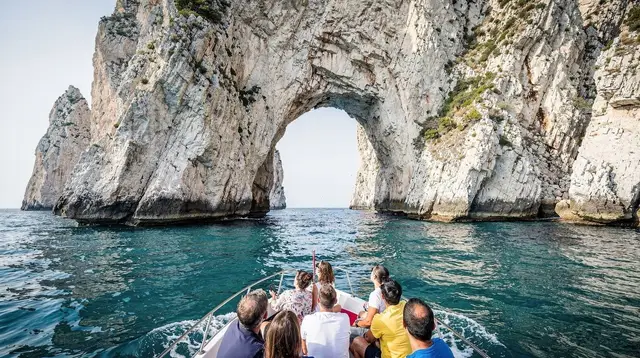
Capri by Yacht from Marina di Stabia Mochi Craft 33 8 Person Maximum

Private Cruise from Naples to Capri and Amalfi Coast - yacht 50'