Sorrento or the Amalfi Coast: Where Should You Stay?
Should I stay in Sorrento or on the Amalfi Coast?
Sorrento is the only town in the area connected to Naples by train (the Circumvesuviana), making it a practical base for Pompeii, Herculaneum, and Capri. The Amalfi Coast towns like Positano, Amalfi, and Ravello are more immersive but depend entirely on SITA buses and seasonal ferries, since none of them have a train station.
Two Different Bases, Two Different Trips
Anyone planning a trip to this part of Southern Italy eventually hits the same question: stay in Sorrento, or stay directly on the Amalfi Coast in a town like Positano or Amalfi? It sounds like a small logistics choice, but it shapes almost everything about the trip — how you get around, what you can do without much planning, and what kind of evenings you end up having.
The short version is that these are two different bases with two different personalities. Sorrento is a transport hub. The Amalfi Coast is a string of villages that reward slowing down. Neither is objectively “better” — the right answer depends on what you’re prioritizing.
Before comparing the two in detail, it helps to be clear about what each option actually means in practice. “Staying in Sorrento” means a single hotel base on the Sorrentine Peninsula, with day trips out to the Amalfi Coast villages, Capri, and the archaeological sites near Naples. “Staying on the Amalfi Coast” means picking one (or two) of the coastal villages — Positano, Amalfi, Ravello, or a quieter option like Praiano or Minori — and building the trip around that base instead, with Sorrento itself becoming a transit point rather than a destination.
Sorrento Is Not on the Amalfi Coast
This is worth stating plainly, because the confusion is common. Sorrento sits on the Sorrentine Peninsula, a separate geographic feature that divides the Bay of Naples from the Amalfi Coast. The Amalfi Coast itself begins on the far side of that peninsula, running roughly from Positano to Vietri sul Mare.
You can see Sorrento as the gateway town — well connected to Naples, close to Capri, and a short (if indirect) hop from the Amalfi Coast proper. But staying “in Sorrento” and staying “on the Amalfi Coast” are genuinely different bases, not two names for the same place.
The Case for Sorrento: Logistics
Sorrento’s biggest advantage is one specific fact: it’s the only town in the whole area served by a train line, the Circumvesuviana, which runs directly to Naples. That single detail changes a lot.
From a Sorrento base, you can reach several major sights without relying on a bus schedule or a seasonal boat:
- Pompeii and Herculaneum are both stops on the same Circumvesuviana line. See our Pompeii ruins guide and the comparison of Herculaneum vs Pompeii if you’re deciding how to split your time between the two.
- Naples itself is reachable by the same train, useful for a day trip to Naples from Sorrento to see the historic center or the archaeological museum.
- Capri is a short ferry ride away, generally faster and cheaper from Sorrento than from Amalfi Coast towns — see our day trip to Capri from Sorrento.
This is why Sorrento works well as a base for travelers who want to combine the Amalfi Coast with the archaeological sites and Capri in one trip, without depending entirely on SITA buses or the ferry timetable for every move. If you want the fuller regional picture, our guide on Naples to Sorrento transport walks through the options in more detail.
Sorrento also tends to have a wider range of accommodation prices, a livelier and more consistent nightlife scene around its old town, and services that run somewhat later into the evening than the smaller Amalfi Coast villages.
The Case for the Amalfi Coast: Atmosphere
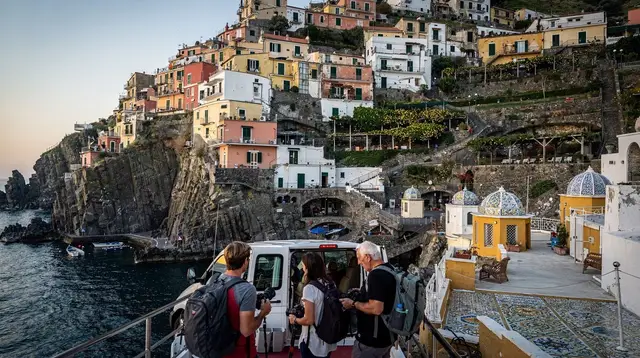
Stay in Positano, Amalfi, or Ravello, and the trade-off flips. You give up the train connection and the easy Naples-Pompeii-Capri triangle, and in exchange you get to wake up in the villages that most people picture when they imagine this coastline: cliffside houses, lemon terraces, a harbor a short walk from your room.
The cost is that everything runs on SITA buses and seasonal ferries. There is no train station in Positano, Amalfi, Ravello, Praiano, or any other Amalfi Coast town — the nearest stations are in Salerno or Sorrento, and you connect from there. Our SITA bus guide and ferries guide cover how these connections actually work in practice, including why ferry schedules shrink sharply outside the April-to-October season.
Driving yourself is possible but rarely the easy option. The SS163 coastal road is narrow and winding, with ZTL traffic restrictions active in Amalfi, Positano, and Ravello during high season, plus heavy congestion in July and August. Most visitors who stay on the Amalfi Coast rely on the same buses and boats as everyone else, or book a private driver for specific transfers.
For a closer look at the villages themselves, see our comparisons of Positano vs Amalfi and Ravello vs Positano, which go deeper into the character of each town.
Comparing the Two Bases Directly
| Sorrento | Amalfi Coast towns (Positano, Amalfi, Ravello) | |
|---|---|---|
| Train from Naples | Yes, via Circumvesuviana | No, none of these towns have a station |
| Access to Pompeii/Herculaneum | Direct, same train line | Requires a bus or ferry connection first |
| Access to Capri | Short, frequent ferries | Longer, fewer seasonal connections |
| Local transport | Walkable town, buses to peninsula sights | SITA bus and ferry for nearly everything |
| Atmosphere | Larger town, more year-round activity | Smaller villages, cliffside and seasonal |
| Nightlife | More options, later hours | Limited, mostly summer-driven |
| Winter services | More consistent | Many businesses and boats close or reduce hours |
Getting to Either Base From Naples Airport
Whichever base you choose, the trip usually starts at Naples airport, and the onward journey looks different depending on where you’re headed. Sorrento benefits from being on the Circumvesuviana line, so once you’ve made your way into Naples, the connection is a single train ride with no further transfers needed. Reaching an Amalfi Coast town directly from the airport is a longer trip, typically involving a transfer at Naples or Salerno followed by a SITA bus or, in season, a ferry. Our guide to getting from Naples airport to the Amalfi Coast breaks down the realistic options and approximate journey times for both routes, which is worth reading before you book arrival transport for either base.
This is one of the more overlooked practical differences between the two options. A late flight arrival makes a Sorrento base considerably less stressful, since the train keeps running into the evening and the town itself has more late-arrival infrastructure — restaurants, taxis, and reception desks that expect guests to show up at odd hours. Arriving late to a smaller Amalfi Coast village can mean a last SITA bus already gone, pushing you toward a private transfer instead.
Traveling With Kids or as a Family
Families weighing Sorrento against the Amalfi Coast are really weighing two different kinds of days. Sorrento’s flatter old town, wider selection of family-friendly restaurants, and direct train access to Pompeii and Herculaneum make it easier to fill days without long transfers eating into nap times or attention spans. Our guide to Amalfi Coast with kids and the broader roundup of family activities along the Amalfi Coast both cover this in more depth, including which villages tend to work better for younger children.
The Amalfi Coast towns themselves are not off-limits for families — Minori and Maiori in particular have flatter waterfronts and calmer beaches than the cliffside drama of Positano — but the SS163’s hairpin turns and the stairs built into towns like Positano and Ravello are worth factoring in if you’re traveling with a stroller or with kids prone to car sickness on winding roads.
Budget Considerations Beyond the Room Rate
Room rates are only part of the cost comparison. A Sorrento base tends to lower the total transport bill, since the Circumvesuviana is inexpensive relative to a taxi or private driver, and it reaches Pompeii, Herculaneum, and Naples without any extra connection. Staying on the Amalfi Coast usually means budgeting more for SITA bus tickets, ferry fares in season, or the occasional private driver when the bus schedule doesn’t line up with your plans. Our Amalfi Coast budget guide walks through typical costs for transport, food, and activities across the region, which is a useful cross-check regardless of which base you end up choosing.
Seasonality also affects the comparison. Peak summer pushes Positano and Ravello accommodation prices well above Sorrento’s, partly because the pool of hotels in the smaller villages is simply smaller and demand doesn’t ease off the way it does in a larger town. Outside the June-to-September window, that price gap narrows considerably.
A Third Option: Splitting Your Stay
Given how different these two bases are, many travelers don’t choose one over the other — they do both. A common pattern is a few nights in Sorrento to handle Pompeii, Herculaneum, and a Capri day trip, followed by a few nights in Positano or Amalfi for a slower stretch focused on the villages themselves. If your schedule allows it, our Amalfi Coast in 5 days itinerary sketches out roughly this kind of split.
For a shorter trip, the same logic still applies on a smaller scale: a couple of nights in Sorrento at the start or end of the trip, paired with the rest of the stay on the coast itself. Our Amalfi Coast in 3 days itinerary shows how tight this can get if time is limited, while Amalfi Coast in a week has enough slack to add a second Amalfi Coast village on top of the Sorrento nights. The main cost of splitting your stay is the packing and unpacking involved in changing hotels mid-trip — for trips shorter than about four or five nights total, most travelers find it simpler to just pick one base and day-trip from there instead.
This is also where guided day trips can bridge the gap without requiring you to manage bus and ferry timetables yourself. A tour like the Amalfi Coast day trip from Sorrento covers several villages in a single day if you’re based in Sorrento but want a proper look at the coast. For a more flexible pace, a private tour of the Amalfi Coast departing from Sorrento lets you set the stops and timing yourself.
Travelers who want to see the coastline from the water rather than the winding SS163 can also book a private boat trip along the Amalfi Coast from Sorrento, which avoids the road traffic entirely and adds swimming stops that a bus itinerary can’t offer. For those staying longer, a private day trip to the Amalfi Coast from Sorrento is a flexible way to combine several villages without committing to a full relocation of your hotel base.
Which One Fits Your Trip?
There isn’t a universal right answer here, and any guide that tells you otherwise is oversimplifying a real trade-off.
Choose Sorrento if:
- You want to combine the Amalfi Coast with Pompeii, Herculaneum, Naples, and Capri in one trip.
- You’d rather not depend entirely on SITA buses or seasonal ferries for every single day.
- You prefer a slightly larger town with more restaurant and nightlife variety.
- You’re traveling in the shoulder season, when Amalfi Coast ferry schedules thin out considerably.
Choose the Amalfi Coast (Positano, Amalfi, Ravello, or a smaller village like Praiano or Minori) if:
- The cliffside villages themselves are the main reason for the trip, not a side excursion.
- You don’t mind planning around bus and ferry timetables, or you’re comfortable booking private transfers.
- You want to wake up somewhere with the classic Amalfi Coast view, rather than seeing it on a day trip.
- You’re visiting in peak summer and want to avoid the SS163 traffic that day-trippers face driving in and out.
Whichever base you pick, it helps to check when to visit the Amalfi Coast first, since ferry frequency and SITA bus capacity both shift significantly between April and October compared to the rest of the year. And if getting around without a rental car is a priority regardless of where you sleep, our guide to the Amalfi Coast without a car applies to both Sorrento-based and Amalfi Coast-based stays.
For a broader look at options beyond just these two areas, travelers sometimes also weigh Capri vs Ischia as an alternative base, though that’s a different comparison from the Sorrento-versus-Amalfi-Coast question this page addresses.
Best Amalfi Coast Tours on GetYourGuide
Verified deep-linked GetYourGuide tours. Book through these links and we earn a small commission at no cost to you.
GetYourGuide does not provide a product photo for this activity — the image shows the meeting point, photographed by us.