Positano vs Amalfi: Which One Should You Choose?
Is Positano or Amalfi better to visit?
Positano suits travelers who want dramatic views, boutique lidos and easy access to hiking trails like the Path of the Gods. Amalfi suits travelers who want a walkable historic center, a cathedral, paper-making heritage and a slightly calmer pace. Neither has a train station, and both get very crowded between Easter and late October.
Two Towns, Two Very Different Amalfi Coast Experiences
Travelers planning a trip to the Amalfi Coast often assume Positano and Amalfi are interchangeable stops on the same itinerary. They are not. Each town has a different relationship with the sea, a different center of gravity, and a different reason travelers fall in love with it. Choosing between them — or deciding how to split time — comes down to what you actually want from a coastal stay: a dramatic photo backdrop and boutique beach clubs, or a walkable historic town with a cathedral and centuries of maritime history.
This guide compares the two directly: beaches, town character, access, crowds, and who each town suits best. If you are still deciding how many days to spend on the coast overall, see how many days you need on the Amalfi Coast before locking in a base.
Beaches: Positano’s Lidos vs Amalfi’s Smaller Shoreline
Positano’s beaches are its calling card, but they are not the soft, free, sandy stretches many first-time visitors picture. Positano’s beaches, Spiaggia Grande and Fornillo, are made of coarse sand and pebbles, and most of the usable shoreline is divided into paid lidos with sunbed and umbrella rentals. Free public sections exist, but they shrink fast in July and August, and parking near either beach in high season is close to impossible.
Amalfi’s town beach is more modest in size and setting. It sits directly below the historic center rather than framing dramatic cliffside views, and it follows the same paid-lido pattern as Positano, with a comparable but smaller share of free sand. Neither town offers a Caribbean-style white-sand experience, and neither should be the deciding factor if beach quality alone is your priority — for that comparison in a wider frame, see is the Amalfi Coast worth it for realistic expectations.
| Feature | Positano | Amalfi |
|---|---|---|
| Main beaches | Spiaggia Grande, Fornillo | Marina Grande (town beach) |
| Beach surface | Coarse sand and pebbles | Coarse sand and pebbles |
| Paid lido share | High, especially July–August | High, similar proportion |
| Free public sections | Limited, shrink in high season | Limited, smaller overall beach |
| Parking near beach | Very difficult in high season | Very difficult in high season |
Village Life: Amalfi’s Cathedral and Paper Heritage vs Positano’s Views
This is where the two towns diverge most. Amalfi was once one of the four maritime republics of medieval Italy, alongside Venice, Genoa and Pisa, and its historic center still carries that weight. The Amalfi Cathedral (Duomo di Amalfi) anchors the main square, and the town is also home to the Museo della Carta, tied to Amalfi’s centuries-old tradition of handmade paper, known locally as carta bambagina. This craft belongs specifically to Amalfi — it is not something Positano shares, despite the two towns sitting only a short boat ride apart.
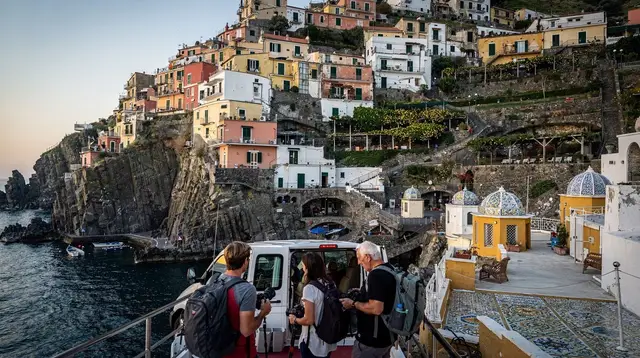
Positano has no equivalent civic or craft heritage of this depth. Its identity is built around cliffside architecture, pastel-colored houses stacked above the sea, boutique shopping, and the views that make it one of the most photographed towns on the coast. A stroll through Positano’s photo spots confirms why it draws so many visitors purely for the view, while a walk through Amalfi’s historic center reveals a town built more for lingering in piazzas, visiting a cathedral, and browsing shops tied to local craft than for chasing a single iconic shot.
Amalfi’s center is also larger and easier to navigate. Positano is famously vertical: its main pedestrian route drops in a long, stepped descent from the upper town to the harbor, which means every trip back up is a real climb. Travelers with mobility concerns or those simply not interested in constant stairs often find Amalfi’s flatter layout more comfortable — a point covered in more detail in the wheelchair accessibility guide for the coast generally.
Getting There: Neither Town Has a Train Station
This is one of the most commonly misunderstood facts about the Amalfi Coast, and it applies equally to both towns. Positano and Amalfi have no railway station of their own — there is, in fact, no train line anywhere along the coastal strip itself. Both towns depend on the same access points: the SITA bus running the SS163 coastal road, and seasonal ferries connecting the coast to Naples, Sorrento and Capri.
The nearest train stations to both towns are in Salerno or Sorrento, and travelers arriving from Naples typically transfer through one of those hubs before continuing by bus or boat — a route detailed in Naples airport to Amalfi Coast transport. Ferries are a comfortable option in summer but should never be treated as a year-round guarantee: schedules thin out drastically or stop altogether in the off-season, a point worth internalizing before building a winter itinerary around boat transfers.
For travelers weighing whether to drive at all, driving the SS163 is worth reading first. The road is a narrow, winding corniche with ZTL traffic restrictions active in Amalfi, Positano and Ravello during high season, and most visitors to both towns rely on bus or boat rather than a rental car.
| Access factor | Positano | Amalfi |
|---|---|---|
| Own train station | No | No |
| Nearest train station | Salerno or Sorrento | Salerno or Sorrento |
| Primary access | SITA bus, seasonal ferry | SITA bus, seasonal ferry |
| Road | SS163, ZTL in high season | SS163, ZTL in high season |
| Parking | Very limited, expensive | Very limited, expensive |
Crowds and High Season: Both Towns Feel the Same Pressure
Neither Positano nor Amalfi offers a crowd-free escape between Easter and late October, and July and August bring the heaviest pressure to both. Expect ZTL restrictions, packed pedestrian lanes, long queues for lidos and restaurants, and parking that ranges from difficult to nonexistent. If avoiding crowds matters more than the choice between these two towns specifically, the guide to avoiding Amalfi Coast crowds and the best time to visit are more useful starting points than picking one town over the other.
Shoulder-season months soften the difference considerably. Visiting in May or in October still gives access to open lidos and running ferries in both towns, with noticeably thinner crowds than the July–August peak. Winter is another story entirely for both: many businesses close, ferry service becomes unreliable, and the atmosphere in Positano and Amalfi alike turns quiet — sometimes too quiet — as covered in the Amalfi Coast in winter guide.
Seeing Both Towns Together
Many travelers do not have to choose exclusively — Positano and Amalfi sit close enough along the coast that combining them in a single boat excursion is one of the most popular ways to experience both without committing a full base to either. A mini-cruise linking Positano and Amalfi by boat covers both towns from the water in a single outing, which also sidesteps the SS163 traffic and ZTL restrictions entirely.
For a more relaxed pace, an Amalfi and Positano boat excursion built around swimming stops and coastal views is a good option for travelers who want the scenery without a packed sightseeing schedule. Those who prefer a guided, small-group approach on land can look at a private tour covering Positano, Amalfi and Ravello in one day, which adds Ravello’s hilltop villas to the comparison. Travelers based in Positano who want Amalfi as a day excursion by sea can also consider a private boat tour from Positano along the Amalfi Coast.
If a full day trip from a different base fits your itinerary better, see the dedicated day trip to Capri from Sorrento guide for a comparable model applied to a different pairing.
Food and Dining: Same Coast, Different Settings
Positano and Amalfi draw on the same regional pantry, but the dining experience in each town feels different because of the setting around it. Amalfi’s restaurants cluster along a flatter historic center and the harborfront, making it easy to wander from the Duomo to a table without tackling a hill. Positano’s dining rooms are stacked along the same vertical lanes that define the town, so a restaurant with a sea view often means climbing steps to reach it and climbing more to leave.
Both towns sit close to some of the coast’s best-known local specialties. Limoncello tasting is available in both, tied to the lemon groves that blanket the hillsides around Sorrento and the coastal terraces further along. Travelers curious about the coast’s savory side rather than its citrus one can look east toward Cetara’s anchovy sauce, colatura di alici, a fermented condiment that shows up on menus across the Amalfi Coast, including in Positano and Amalfi, even though the fishing village itself sits well past Amalfi toward Salerno. Neither town has a monopoly on good food; the difference is mainly how much walking separates you from the table.
Day Trips from Positano or Amalfi
Because neither town has its own train station, both function primarily as boat- and bus-connected bases, which makes them similarly well positioned for day trips rather than one having a clear edge over the other. From either town, Ravello is reachable by SITA bus, and a half-day there covering the Duomo and the cliffside gardens adds the hilltop perspective that neither Positano nor Amalfi can offer from sea level.
Ferries make Capri a realistic day trip from both towns in season, and a one-day itinerary covering Capri’s highlights works whether the boat departs from Positano’s harbor or Amalfi’s. Closer to home, the beach towns of Minori and Maiori sit a short bus or boat ride past Amalfi and offer a longer, sandier shoreline than either Positano or Amalfi itself — a useful option for travelers who chose one town as a base but still want a different kind of beach day. A boat tour departing from Amalfi is another way to see Positano, the Emerald Grotto and the coastline in between without relying on the SS163 at all.
So, Which Should You Choose?
There is no universal winner here, and any guide claiming otherwise is oversimplifying. The right choice depends on what you are optimizing for on this particular trip.
Choose Positano if you want dramatic cliffside views, boutique shopping, easy access to the Path of the Gods hike, and don’t mind stepped lanes and a beach-club-heavy shoreline. It rewards travelers prioritizing scenery and a beach-and-hike combination.
Choose Amalfi if you want a walkable historic center, a cathedral worth visiting, the paper-making heritage found only here, and a base that feels slightly less exclusively photo-driven. It rewards travelers prioritizing town life, culture, and easier walking.
For a wider view of how these two compare against a third common base, Sorrento vs Amalfi Coast for where to stay and Ravello vs Positano round out the picture. And if three or four days allow it, many travelers skip the binary choice altogether and split their stay between both — a structure covered in the Amalfi Coast in 5 days itinerary.
Frequently Asked Questions About Positano vs Amalfi
Which has better beaches, Positano or Amalfi?
Positano’s Spiaggia Grande and Fornillo are more scenic but mostly paid lidos with limited free space. Amalfi’s town beach is smaller and less photogenic, with a similar lido setup and only a modest stretch of free sand.
Does Positano or Amalfi have a train station?
Neither. Both rely on the SITA bus along the SS163 and on seasonal ferries. The nearest train stations are in Salerno or Sorrento.
Which town has more historic sights, Positano or Amalfi?
Amalfi, a former maritime republic, has a larger historic center, a cathedral (Duomo di Amalfi) and the Museo della Carta tied to its paper-making tradition. Positano’s landmarks are fewer and more focused on views and boutiques.
Is Positano or Amalfi easier to walk around?
Amalfi’s center is flatter and easier to navigate on foot. Positano is famously vertical, built on stepped lanes that connect the upper town to the harbor, which suits some travelers and tires out others.
Which is more crowded, Positano or Amalfi?
Both experience heavy high-season pressure between Easter and late October, including ZTL traffic restrictions and near-impossible parking. Neither town is a quiet escape from June through August.
Can I visit both Positano and Amalfi in one day?
Yes, by SITA bus, ferry, or a boat tour that combines both towns along the coast, though a rushed single day leaves little time to see either in depth.
Which is better for a honeymoon, Positano or Amalfi?
Positano tends to draw couples for its cliffside views and boutique hotels, while Amalfi appeals to couples who prefer a livelier town center with dining and cultural sights close by. Both work; the choice depends on preferred pace.
Top-Rated Amalfi Coast Tours on GetYourGuide
Verified deep-linked GetYourGuide tours. Book through these links and we earn a small commission at no cost to you.
GetYourGuide does not provide a product photo for this activity — the image shows the meeting point, photographed by us.