Is the Amalfi Coast Worth It? An Honest Answer
Is the Amalfi Coast worth visiting?
Yes, for cliffside scenery, perched villages, and a UNESCO-listed coastline unlike almost anywhere else in Europe — but it is not a white-sand beach destination, the SS163 gets badly congested in July-August, and no village on the coast has a train station. Visiting in May-June or September, and relying on buses or ferries rather than a rental car, delivers most of the reward with far less friction.
What the reputation gets right, and what it oversells
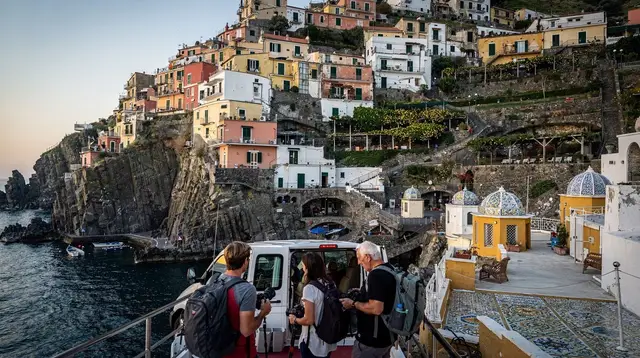
The Amalfi Coast shows up on nearly every “most beautiful coastline” list, and a good part of that reputation is earned. Over roughly 50 km of cliff-hugging shoreline, a string of villages — Amalfi, Positano, Ravello, and smaller stops like Praiano and Conca dei Marini — climb the rock face in stacked terraces of lemon groves, pastel houses, and church domes. The whole stretch is a UNESCO World Heritage site, and the panoramas from the coastal road, from a boat, or from a Ravello garden are genuinely rare: few places in Europe combine dramatic vertical terrain with a warm Mediterranean coastline this closely.
Where the marketing gets ahead of reality is the beach question. Photos crop out the crowds and the concrete lidos, and casual descriptions sometimes imply a Caribbean-style stretch of white sand. That isn’t what’s here. The coves along this coast are mostly pebble or coarse sand, and the better-known beaches in Positano — Spiaggia Grande and Fornillo — are largely occupied by paid lido concessions in high season, with limited free sections and very little free parking nearby. If your image of “worth it” depends on soft sand and open public beach space, temper that expectation before you book.
The honest framing is this: the Amalfi Coast delivers scenery, village character, and a sense of place that is hard to match. It does not deliver an easy, low-friction beach holiday. Whether it’s “worth it” depends heavily on which of those two things you came for — and when you show up.
The real trade-offs: traffic, ZTL, and no trains
The single biggest friction point on this coast is the SS163, the narrow corniche road that links every village from Vietri sul Mare to Positano. It was never built for the volume of traffic it now carries. In July and August, expect slow-moving queues, tour coaches passing each other on hairpin bends, and long waits at pinch points. Layered on top of that, Amalfi, Positano, and Ravello all enforce ZTL zones — restricted traffic areas — during peak season, which limits where private cars and rental vehicles can actually go.
Compounding this: no village on the coast itself has a train station. Amalfi has no railway; neither does Positano, Ravello, or any other coastal town. The nearest stations are Salerno to the east or Sorrento to the west, both reached via a different transport mode than the train that got you to the region. Sorrento connects to Naples by the Circumvesuviana line, but that line runs through Pompei and Herculaneum, not along the coast itself. Getting from Naples or its airport to any Amalfi Coast village therefore always means a transfer — bus, ferry, or private driver — never a direct train.
Prices follow the same seasonal curve as the crowds. Accommodation, ferry tickets, and restaurant menus all climb in July and August, and the gap between shoulder-season and peak-season pricing is often substantial enough to change what a trip actually costs. None of this makes the coast not worth visiting — but it does mean the reward-to-hassle ratio moves a lot depending on when you go and how you get around.
How the season changes the answer
| Season | Crowds & SS163 | Services & ferries | Verdict |
|---|---|---|---|
| July - August | Peak traffic, ZTL fully active, busiest villages | Full ferry schedules, everything open, highest prices | Worth it if you accept congestion and cost |
| May - June, September | Moderate, manageable | Most ferries and shops running, better prices | Best overall balance for most visitors |
| November - March | Very light, easy driving | Many ferries suspended, some shops closed | Peaceful but limited; check openings ahead |
May-June and September tend to offer the best trade-off: warm enough for boat trips and coastal walks, with services and ferries still largely running, but without the bumper-to-bumper SS163 traffic of August. This is also usually the window where accommodation and ferry prices sit meaningfully below peak-season rates.
Winter is a different proposition entirely. From November through March, the coast slows down considerably — some restaurants and shops close for the season, and ferry connections between the villages, Capri, Naples, and Sorrento become sparse or stop altogether. It should never be treated as a guaranteed year-round service. A winter visit can be genuinely rewarding for travelers who want quiet villages and easy driving without ZTL congestion, but it is not the trip to book if you’re expecting boat excursions, beach clubs, or a lively evening scene.
Getting around without adding to the problem
Because the SS163 is the coast’s main bottleneck, how you move through the region does more to shape your experience than almost any other decision. The SITA bus network connects every coastal village and is the transport most locals and repeat visitors actually rely on — it sidesteps the parking shortage and the stress of driving hairpin turns with oncoming coach traffic. Ferries add a second, often more scenic, option in season, linking the coastal towns to each other, to Sorrento, Capri, and Naples — though again, only reliably outside the winter months.
If a rental car still appeals, understand what you’re taking on: narrow lanes, tight switchbacks, ZTL restrictions in the main towns, and parking that ranges from expensive to nonexistent in peak season. Many visitors who drove once choose buses or a private driver on a return trip. For a first-time visit, going car-free genuinely simplifies things rather than limiting them.
For travelers who’d rather not manage bus timetables or ferry schedules themselves, a guided option removes the logistics entirely. A day trip such as this full-day Amalfi Coast sightseeing tour covers several villages with a driver who already knows the ZTL rules and the traffic patterns. Travelers who want a more flexible pace might prefer a private tour of the Amalfi Coast with a dedicated driver, which allows stops to be adjusted on the fly. A simpler, budget-friendly option is a guided Amalfi Coast excursion by bus, which takes the parking and driving decisions off your plate entirely.
How it compares to the alternatives
Part of deciding whether the Amalfi Coast is worth it is knowing what it’s being compared to. It’s frequently mentioned in the same breath as Cinque Terre, Italy’s other famous cliffside coastline, but the two deliver different experiences: Cinque Terre is walkable between villages on marked trails and reachable by a coastal train, while the Amalfi Coast has no railway at all and depends on the SS163, buses, or ferries. Travelers who want hiking between towns without transfers sometimes find Cinque Terre the easier trip; those who want grander scenery, larger towns, and easier access to Naples and Pompeii tend to prefer the Amalfi Coast.
Within the coast itself, the “worth it” question often narrows to which base town to pick. Positano versus Amalfi is the most common version of that debate: Positano is more photogenic and more crowded, Amalfi is more functional with better bus and ferry connections. Ravello versus Positano is a related choice for travelers weighing quiet elevation and garden views against beach-town energy. And for travelers unsure whether to base themselves on the coast at all, Sorrento versus the Amalfi Coast for where to stay is worth reading before booking — Sorrento has the train station and calmer prices, while coastal towns put you closer to the views but deeper into the SS163 traffic.
Is it worth it for families, or on a budget?
The answer shifts again depending on who’s asking. For families, the narrow sidewalks, steep staircased streets, and lack of sandy beaches in most villages can make the coast more demanding than a typical seaside holiday — but family-friendly activities do exist, from boat trips to gelato-stop walking routes, and a dedicated kids’ itinerary can flatten out the logistics considerably. Families who prioritize an easy, flat beach day may be happier basing in Sorrento or on Capri and treating the coastal villages as day trips rather than a home base.
Budget is the other recurring factor in whether the coast feels “worth it.” Peak-season prices for accommodation, ferries, and restaurants on the coast itself can be steep, and a dedicated budget guide is worth reading before assuming the trip is out of reach. Staying in a less famous village such as Minori or Maiori instead of Positano, traveling in shoulder season, and relying on SITA buses instead of private drivers or taxis are the three levers that do the most to bring the cost down without giving up the coastline itself.
Worth extending to Capri?
Many visitors weighing whether the Amalfi Coast is worth it are really asking a broader question about the whole region, since Capri sits within easy ferry reach of both the coast and Sorrento. Capri delivers a different flavor of the same reputation — dramatic cliffs, the Faraglioni sea stacks, and the Blue Grotto — but it’s also its own logistics puzzle, with funiculars and chairlifts standing in for cars. A one-day Capri highlights guide is a practical add-on for travelers who’ve decided the coast itself is worth the trip and want to know whether the island is worth an extra day.
What “worth it” actually depends on
Putting the pieces together, the honest answer is conditional rather than a flat yes or no:
- If you came for scenery, villages, and a UNESCO coastline — cliffside towns, lemon terraces, panoramic viewpoints — the coast delivers on its reputation, especially outside peak season.
- If you came for Caribbean-style sand beaches and open public shoreline — this isn’t that destination; the coves are pebble-based and much of the accessible beach space is paid lido.
- If you’re visiting in July-August with a rental car — expect real friction from SS163 traffic and ZTL zones, and budget for peak pricing.
- If you’re flexible on timing — shifting to May-June or September resolves most of the crowding and cost complaints without sacrificing much in terms of weather or open services.
- If you’re comfortable without a car — buses and ferries turn the coast’s biggest weakness (the SS163) into a non-issue for most of the year.
None of this is a reason to skip Naples, Pompeii, or Vesuvius as an extension either. A combined day trip or a booking like this combined Pompeii and Amalfi Coast day tour pairs archaeological sites with coastal scenery in a single day, which is a practical way to test whether the coast suits you before committing to a multi-night stay.
For a more active alternative to bus touring, sea-level activities like a kayak tour along the Amalfi Coast offer a different vantage point on the cliffs and grottoes that most road-based visits never see, and avoid the SS163 question altogether.
The bottom line
The Amalfi Coast earns its place on bucket lists for its landscape, not for its beaches, and the difference between a trip that feels worth it and one that feels like a slog usually comes down to timing and transport choices rather than the destination itself. Visit in May-June or September, lean on buses and ferries instead of a rental car, and set realistic expectations about pebble coves rather than white sand — and the coast is very likely to live up to its reputation. Show up in the heart of August determined to self-drive between every village, and the same coastline can feel congested, expensive, and frustrating. The scenery doesn’t change; how you experience it does.
Frequently asked questions about visiting the Amalfi Coast
Is the Amalfi Coast overrated?
Not overrated, but often mis-marketed. The coastline, cliffs, and village architecture live up to the reputation; the idea of Caribbean-style sand beaches does not, since most shoreline here is pebble coves and paid lidos.
Is the Amalfi Coast worth it in August?
August delivers the same views but at peak cost, peak crowding, and peak SS163 traffic, with ZTL restrictions active in Amalfi, Positano, and Ravello. It is worth it if you accept those trade-offs; many visitors find May-June or September a better balance.
Is the Amalfi Coast worth it without a car?
Yes, and for most visitors it is actually the better choice. SITA buses and seasonal ferries connect the coastal villages, and driving the SS163 yourself adds stress and parking difficulty without adding much to the experience.
Are the beaches on the Amalfi Coast worth visiting?
They are scenic but not sandy in the way beach-focused travelers might expect. Positano’s Spiaggia Grande and Fornillo are mostly pebble and largely occupied by paid lidos in high season, with limited free access and little free parking nearby.
Is the Amalfi Coast worth it for a short trip?
A 2-3 day visit is enough to see Amalfi, Positano, and Ravello without rushing, though it will feel like a highlights reel rather than a deep exploration. Longer stays let you add Capri, Sorrento, or a day trip to Pompeii.
Is the Amalfi Coast worth the money?
Prices rise sharply in July-August for accommodation, ferries, and restaurants. In shoulder season the same experience typically costs meaningfully less, which is why many repeat visitors consider May-June or September the better value window.
Top-Rated Amalfi Coast Tours on GetYourGuide
Verified deep-linked GetYourGuide tours. Book through these links and we earn a small commission at no cost to you.
GetYourGuide does not provide a product photo for this activity — the image shows the meeting point, photographed by us.