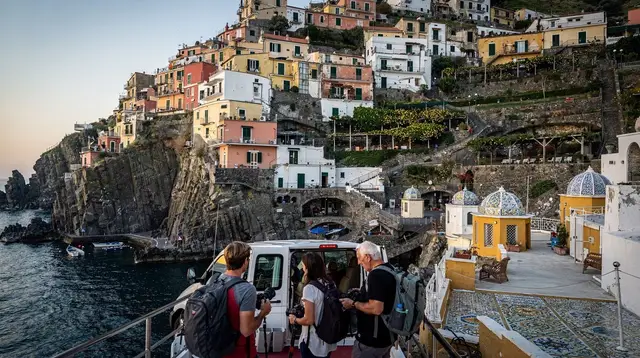
Positano Beaches: What They're Really Like (Not White Sand)
Are Positano's beaches sandy like Caribbean photos suggest?
No. Spiaggia Grande and Fornillo, Positano's two main beaches, are made of pebbles and coarse sand, not fine white sand. Much of both beaches is occupied by paid lidos with sunbeds and umbrellas for rent, with only limited free public space.
Setting Expectations Before You Pack a Swimsuit
Photos of Positano circulating online tend to show turquoise water framed by pastel houses, and it’s easy to assume the beach itself matches the tropical postcard look. It doesn’t. The two main beaches, Spiaggia Grande and Fornillo, are made of pebbles and coarse sand rather than the fine white sand associated with Caribbean or Southeast Asian coastlines. The water is genuinely clear and a striking shade of blue-green, but the shoreline underfoot is stone, and a substantial share of both beaches is fenced off into paid lidos rather than left as open public sand.
This isn’t a flaw unique to Positano. Most of the Amalfi Coast shares this pebble-and-lido pattern, since the coastline is a narrow band of cliffside villages rather than a long sandy bay. Positano is simply the most photographed example, which is why the gap between image and reality catches first-time visitors off guard most often here.
Spiaggia Grande: The Village’s Main Beach
Spiaggia Grande sits directly below Positano’s town center, at the base of the switchback staircases and lanes that make up the village. It’s the beach most people picture when they think of Positano, and it’s also the busiest, since it doubles as the arrival point for ferries and boat tours and sits a few steps from restaurants, gelaterias, and the church of Santa Maria Assunta with its distinctive majolica dome.
The beach itself is a mix of paid lido sections, each with rows of sunbeds and umbrellas for rent, and narrower strips of free public beach at either end. In high season, the free sections fill early, particularly on the side closer to the boat dock. Because Spiaggia Grande functions as both a beach and Positano’s de facto waterfront square, expect foot traffic, boat engines, and a generally social, lively atmosphere rather than a quiet stretch of shore.
Arriving early in the day, before the first SITA buses and ferries bring in day-trippers, gives the best chance of finding a spot on the free sections or securing sunbeds at a lido before it fills. Arriving mid-afternoon in July or August, once tour groups and day-trip boats have deposited their passengers, tends to be the most crowded window.
Fornillo: The Quieter Alternative
Fornillo beach lies west of Spiaggia Grande, reached on foot via a paved seafront promenade that runs past the Torre Trasita, a restored watchtower, and along a rocky stretch of coastline with sea views the whole way. The walk takes roughly 15 to 20 minutes from the village center, and a seasonal water taxi shuttle sometimes covers the same route by sea for those who’d rather not walk.
Fornillo shares the same pebble-and-coarse-sand composition as Spiaggia Grande, and it also has its own paid lidos, but it draws noticeably fewer visitors simply because it takes more effort to reach and isn’t visible from the main village viewpoints. That relative distance is exactly what makes it appealing: a calmer stretch of coast, less boat traffic close to shore, and a slower pace than the main beach’s crowds and comings and goings.
Because Fornillo isn’t a drop-in stop for ferry passengers or boat tours the way Spiaggia Grande is, it tends to suit travelers staying in Positano for more than a day trip, who can afford the extra walk and want a quieter base for an afternoon.
Spiaggia Grande vs. Fornillo at a Glance
| Spiaggia Grande | Fornillo | |
|---|---|---|
| Location | Village center, base of the main stairs | West along the seafront promenade |
| Access | Steps from the village and boat dock | 15-20 minute walk, or seasonal water taxi |
| Atmosphere | Busy, social, close to restaurants | Quieter, more relaxed |
| Composition | Pebbles and coarse sand | Pebbles and coarse sand |
| Beach type | Mostly paid lidos, some free sections | Mostly paid lidos, some free sections |
| Best suited for | Short visits, easy access | Longer stays, calmer pace |
Why Positano Has No Train Station
Positano is not connected to Italy’s rail network, and neither are any of the other villages directly on the Amalfi Coast itself. The nearest railway stations are in Salerno or Sorrento, both roughly an hour or more away by road depending on traffic and season. Most visitors reach Positano by SITA bus along the SS163, the narrow, cliffside coastal road that links the coast’s villages, by seasonal ferry from Naples, Sorrento, or Capri, or by car or private driver on that same SS163.
This matters for beach planning because it shapes exactly when crowds build up at Spiaggia Grande and Fornillo. Bus and ferry arrivals cluster at specific times of day, so the beaches tend to see waves of new arrivals rather than a steady trickle. Someone arriving on an early SITA bus or the first ferry of the day reaches the beach before those waves build, while someone arriving on a midday bus lands in the middle of the busiest stretch of the day. Note also that ferry service is a seasonal, warm-weather option, not a year-round guarantee: schedules are dense from around Easter through October and considerably reduced or suspended outside that window, so travelers visiting in winter should plan around the bus and road connections instead.
When to Visit for More Space, Without a Booking
Positano’s beaches are most crowded from July through August, when demand for lido sunbeds peaks and free sections fill quickly, especially by mid-morning. Outside that stretch, the shoulder months of May, June, September, and into early October generally offer a better chance of finding lido space or a spot on the free sections without needing to book ahead, since fewer visitors are competing for the same stretch of pebbles at once. The trade-off is that some lidos and beach services scale back or close earlier in the day once the coast moves into its quieter autumn and winter rhythm, particularly from November onward, so checking whether a specific lido is still operating is worth doing if visiting toward the edges of the season.
Practical Notes for a Day at the Beach
Bring water shoes if walking on pebbles barefoot isn’t comfortable; both beaches are stone underfoot, not sand. A lido rental typically includes a sunbed, umbrella, and access to changing facilities and a shower, which can be worth the cost for a full day, especially with children in tow, since flat, comfortable free space is limited. Free sections exist at both beaches but are narrower than the paid areas and go first in high season.
For a different perspective on the coastline itself, several boat-based options depart from Positano’s harbor near Spiaggia Grande. A guided boat trip along hidden coves and viewpoints not reachable on foot can be booked through a bay boat tour to hidden beaches and scenic viewpoints, while those who prefer paddling at their own pace can look into a guided kayak tour along the Positano coastline.
Travelers wanting the village context behind the beaches — the staircases, churches, and viewpoints above Spiaggia Grande — can join a private guided walking tour of Positano, and those looking to combine the coastline with Amalfi and other villages by sea can consider a private guided boat trip along the Amalfi Coast.
How Positano’s Beaches Compare to Others on the Coast
If pebbles and paid lidos aren’t quite what the postcards promised, it helps to know the pattern repeats, with variations, all along this stretch of coastline. Amalfi town has its own small beach near the harbor, with a similar split between paid sections and narrower free strips. Further east, Minori and Maiori are known for some of the longest beaches on the coast, which can mean more room to spread out than Positano’s tighter shoreline allows. West of Positano, the beaches around Praiano and Conca dei Marini are smaller and quieter, reached by steps down from the SS163, without the ferry and boat-tour traffic that Spiaggia Grande absorbs every day. None of these trade pebbles for fine sand — that’s simply the geology of this coast, not something specific to Positano — but they do offer more space or a calmer atmosphere depending on what a traveler is prioritizing over convenience.
For visitors trying to decide whether Positano itself is the right home base at all, rather than just where to swim, Positano vs. Amalfi and the comparison of Sorrento vs. the Amalfi Coast for where to stay both weigh beach access against price, atmosphere, and ease of getting around.
Fitting a Beach Day Around the Rest of Positano
A day that starts on the sand and pebbles doesn’t have to end there. Positano’s steep lanes and staircases climb from Spiaggia Grande past boutiques, restaurants, and viewpoints, and several of the same lidos that rent sunbeds by day sit beside restaurants that stay open well into the evening. Travelers curious about the village’s after-dark side once the beach chairs are stacked away can look into Positano’s nightlife around the harbor and main square.
Those visiting during the hottest stretch of summer should also read what to expect from the Amalfi Coast in August, since beach crowding and peak heat arrive together, and a look at what to pack for the Amalfi Coast helps settle questions like water shoes versus sandals and sun cover before the trip even starts. Drivers planning to reach Positano’s beaches directly by car should read about driving the SS163 beforehand: parking near either beach is limited, and the road’s blind curves demand full attention, which is one more reason the SITA bus and seasonal ferry remain the more common way to arrive with beach bags and umbrellas in tow.
Beyond the Beach
Positano’s shoreline is only one part of what draws visitors to this stretch of coast. For orientation before arriving, see how Positano compares to Amalfi as a base, or check how to reach the Amalfi Coast without a car if arriving from Naples or Sorrento. Those wanting the classic photo of the village and its beach from above should read our guide to Positano’s best photo spots, and hikers can look into the multi-hour Path of the Gods hike, which ends not far from Positano’s outskirts.
Families weighing whether pebble beaches suit young children can read our guide to visiting the Amalfi Coast with kids for a broader view of family logistics on this coastline. For getting around once in Positano, our SITA bus guide explains timetables and stops along the SS163, while the ferry guide between Amalfi Coast towns, Sorrento, and Capri covers the seasonal boat schedules mentioned above. Those planning a longer stay can check where to stay along the Amalfi Coast or browse the best time to visit the Amalfi Coast for a season-by-season breakdown beyond just beach crowding.
If Positano is one stop on a wider coastal trip, the Amalfi Coast in 5 days itinerary and Positano and Praiano long weekend itinerary both build in beach time alongside village visits and day trips. For sunset views over the same beaches covered here, consider joining a sunset Vespa tour along the Amalfi Coast for a different angle on the coastline once the beach crowds thin out in the evening.
Frequently Asked Questions About Positano’s Beaches
Is Positano beach sand or pebbles?
Pebbles and coarse sand, not fine sand. Expect small, smooth stones underfoot at both Spiaggia Grande and Fornillo, and consider water shoes if bare feet on pebbles bother you.
Is Spiaggia Grande free?
Part of it is free public beach, but a large share of the shoreline is divided into paid lidos with sunbeds and umbrellas for rent. Free strips exist but fill up quickly in high season.
Which is better, Spiaggia Grande or Fornillo?
Spiaggia Grande sits right in the village center and is livelier and more crowded. Fornillo is reached via a seafront walkway, is quieter, and suits travelers who want a calmer atmosphere.
How do I get to Fornillo beach?
Walk west along the paved seafront promenade from Spiaggia Grande, past the Torre Trasita watchtower; the walk takes about 15-20 minutes on foot, or a seasonal water taxi shuttle can cover the same route by sea.
Does Positano have a train station?
No. Positano has no railway station. Visitors arrive by SITA bus along the SS163, by seasonal ferry, or by car or private driver via the same coastal road.
When is the best time to find space on Positano’s beaches without booking ahead?
Shoulder months such as May, June, September, and early October offer a better chance of finding lido space or free beach room without advance reservation than the July-August peak, when demand for sunbeds is highest.
Are Positano beaches good for kids?
They can work for families, but pebbles underfoot and limited free flat sand areas make them less convenient for small children than a typical sandy beach; water shoes and a lido umbrella help.
Can I bring my own umbrella and chair to Positano beaches?
Some free sections allow it, but the amount of unreserved free space is limited, especially in summer, since much of the shoreline is leased to lido operators.
Family Attractions on the Amalfi Coast on GetYourGuide
Verified deep-linked GetYourGuide tours. Book through these links and we earn a small commission at no cost to you.
GetYourGuide does not provide a product photo for this activity — the image shows the meeting point, photographed by us.