Amalfi Coast in August: Is Peak Season Worth the Crowds?
Is August a good time to visit the Amalfi Coast?
August is the peak of high season on the Amalfi Coast, with the heaviest SS163 traffic, alternating one-way circulation in places, strictly enforced ZTLs in Amalfi, Positano, and Ravello, and ferries running at maximum frequency but also filling up fastest. It's not a month to avoid outright, but it rewards visitors who plan transport, bookings, and timing carefully.
What August Actually Looks Like on the Amalfi Coast
August is the single busiest month of the year on the Amalfi Coast, and there’s no point pretending otherwise. It sits at the peak of a high season that runs roughly from Easter through the end of October, and everything that defines high season — traffic, ferry loads, lido occupancy, site queues — reaches its maximum in August specifically. That’s a factual statement about density, not a verdict on whether you should come. Plenty of travelers visit successfully in August every year; they just plan around the crowding rather than being surprised by it.
The coast itself doesn’t change in August. Amalfi, Positano, Ravello, Praiano, and the smaller villages along the SS163 are the same roughly 50-kilometer stretch of cliffside road they are in May or October. What changes is how many people are trying to move along that road, board that ferry, or squeeze onto that lido at the same time you are.
The SS163 in August: Peak Traffic, Peak Restrictions
The SS163 is a narrow, winding corniche road, not a highway, and it was never built to absorb high-season traffic volumes comfortably. In August, that mismatch is at its most obvious. Expect the heaviest congestion of the year, especially around midday and in the late afternoon when day-trippers, tour buses, and rental cars converge on Amalfi, Positano, and Ravello simultaneously.
In several of the narrowest stretches, local authorities enforce alternating one-way circulation to keep traffic moving at all — meaning cars are held and released in one direction at a time. This isn’t unique to August, but it’s applied most consistently and for the longest hours during the month, precisely because volume demands it.
On top of that, the ZTLs (limited traffic zones) in Amalfi, Positano, and Ravello are strictly enforced in August. These zones restrict vehicle access to residents, permit holders, and authorized traffic — tourists driving into a ZTL without authorization risk automatic fines captured by camera, regardless of season, but the enforcement is at its most active precisely when demand to enter these town centers by car is highest.
The practical upshot: this is not the month for a relaxed self-drive itinerary along the coast road. If you want the full picture on getting around without your own car, see our guide to visiting the Amalfi Coast without a car.
SITA Buses and Ferries: Full Service, Full Boats
The good news about August is that it’s also when public transport service is at its most complete. The SITA bus network, which links every village along the coast since none of them — Amalfi, Positano, Ravello, Praiano, Minori, Maiori, Vietri sul Mare, Cetara, Atrani — has a train station of its own, runs its fullest summer timetable in August. Frequencies are higher than in shoulder season, which helps offset demand.
The same logic applies to ferries. August is when boat connections between the coastal villages, Capri, Sorrento, and Naples run at their maximum seasonal frequency — this is the one month you can generally count on frequent sailings throughout the day. But maximum frequency doesn’t mean guaranteed space. Boats fill up fastest in August, and popular midday and late-afternoon departures can sell out, particularly on routes to and from Capri. Booking ahead, or at minimum showing up well before a sailing you’re counting on, matters more in August than at almost any other point in the year.
It’s worth repeating a fact that applies year-round but is easy to forget while planning an August trip: ferry service is a seasonal add-on to this coast’s transport network, not a permanent fixture. Service is dense in summer and much reduced or suspended outright in winter, so August travelers are seeing the network at its best — which is also its most crowded.
Buses, similarly, can run standing-room-only during peak August hours on popular routes like Amalfi–Positano or Sorrento–Amalfi. If you’re relying on the bus for a same-day return, especially in the evening from Positano or Amalfi, build in buffer time rather than assuming you’ll board the first bus that arrives.
Beaches and Lidos at Capacity
Positano’s beaches are a useful reality check for anyone imagining an Amalfi Coast beach holiday along Caribbean lines. The shoreline here is mostly pebble or coarse sand, and the coast’s best-known beaches — Spiaggia Grande and Fornillo — are largely occupied by paid lidos, with limited free space and very little free parking in high season.
In August, those lidos are at their most sold-out. Spiaggia Grande in particular routinely reaches full capacity on peak days, and walk-up availability for sunbeds becomes unreliable. Travelers who want a guaranteed spot should book a lido reservation ahead of time rather than arriving and hoping. For a full rundown of what’s actually available and how the free versus paid sections break down, see our Positano beaches guide.
This same capacity pressure extends to the smaller beach towns. Minori and Maiori have longer stretches of sand than Positano and somewhat more breathing room, but August still brings their busiest crowds of the year. If a quieter beach day matters more to you than being based in Positano or Amalfi itself, those towns are worth weighing.
Day Trips to Naples, Pompeii, and Vesuvius in August
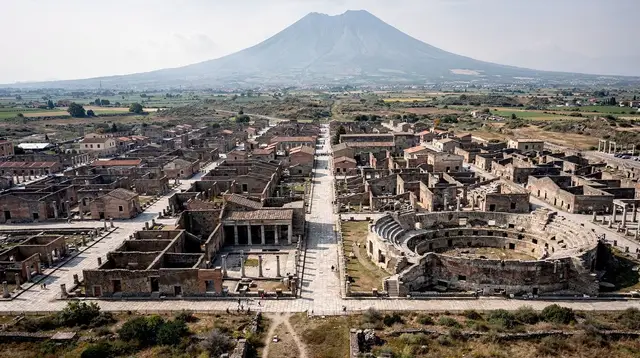
The Amalfi Coast’s most popular day-trip destinations sit outside the coast itself, in the Naples area, and August affects them the same way it affects the coast: full service, full crowds. Pompeii and Herculaneum are two distinct archaeological sites, destroyed by different mechanisms in AD 79 — ash and pumice fall buried Pompeii, while a pyroclastic flow preserved organic material at Herculaneum — and both draw their heaviest visitor numbers of the year in August.
Vesuvius adds a layer that other sites don’t have: it’s an active volcano under permanent monitoring, last erupting in 1944, and access to its crater-rim trail is controlled through a numbered ticket system rather than open entry. In August, those numbered tickets are in highest demand and can sell out further in advance than in quieter months. If a Vesuvius hike is part of your plan, treat the ticket booking as a priority task, not an afterthought. Our guide to the Vesuvius crater hike covers what the numbered-ticket system actually involves.
Naples itself, which sits over an hour’s drive from the Amalfi Coast proper and functions as the region’s air and rail gateway rather than as part of the coast, is also at its busiest in August, both with day-trippers heading to the coast and with its own summer visitor traffic. If you’re combining a coast stay with these excursions, our Pompeii ruins guide is worth reading before you go, and a combined day like the one covered by our Pompeii and Amalfi Coast day tour can help consolidate transport logistics that are otherwise harder to manage independently in peak-season traffic.
Capri in August
Capri draws its own August crowds on top of the coast’s. Ferries and hydrofoils from Naples, Sorrento, and the Amalfi Coast run frequently in August, but seating fills fast, especially on morning departures aimed at day-trippers. Once on the island, the funicular connecting Marina Grande to Capri town, and the bus or chairlift up to Anacapri, both see their heaviest use of the year.
The Blue Grotto deserves a specific caution that applies regardless of season but is worth repeating for August planners: access depends on tide and sea conditions, not on how many people want to visit. It closes without notice when conditions aren’t right, and light quality is generally best in late morning. No amount of advance booking guarantees entry — treat a Blue Grotto visit as conditional, not confirmed, whatever month you travel.
Ravello and the Higher Villages
Ravello, perched around 350 meters above sea level on a ridge with no beach access of its own — reaching the shore at Amalfi or Minori requires a steep road or staircase — offers a slightly different August experience than the waterfront towns. Its elevation and setting mean it doesn’t absorb beach crowds, but it does draw heavy day-trip traffic in August, particularly around its clifftop gardens and its summer concert season, which runs through the warmer months. If you’re weighing Ravello against Positano for a base, August is a month where Ravello’s distance from the water can work in its favor if crowd avoidance is a priority, though it comes with its own access road and parking pressures.
So Should You Go in August?
There’s a version of this question that has a simple answer and a version that doesn’t. The simple part: August is, factually, the peak of the Amalfi Coast’s high season, with the heaviest road traffic, the fullest ferries and buses, the most strictly enforced ZTLs, and the busiest lidos and archaeological sites of the year. None of that is in dispute, and no amount of clever planning erases it entirely.
The less simple part is whether that makes August the wrong month for you specifically. For travelers who can be flexible about which weeks they visit, months with lighter crowds but still-active ferry and bus service exist on either side of August — our best time to visit guide and our guide to avoiding the worst of the crowds both go into that trade-off in more detail. For travelers locked into August by school holidays or work schedules, the coast is still fully open, fully served by transport, and fully worth visiting — it just rewards early bookings, early starts, and a plan built around public transport rather than a rental car.
A well-organized Amalfi Coast tour by bus sidesteps the SS163 parking and ZTL problem entirely by putting someone else behind the wheel, while a guided Amalfi Coast tour can help structure a day around the villages that matter most to you without losing hours to traffic. If your dates are flexible and you’d rather see how the shoulder seasons compare, our off-season Amalfi Coast itinerary lays out what changes once the crowds thin out.
Frequently Asked Questions About Visiting the Amalfi Coast in August
Is the Amalfi Coast too crowded in August?
August is objectively the most crowded month on the coast. Traffic on the SS163 peaks, paid lidos like Positano’s Spiaggia Grande run at full capacity, and popular sites see their heaviest footfall of the year. Whether that counts as “too crowded” depends on your tolerance for queues and full buses.
Should I drive the Amalfi Coast in August?
Driving is particularly discouraged in August. The SS163 sees its heaviest traffic of the year, with alternating one-way circulation enforced at narrow points and strict ZTL zones active in Amalfi, Positano, and Ravello. Most visitors rely on the SITA bus or ferries instead.
Are the ferries still running in August?
Yes, August is when ferry schedules between the coastal villages, Capri, Sorrento, and Naples run at their maximum seasonal frequency. That also means boats fill up fastest, so early booking and early departures matter more than at other times of year.
Can I still visit the beaches in Positano in August?
Yes, but expect the paid lidos, including Spiaggia Grande, to be at their most sold-out. Free stretches of shoreline are limited even outside August, and in peak season arriving early or booking a lido spot in advance becomes essential.
Is it worth doing day trips to Pompeii or Vesuvius in August?
Both remain worthwhile, but expect the busiest crowds of the year at Pompeii and Herculaneum, and be aware that Vesuvius access runs on a numbered ticket system for its crater-rim trail, which can sell out well in advance in August.
What’s the alternative to visiting in August?
Late spring and early-to-mid autumn keep most services, ferries, and transport running while reducing the density of traffic and crowds compared with August. See our guide to the best time to visit for a month-by-month comparison.
Popular Amalfi Coast Tours on GetYourGuide
Verified deep-linked GetYourGuide tours. Book through these links and we earn a small commission at no cost to you.
GetYourGuide does not provide a product photo for this activity — the image shows the meeting point, photographed by us.
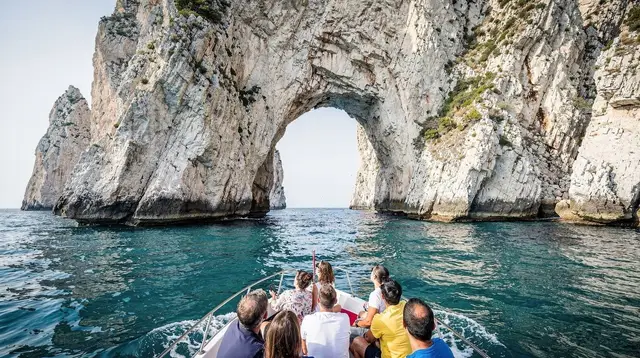
Capri by Yacht from Marina di Stabia Mochi Craft 33 8 Person Maximum

Private Cruise from Naples to Capri and Amalfi Coast - yacht 50'