Ravello vs Positano: Which One Should You Choose?
Should I visit Ravello or Positano?
They aren't interchangeable choices. Ravello sits about 350 meters above the sea with no beach of its own, built around panoramic villas and gardens, while Positano gives direct access to the Spiaggia Grande and Fornillo beaches. Pick Ravello for views and quiet culture, Positano for beach time, hiking, and village life.
Two Different Kinds of Amalfi Coast Trip
Ravello and Positano get lined up against each other constantly, as if choosing between them were like picking between two similar beach resorts. It isn’t. These two villages answer different travel desires, and treating them as competing versions of the same experience leads to disappointment on both sides — visitors who arrive in Ravello expecting a beach, and visitors who arrive in Positano expecting the hushed, elevated calm of a hilltop garden town.
The core difference is elevation and access to the sea. Ravello sits at roughly 350 meters above the coastline, perched on a ridge with sweeping views over the Gulf of Salerno. It has no beach of its own. Reaching the water means descending to Amalfi or Minori, either by road or by a steep staircase, and then climbing back up afterward. Positano, by contrast, spills down a hillside directly to the water, ending at the Spiaggia Grande, with a second beach, Fornillo, a short walk beyond the harbor. If a beach day is part of the plan, that single structural fact should decide most of the comparison before anything else does.
What Ravello Actually Offers
Ravello is built around panorama and patrimony rather than shoreline. The village’s signature sites are its clifftop villas and gardens: Villa Cimbrone, with its famous Terrace of Infinity overlooking the coast, and Villa Rufolo, whose gardens host Ravello’s summer concert season against a backdrop of the sea far below. Neither villa is a beach club or a swimming spot — both are gardens and historic residences positioned specifically to look down at the coastline rather than touch it.
This orientation shapes the whole village. A Ravello walking tour covers a compact historic center, the Ravello Duomo, and viewpoints rather than a seafront promenade. The Ravello concert season draws visitors specifically for classical and chamber music performed in garden settings, an experience with no equivalent in Positano. None of this requires or benefits from beach access; it’s a different value proposition entirely, closer to visiting a hill town for its architecture and views than to visiting a coastal resort.
Because Ravello has no shoreline, it also has none of the lido culture, beach umbrellas, or boat rental stands that define a Positano afternoon. Visitors who want to combine Ravello’s gardens with a swim typically base themselves in Amalfi or Minori and treat Ravello as a half-day excursion, not a full seaside stay.
What Positano Actually Offers
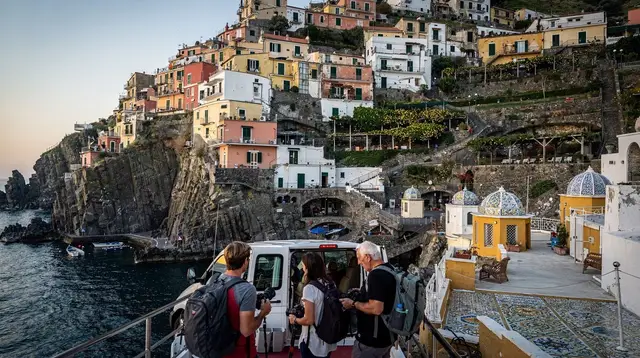
Positano’s identity runs almost entirely in the opposite direction. The village cascades down a steep hillside in tiers of pastel houses, and the destination point at the bottom is the water: the Spiaggia Grande, Positano’s main beach, framed by the Positano photo spots that make the village one of the most photographed places on the coast. A smaller, somewhat quieter beach, Fornillo, sits a short coastal walk to the west.
It’s worth being direct about what these beaches actually are, since the postcard image can be misleading. Both are largely occupied by paid lidos — rows of sunbeds and umbrellas rented by the day — with limited free public sand, especially from June through August. Anyone expecting Caribbean-style open beach access should adjust expectations accordingly; renting a lido spot or booking ahead in peak season is often necessary.
Beyond the beach, Positano works as a base for hiking. The Path of the Gods, one of the coast’s best-known trails, ends near Nocelle, a hamlet reached from Positano by local bus or a long staircase. This gives Positano a practical edge for travelers who want to combine a coastal hike with beach time and village life in one base — an option Ravello’s elevated, sea-disconnected setting doesn’t offer in the same way. Positano’s nightlife and its sunset cruises departing directly from the harbor round out an evening scene that depends on that direct sea access.
Comparing the Two Directly
| Ravello | Positano | |
|---|---|---|
| Elevation | ~350 m above the coast | At sea level, cascading downhill |
| Beach access | None; descend to Amalfi or Minori | Direct — Spiaggia Grande, Fornillo |
| Signature sites | Villa Cimbrone, Villa Rufolo, Duomo | Beaches, harbor, vertical village streets |
| Best for | Views, gardens, concerts, quiet culture | Beach days, hiking base, village nightlife |
| Nearest train station | None (Amalfi or Sorrento by bus) | None (Amalfi or Sorrento by bus) |
| Typical visit length | Half day to full day | One to several days |
Day Trips From Ravello and Positano
Both villages work as launching points for excursions well beyond their own borders, and the options don’t differ as sharply as the villages themselves do. From Positano’s harbor, boat operators run day trips along the coast and across to Capri, including a boat tour departing from Amalfi that many Positano-based travelers reach by a short bus or ferry hop first. Ravello, despite its elevation, isn’t cut off from these excursions either — visitors typically ride the SITA bus down to Amalfi and join the same boats or coach transfers from there, adding roughly the same connecting time that any Ravello outing already requires.
Capri is the most popular add-on from either base. A one-day Capri itinerary works equally well whether the ferry is caught from Amalfi after a Ravello morning or from Positano’s own dock, since crossing times from either point are broadly similar. Inland excursions follow a comparable pattern: a day trip to Pompeii from the Amalfi Coast usually starts with a transfer toward Naples-bound transport regardless of which village a traveler is staying in, since neither Ravello nor Positano sits directly on a rail line.
The practical takeaway is that day-trip logistics rarely tip the Ravello-versus-Positano decision one way or the other. Both villages funnel outward excursions through the same hubs — Amalfi, Sorrento, or Naples — so the choice of base should rest on what a traveler wants to do while actually in the village, not on which one makes a Capri or Pompeii day easier.
Food and Evening Pace in Each Village
The dining and evening atmosphere in Ravello and Positano reflect the same split as everything else. Ravello’s restaurants tend to sit on terraces built for the view, serving dinner against the same panorama that draws visitors to Villa Cimbrone and Villa Rufolo during the day; the pace after dark is unhurried, shaped by the concert season more than by nightlife, and the village empties out relatively early outside of performance nights.
Positano’s evenings run at a different tempo. Restaurants cluster along the descent toward the Spiaggia Grande and around the harbor, and the nightlife extends later, supported by the same steady flow of visitors who fill the beach by day. A sunset cruise departing from the harbor is a common way to bridge the two halves of a Positano day, ending back at the village just as dinner service picks up.
Neither pace is objectively better; it’s simply a continuation of the same fundamental choice between an elevated, view-oriented visit and a sea-level, beach-and-harbor one that defines the rest of the comparison.
Getting Between Them (and Why It Isn’t Simple)
Neither Ravello nor Positano has a train station — no village on the Amalfi Coast itself does. Both depend on the SITA bus network or the SS163 coastal road for every trip in or out, and there’s no direct bus route connecting the two villages to each other. A trip from one to the other typically routes through Amalfi: a SITA bus or seasonal ferry from Positano to Amalfi, followed by a separate SITA bus climbing from Amalfi up to Ravello. A private driver can shorten the logistics but doesn’t shorten the road, which remains the narrow, switchbacked SS163.
This matters for planning because it rules out spontaneity. Visiting both in a single day is possible but tight, and it usually means a shorter, more rushed stop at each rather than a relaxed visit to both. Many travelers instead treat this as a guided day out — a private day tour covering Positano, Amalfi, and Ravello removes the bus-transfer puzzle entirely and fits both villages into one organized itinerary. For travelers based in Positano who want Ravello as an add-on without managing the connections themselves, a private tour to Amalfi and Ravello departing from Positano is a more targeted option.
Those coming from further afield have other starting points worth knowing about. From Sorrento, a day trip covering Positano, Amalfi, and Ravello is a common way to see all three without a rental car, and travelers who enjoy a more active pace sometimes choose an Amalfi Coast Vespa tour taking in Amalfi, Ravello, and Positano instead of a coach.
Choosing a Base for a Longer Stay
For a stay of several days rather than a single visit, the choice of base matters more than the choice of which village to see first. Positano works well as a base precisely because it combines beach access, hiking trailheads, restaurants, and evening activity in one walkable, if steep, footprint — see the broader comparison in Sorrento vs Amalfi Coast: Where to Stay for how it stacks up against other bases. Ravello, on the other hand, suits travelers who specifically want quiet evenings, garden views, and easy access to concerts or the Ravello Duomo, and who are content to arrange transport whenever a beach day or the harbor scene in Amalfi is on the agenda.
Some travelers split the difference by basing in Amalfi itself, which sits between the two at sea level with its own beach and its own SITA bus connections up to Ravello and along the coast to Positano — worth reading about in Positano vs Amalfi if a three-way comparison is more useful than a two-way one. Others extend the question further afield with Ravello vs Positano vs Cinque Terre-style planning when the Amalfi Coast is being weighed against an entirely different Italian coastline.
Whichever base is chosen, the practical groundwork is the same: check Where to Stay on the Amalfi Coast for logistics common to both villages, and plan around the SS163 and SITA bus schedules rather than assuming a rental car will make things faster — in high season, it usually won’t.
The Bottom Line
Ravello and Positano are not two versions of the same seaside town; they’re two different reasons to visit the Amalfi Coast. Ravello is a panorama and heritage destination with no beach, built around villas, gardens, and a concert season best appreciated from above the coastline rather than beside it. Positano is a beach and hiking base with a working harbor, vertical streets, and direct access to the Sentiero degli Dei near Nocelle. Neither is a lesser or alternative version of the other — the right choice depends entirely on whether the trip is built around a view or around the water, and many itineraries end up including both rather than picking just one.
Frequently Asked Questions About Ravello vs Positano
Does Ravello have a beach?
No. Ravello sits roughly 350 meters above the coastline on a ridge, with no shoreline of its own. Visitors who want the sea drive or take a bus down to Amalfi or Minori, or descend steep stairs and paths, then return uphill afterward.
Is Positano better for beaches than Ravello?
Yes, in the sense that Positano actually has beaches. The Spiaggia Grande and Fornillo are reachable on foot from the village center, though much of the usable sand is occupied by paid lidos, especially in July and August, with limited free space.
Can I visit both Ravello and Positano in one day?
It is possible but tight, since there is no direct road or train between them; a trip typically routes through Amalfi by SITA bus or a booked driver, so a single day usually means a shorter stop in each rather than a relaxed visit to both.
Why is Ravello more expensive or exclusive than Positano?
Ravello’s reputation for quiet exclusivity comes from its elevated setting, its concert season, and villas like Villa Cimbrone and Villa Rufolo rather than from beach infrastructure, since it has none. Positano has its own high prices tied to lidos, boutique hotels, and vertical village real estate.
Is Positano too crowded, and is Ravello a quieter alternative?
Ravello is quieter than Positano at street level, mostly because it draws visitors for gardens, concerts, and viewpoints rather than beach access, not because it is a substitute seaside town. Comparing crowd levels only makes sense once the two are understood as different kinds of destinations.
How do I get from Positano to Ravello without a car?
There is no direct bus link. Most travelers take a SITA bus or ferry to Amalfi, then change to another SITA bus that climbs to Ravello, or arrange a private driver for the whole route. There is no train station in either village.
Does Ravello work for a family beach vacation?
Not on its own. Families wanting swimming access alongside Ravello’s gardens and views typically base themselves in Amalfi, Minori, or Positano instead, then treat Ravello as a half-day or full-day outing rather than a base.
Is the Path of the Gods hike closer to Positano or Ravello?
Closer to Positano. The Sentiero degli Dei trail ends near Nocelle, a hamlet just above Positano reached by bus or stairs, making Positano the more practical base for hikers, while Ravello has no direct trailhead connection to this route.
Top-Rated Amalfi Coast Tours on GetYourGuide
Verified deep-linked GetYourGuide tours. Book through these links and we earn a small commission at no cost to you.
GetYourGuide does not provide a product photo for this activity — the image shows the meeting point, photographed by us.