Limoncello Tasting on the Amalfi Coast: What You're Actually Drinking
Is limoncello a type of wine?
No. Limoncello is a liqueur, typically 25-32% alcohol by volume, made by steeping lemon peel in alcohol and then sweetening the infusion with sugar syrup. There is no fermentation involved, which is what separates it from wine.
Clearing up the wine confusion first
A surprising number of visitors arrive on the Amalfi Coast expecting limoncello to be some kind of lemon wine. It isn’t. Limoncello is a liqueur, generally 25% to 32% alcohol by volume, made by macerating lemon peel in neutral alcohol for days or weeks, then blending the resulting infusion with a sugar syrup and water to bring the strength down to a drinkable level. There is no fermentation step anywhere in the process, which is the fundamental difference from wine: wine gets its alcohol from yeast converting sugar in grape juice, while limoncello’s alcohol comes from the base spirit itself, and the lemon peel contributes flavor and aromatic oils, not fermentable sugar. If you want an actual local wine tasting rather than a liqueur tasting, that is a separate experience, sometimes paired with Pompeii or Vesuvius day trips rather than with Amalfi’s citrus terraces.
Understanding this distinction matters because it changes what you should expect from a tasting. A limoncello tasting is closer in spirit to a spirits or eau-de-vie tasting than a wine tasting: small pours, served ice-cold, meant to be sipped slowly rather than paired with food course by course.
What actually goes into a bottle of limoncello
The traditional recipe has very few ingredients: lemon peel (only the yellow zest, never the bitter white pith), pure alcohol, sugar, and water. Producers steep the peel in alcohol in sealed containers, away from light, for anywhere from a few days to several weeks depending on the house method. The steeping alcohol pulls the essential oils out of the peel, turning a pale, cloudy yellow. That infusion is then filtered and cut with a simple syrup until it reaches the desired sweetness and strength. Nothing is aged in wood, and there is no secondary process to hide poor-quality base ingredients — which is exactly why the type of lemon used has such an outsized effect on the final product.
Why the Sfusato Amalfitano lemon is the whole story
Most industrial limoncello sold across Italy, and internationally, is made with whatever lemon variety is cheapest and most available, often from Sicily or from lemons that aren’t grown on the Amalfi Coast at all. Limoncello made on the coast itself is traditionally built around a single variety: Sfusato Amalfitano, an IGP-protected lemon (Indicazione Geografica Protetta) grown specifically on the terraced hillsides of the Amalfi Coast.
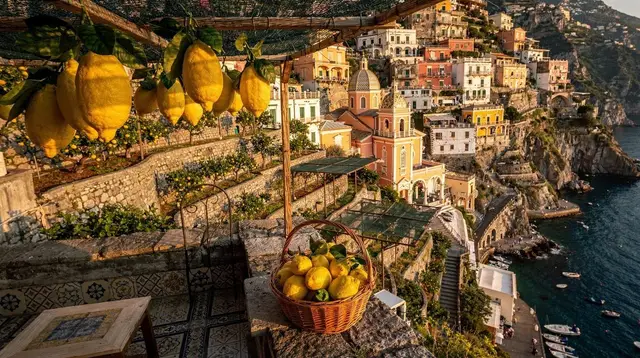
The Sfusato is easy to identify even before you taste anything from it. It has a distinctive elongated, slightly tapered shape rather than the round profile of a standard lemon, and its peel is notably thick, which matters enormously for limoncello because the flavor and aroma come entirely from the oils held in that peel. A thicker, oil-rich peel means a more fragrant, rounder infusion. Growers and producers on the coast will tell you that Sfusato-based limoncello tends to be smoother and less sharply bitter than versions made with ordinary lemons, precisely because of this difference in peel composition and because the fruit itself carries lower acidity.
None of this is marketing gloss you can safely ignore: it is the actual reason a good bottle of Amalfi limoncello tastes different from a supermarket bottle labeled simply “limoncello di Sorrento” or “limoncello italiano” made somewhere else entirely.
How Amalfi’s lemons compare to Sorrento’s
The confusion between “limoncello di Amalfi” and “limoncello di Sorrento” is understandable, because both areas grow their own protected lemon varieties and both sell limoncello in nearly identical bottles along nearly identical shopping streets. The Sorrentine Peninsula has its own long citrus tradition, visible in the lemon groves around Sorrento, where growers work a different local variety under similarly constructed pergolas. The two zones are neighbors, not the same place: Amalfi Coast towns sit along the SS163 with no railway, while Sorrento is the one town in the wider area reachable by train from Naples. If a bottle is labeled Costa d’Amalfi IGP and made with Sfusato Amalfitano, it comes from the terraces described above; a bottle labeled around Sorrento’s own lemon tradition is a related but distinct product, and neither should be assumed to be the other just because both are sold as “Amalfi Coast limoncello” to visitors passing through either area.
Where the lemons actually grow
It helps to picture the real geography behind the bottle rather than picture a shop counter. The lemon groves that supply traditional Amalfi Coast limoncello are not flat orchards; they are narrow terraces cut into the steep hillsides directly behind the towns of Amalfi and Minori, held in place by dry-stone retaining walls that in some cases date back centuries. Walking these terraces on a guided visit, rather than just walking into a shop on the main street, is the difference between a tasting and an actual introduction to how this citrus fruit is farmed.
The groves are covered with traditional pergolas: overhead structures built from chestnut wood poles and covered in netting, which shield the fruit from wind, hail, and excessive direct sun. These pergolas also make the harvest labor-intensive, since almost everything on these near-vertical terraces has to be done by hand, and the fruit and equipment have to be moved along narrow paths and, in places, on monorail carts built specifically for the terrain. This is part of why a genuine grove tour has more to show you than a retail tasting counter does.
When to actually see the terraces full of fruit
If seeing loaded lemon terraces, rather than just tasting the finished bottle, is part of what you want from a visit, timing matters. The best window to see the groves visibly heavy with fruit falls outside the peak of summer, when the harvest is in full swing on the terraces above Amalfi and Minori. During the busiest summer tourist weeks, many groves are between harvest cycles and look considerably less dramatic than the postcard images suggest. If your schedule allows flexibility, ask a local operator when the current harvest is running rather than assuming any fixed calendar date — Sfusato harvest timing shifts slightly year to year depending on the growing season, and no single month is guaranteed.
Choosing a tasting: shop counter vs. working grove
Not every “limoncello tasting” on the coast is the same experience. Broadly, you’ll find two categories:
| Type of experience | What you get | Best for |
|---|---|---|
| Shop or factory tasting in town | Quick tasting of several limoncello styles, often paired with a short explanation of production, usually within Amalfi’s historic center | Visitors short on time, or combining with a walk through Amalfi’s old town |
| Guided grove and terrace visit | Walk through working Sfusato terraces, explanation of pergola construction and IGP rules, tasting at the end | Visitors who want to see where the lemons actually grow, not just taste the result |
| Make-your-own workshop | Hands-on session preparing your own small batch under instruction | Visitors who want an active, participatory souvenir rather than a passive tasting |
For anyone with a couple of hours to spare, the grove-based option is worth the extra time: it puts the entire process — from terrace to peel to bottle — into a single visual sequence that a shop tasting alone cannot provide.
Tasting etiquette: how limoncello is actually served
Because limoncello is a liqueur rather than a wine, the tasting format is different from what a wine-tasting visitor might expect. It is served ice-cold, almost always straight from a freezer rather than a fridge, in small stemless glasses meant for a single sip or two rather than a full pour. There is no swirling, no aeration, and no food pairing built into the ritual the way there is with wine: it is traditionally drunk as a digestivo at the end of a meal, not sipped alongside courses or used as an aperitif before one. Most tastings offer several styles side by side — a classic version, sometimes a cream-based variant made with milk or cream added to the base infusion, and occasionally a stronger or more concentrated pour for comparison. Because the alcohol content sits well above wine, a full tasting flight adds up faster than it looks, so pacing a few small glasses across an hour is more realistic than treating it like a wine flight.
Booking a limoncello experience
A handful of operators run structured visits combining the lemon terraces, the production process, and a tasting. The guided limoncello factory tour in Amalfi with tastings included covers the production steps end to end and finishes with a sampling of several styles. For a more instructor-led format, the Amalfi limoncello factory visit with an instructor walks through the same fundamentals with a dedicated guide explaining each stage in more depth.
If you’d rather leave with something you made yourself, the make-your-own limoncello workshop that also introduces the lemons of Amalfi pairs a hands-on session with an explanation of the Sfusato variety and its terraces. And for a visit centered specifically on the terraces themselves rather than a factory setting, the vertical lemon farm tour with tastings and a rural museum stop takes you directly onto the terraced hillside and includes a look at the tools and history of the harvest.
Combining it with the rest of your day
A limoncello visit is easy to slot into a broader day around Amalfi. Many travelers pair it with a walking tour of Amalfi’s historic center, a stop at the Amalfi Paper Museum to see the town’s other artisan tradition, or a look at Vietri sul Mare’s ceramics if you’re continuing along the coast toward Salerno. If you’re staying in Minori, several grove visits start from that side of the coast instead of from Amalfi itself, which can save you a bus transfer.
Limoncello isn’t the only artisan tradition worth pairing with a coastal day. Continuing east from Amalfi, Atrani’s compact old center is a short walk away, while further along, Cetara’s anchovy colatura makes for a completely different tasting stop built around the coast’s other signature product. Minori itself is also home to the pasta museum, covering the third of the coast’s classic artisan trades alongside lemons and ceramics. Travelers who want to see all three towns in that stretch in one outing can use the Minori, Maiori, Vietri, Cetara and Atrani area page to plan the order.
Travelers building a longer stay sometimes fold a limoncello visit into an itinerary such as the Amalfi Coast in 5 days plan, or use it as one stop on an off-season itinerary when the terraces are quieter and, depending on timing, more visibly loaded with fruit. If transport planning is still an open question, the SITA bus guide and the driving the SS163 guide cover how to actually reach Amalfi and Minori from wherever you’re based.
For readers deciding where to stay before booking any tastings, the where to stay on the Amalfi Coast guide and the Amalfi vs. Positano comparison are useful starting points, since basing yourself closer to Amalfi or Minori cuts down travel time to the lemon terraces considerably. If cost planning matters, the Amalfi Coast budget guide covers typical price ranges for tastings and workshops alongside other coastal activities, and the best time to visit guide gives broader seasonal context beyond just the lemon harvest.
A note on buying bottles to take home
If you plan to buy a bottle rather than just taste on-site, look for labels that specify Costa d’Amalfi IGP or reference Sfusato Amalfitano directly, since these are the clearest indicators that the lemons actually came from the coast’s terraces rather than from lemons trucked in from elsewhere. Shops throughout Amalfi and Minori sell bottles at a wide range of prices, and the cheapest options in high-traffic tourist areas are not always made with the protected variety — a quick look at the label before buying avoids disappointment once you’re back home.
Packing bottles for the trip home
A full-size bottle of limoncello is glass and liquid, which means it belongs in checked luggage, not a carry-on, since it will exceed standard cabin liquid allowances. If you’re flying out and only have carry-on bags, some shops sell smaller bottles specifically sized to fit airline liquid limits, or will seal a bottle in a duty-free-style tamper-evident bag if you’re connecting through an airport that recognizes those seals — ask before you buy if this matters to your itinerary. Wrapping a bottle in clothing inside a checked bag, or using a padded bottle sleeve if you’re carrying more than one, cuts down the risk of breakage considerably better than relying on the box alone. If you’re packing beyond just a bottle or two, the Amalfi Coast packing list covers what else is worth planning for on a coastal trip that mixes hiking, beach time, and artisan shopping in the same days.
Limoncello & Lemon Grove Tours on the Amalfi Coast on GetYourGuide
Verified deep-linked GetYourGuide tours. Book through these links and we earn a small commission at no cost to you.
GetYourGuide does not provide a product photo for this activity — the image shows the meeting point, photographed by us.