Sorrento's Lemon Groves: A Different Citrus Tradition
Is Sorrento's limoncello made with the same lemon as the Amalfi Coast?
No. Sorrento cultivates the Limone di Sorrento IGP, a distinct protected variety grown on the Sorrentine Peninsula. The Amalfi Coast's limoncello traditionally uses the Sfusato Amalfitano, a different IGP-protected lemon grown around Amalfi and Ravello. The two are neighbors, not the same crop.
Two Lemons, One Confusing Bottle
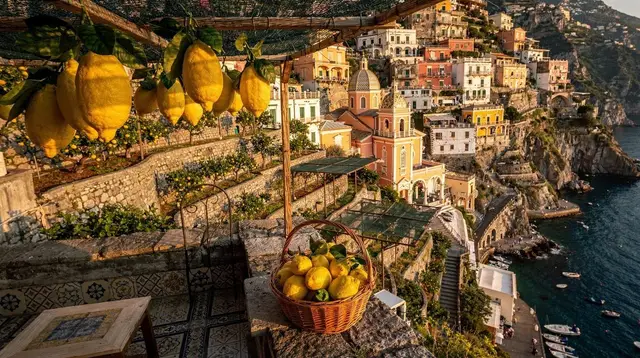
Stand on a terrace above Sorrento and look at the netted citrus trees stepping down the hillside, and it’s easy to assume you’re looking at the same lemon that ends up in every limoncello bottle sold along the Amalfi Coast. It isn’t. Sorrento’s citrus tradition and the Amalfi Coast’s citrus tradition are neighbors, not the same crop, and the difference is not a technicality invented for a guidebook — it’s written into Italian geographic-indication law.
The lemon grown on the Sorrentine Peninsula carries its own protected designation, the Limone di Sorrento IGP (Indicazione Geografica Protetta). The lemon most associated with limoncello from Amalfi and Ravello is the Sfusato Amalfitano, a longer, more pointed variety with its own separate IGP status tied specifically to the Amalfi Coast growing area. Both are real, both are excellent, and both get folded into a single vague phrase — “Amalfi Coast limoncello” — that tourist shops from Naples to Positano use whether or not the lemons inside actually come from Amalfi.
This page is about the Sorrento side of that story: what the peninsula’s own lemon groves look like, where you can actually see them, what a grove visit involves, and why the labeling confusion persists even though the two traditions are legally and botanically distinct.
What Makes Sorrento’s Lemon Different
The Limone di Sorrento IGP covers lemons grown specifically on the Sorrentine Peninsula — around Sorrento itself, Sant’Agnello, Massa Lubrense, and Sant’Agata sui Due Golfi. The designation exists because the peninsula’s particular combination of volcanic soil, sea exposure, and microclimate produces a lemon with a distinctive aromatic oil in its thick skin, prized for both fresh use and limoncello production.
The Sfusato Amalfitano, by contrast, is grown on the terraced slopes around Amalfi, Ravello, and neighboring villages on the coast proper. Its name comes from its shape — “sfusato” roughly meaning tapered or spindle-like — and it’s typically longer and less rounded than the Sorrento variety. Growers on the coast built their own IGP protection around this specific lemon, separate from Sorrento’s.
In practical terms, this means a bottle of limoncello made with genuine Sorrento lemons and a bottle made with genuine Sfusato Amalfitano are both authentic, both traditional, and both legitimately Italian IGP products — but they are not interchangeable, and neither should be marketed as the other. When a shop label simply says “Amalfi Coast limoncello” without specifying which lemon or which IGP, it’s sidestepping that distinction rather than clarifying it.
The Terraced Groves Above Sorrento
You don’t need to leave central Sorrento to see lemon terracing. Climbing into the hills above the old town, particularly on the roads heading toward Sant’Agata sui Due Golfi, reveals hillsides checkered with netted citrus rows — the nets are there to filter sunlight and protect fruit from wind and hail, not for decoration. These terraces have shaped the peninsula’s agricultural landscape for centuries, and the stone retaining walls that hold the soil in place are as much a part of the view as the trees themselves.
For a closer look, Massa Lubrense and Sant’Agata sui Due Golfi are the two areas most worth the short trip out of town. Both sit on higher ground with more continuous stretches of grove than you’ll typically find squeezed into Sorrento’s more built-up center, and both offer wide views back over the Bay of Naples and toward Capri on clear days. Neither location functions as a formal “lemon park” with ticketed entry and fixed hours — what you’re seeing is working agricultural land, privately owned and farmed by local families, much of it inaccessible without an arranged visit.
It’s worth being clear-eyed about what a grove visit is and isn’t. This is not a standardized attraction with a visitor center and posted opening times year-round. It’s a small-scale, family-run activity, and its availability shifts with the agricultural calendar — a grove that welcomes visitors during harvest season may simply not be operating as a visitor experience at other times of year. Anyone planning a trip specifically around seeing the groves up close should treat a guided visit, rather than a spontaneous drop-in, as the reliable option.
Visiting a Grove: What to Actually Expect
A typical lemon grove visit on the Sorrentine Peninsula is built around a small group walking through a working farm with the grower or a family member as guide. Expect narrow terraced paths, netting overhead during the growing season, and an explanation of how the trees are pruned, netted, and picked — this is agricultural tourism at a genuinely small scale, not a factory tour. Many visits are paired with a tasting, a cooking class, or a light meal using produce from the farm itself, which is as much a part of the experience as the grove walk.
Because these are family operations, group sizes tend to be modest and scheduling depends on the farm’s own rhythm rather than a fixed daily timetable. This is worth knowing before booking: a visit arranged through a structured tour is far more likely to actually happen on the day you want than an attempt to show up unannounced at a private grove.
If a hands-on citrus experience is the goal, a few structured options cover different angles of it. A grove walk paired with a full lunch works well for a slower, more immersive half-day, which is the format behind the Sorrento lemon tour with limoncello making and lunch. For visitors who want to see how citrus fits alongside the peninsula’s other agricultural traditions, the Sorrento oil, cheese, and limoncello tour combines a grove stop with olive oil and cheese tastings from the same area.
Those short on time but still wanting a taste of the tradition without leaving town can look at the Sorrento walking tour with limoncello tasting, which threads a tasting into a broader stroll through Sorrento’s historic center. More active travelers sometimes prefer covering more ground between groves by bike, which is the appeal of the Sorrento coast lemon nursery e-bike experience.
Making and Tasting: Beyond the Bottle
Limoncello itself is a liqueur, not a wine, typically bottled at around 25 to 32 percent alcohol, made by steeping lemon peel — never the juice — in alcohol before blending with sugar syrup. On the Amalfi Coast side, that peel is traditionally Sfusato Amalfitano; on the Sorrento side, it’s the Limone di Sorrento. The steeping-and-blending method is broadly shared across the region, which is part of why the two products get lumped together so easily, but the raw material underneath is different.
For visitors who want to see or try the process rather than just drink the result, several experiences build a hands-on limoncello component into a lemon tour. A workshop-style approach to the finished product is offered through the Sorrento lemon tour and limoncello spritz workshop, which pairs a grove visit with mixing your own citrus-based spritz. It’s worth going in with realistic expectations: this is a craft product made in small batches by families and small producers, not a large-scale industrial line, and no two producers’ recipes, yields, or prices will be identical.
Sorting the Labels: A Practical Guide
Given how often “Amalfi Coast limoncello” appears on shelves throughout Sorrento, a little label literacy goes a long way. A bottle that names the Limone di Sorrento IGP or the Sfusato Amalfitano IGP explicitly is telling you something real about its origin. A bottle that only says “Amalfi Coast” or “Costiera Amalfitana” in decorative script, without any reference to a specific lemon variety or IGP certification, may be using either lemon — or citrus sourced from further afield entirely.
| What the label says | What it likely means |
|---|---|
| “Limone di Sorrento IGP” | Made with the protected Sorrento peninsula lemon |
| “Sfusato Amalfitano IGP” | Made with the protected Amalfi Coast lemon |
| “Amalfi Coast limoncello” (no variety named) | Ambiguous — could be either lemon, or neither |
| Sold in Sorrento with a coastal village name/image | Marketing choice, not proof of lemon origin |
This isn’t a call to distrust every bottle in every Sorrento shop — plenty of producers are entirely transparent about their sourcing. It’s simply a reminder that the picturesque coastal branding on a label is not the same as a verified origin claim, and the two IGP names are the only labels that actually guarantee which lemon tradition you’re buying into.
Where the Groves Fit on a Longer Trip
A lemon grove visit pairs naturally with time already planned around Sorrento or the wider Sorrentine Peninsula, rather than functioning as a standalone destination worth a special trip on its own. Visitors staying in Sorrento as a base for exploring the Amalfi Coast or taking a ferry over to Capri often slot a half-day grove visit or cooking class into a slower morning or afternoon between other plans — see our guide to Sorrento’s old town for how to combine both in a single day.
Those coming from further along the coast should remember that the groves here are a genuinely different tradition from what’s grown around Amalfi and Ravello — worth visiting on its own terms, not as a substitute stop for “the Amalfi lemon experience.” If tasting the coast’s own Sfusato Amalfitano tradition specifically is the goal, that’s better arranged on the coast itself; our limoncello tasting guide for Amalfi covers that separately. Travelers still mapping out how much time to spend across the whole region may also find it useful to check how many days the Amalfi Coast actually needs or whether the destination is worth it for their particular trip before slotting in extras like a grove visit.
For a broader culinary angle beyond citrus alone, a proper hands-on class is worth considering — the Sorrento lemon tour and cooking class extends the grove visit into a full cooking session using the same produce, which suits travelers who want a fuller afternoon rather than a quick tasting stop. Combined with a walk through Sorrento’s historic streets or a look at where to stay along the coast, a lemon grove visit rounds out a Sorrento stopover without needing to compete with the coast’s bigger sights for attention.
Frequently Confused Sorrento Lemon Facts
- Sorrento’s lemon and the Amalfi Coast’s Sfusato Amalfitano are two separate IGP-protected varieties, not one shared crop.
- “Amalfi Coast limoncello” sold in Sorrento shops does not guarantee Sfusato Amalfitano lemons were used.
- Lemon groves on the peninsula are small, family-run farms, not standardized attractions with fixed public hours.
- The best terraced views are around Sorrento’s hills, Massa Lubrense, and Sant’Agata sui Due Golfi — not on the Amalfi Coast itself.
- Limoncello is a liqueur made from steeped peel, not juice, and not a wine, typically 25 to 32 percent alcohol.
Sorrento Lemon Groves: Common Questions
Is Sorrento’s lemon the same as the Amalfi Coast’s Sfusato Amalfitano?
No. Sorrento’s lemon is protected under its own Limone di Sorrento IGP designation, separate from the Sfusato Amalfitano grown around Amalfi and Ravello. They are related Mediterranean citrus varieties farmed in neighboring areas, but they are botanically and administratively distinct products.
Why do so many shops in Sorrento sell “Amalfi Coast limoncello”?
It’s largely a marketing label aimed at tourists rather than an accurate description of origin. Some bottles genuinely use Sfusato Amalfitano lemons brought in from the coast, while others use Sorrento’s own citrus but keep the more recognizable “Amalfi Coast” phrase on the label. Reading the small print on origin and IGP certification is the only reliable way to know which lemon is actually inside.
Where can I actually see lemon groves in Sorrento?
Terraced groves line the hills above Sorrento’s old town and are visible from several viewpoints on the way into the city. More extensive terraces sit around Massa Lubrense and Sant’Agata sui Due Golfi, a short drive or bus ride from central Sorrento, where the peninsula’s citrus farming is easier to see up close.
Can I visit a lemon grove on my own, without a tour?
Many groves are private family farms without regular public opening hours, so a self-guided visit often means viewing them from public roads and paths rather than walking among the trees. A guided tour or tasting experience is the more reliable way to enter an actual grove, meet the growers, and see the netting and terracing methods explained.
What season is best for visiting Sorrento’s lemon groves?
The main harvest runs roughly from late spring into summer, though exact timing shifts year to year with weather. Outside harvest weeks, the terraces are still worth seeing for the greenery and the views, but the busier picking and processing activity that makes a visit feel most alive is tied to that seasonal window.
Is a lemon grove visit in Sorrento a big commercial operation?
No. Most groves open to visitors are small, family-run plots rather than industrial facilities. Group sizes tend to be modest, visiting hours depend on the family’s own schedule and the harvest calendar, and the experience is closer to an agricultural family visit than a standardized attraction.
Does Sorrento lemon farming affect the price of limoncello there?
Prices vary by producer, bottle size, and whether the lemons are locally grown or brought in, so no single figure applies across the peninsula. What matters more for a visitor is checking the label for the grower or IGP designation rather than assuming a lower or higher price signals better quality.
Limoncello & Lemon Grove Tours on the Amalfi Coast on GetYourGuide
Verified deep-linked GetYourGuide tours. Book through these links and we earn a small commission at no cost to you.
GetYourGuide does not provide a product photo for this activity — the image shows the meeting point, photographed by us.