Minori Pasta Museum: A Village Story, Not Gragnano's Factory Town
Is the Minori pasta museum the same story as Gragnano's pasta industry?
No. Gragnano, inland near Naples and outside the Amalfi Coast, is known for large-scale dried pasta production. Minori's museum documents the village's own artisanal pasta-making history and is a small, local exhibit, not a branch or replica of Gragnano's industrial tradition.
Two Different Pasta Stories, Not One
Ask most people where Italy’s pasta-making history lives, and the answer that comes to mind is usually Gragnano, the town in the Neapolitan hinterland whose name is stamped on dried pasta packaging worldwide. Gragnano earned that reputation through large-scale industrial production, drying racks strung across narrow streets, and centuries of shipping pasta far beyond Campania. It is not, however, on the Amalfi Coast at all. It sits inland, in the province of Naples, reached by different roads and a different transport network than the coastal towns covered on this site.
Minori’s pasta museum tells a separate, smaller story, and treating it as a satellite of Gragnano’s industry misreads what is actually on display. The Amalfi Coast is not one town with one shared museum theme; it is a string of villages, each holding onto a different craft. Minori’s exhibit documents this village’s own artisanal pasta-making history: local mills, hand tools, and techniques passed down among Minori’s own families, long before industrial drying took over elsewhere in the region. This page exists to draw that line clearly, so a visit here is set up with the right expectations rather than borrowed ones from a town an hour’s drive inland.
Where Minori Sits on the Coast
Minori is one of the coast’s quieter villages, tucked along the Amalfi Coast between Amalfi and Maiori, in the stretch often grouped together as Minori and Maiori. Like every village on this roughly 50-kilometer stretch of coastline, Minori has no train station of its own. There is no rail line running along the cliffside SS163 road at all; the coast is served instead by SITA buses, the SS163 itself for those driving, and seasonal ferries connecting the villages, Capri, Naples, and Sorrento when boat schedules are running.
That absence of a station is worth repeating because it shapes how a visit here should be planned. Travelers coming from Salerno, Amalfi, Ravello, or Sorrento reach Minori by SITA bus along the coastal road, or by ferry in the warmer months, never by train directly into the village. The SITA bus network is the backbone of coastal transport for exactly this reason, and anyone planning a stop at the pasta museum should build the visit around bus or boat timings rather than assuming rail access that does not exist here.
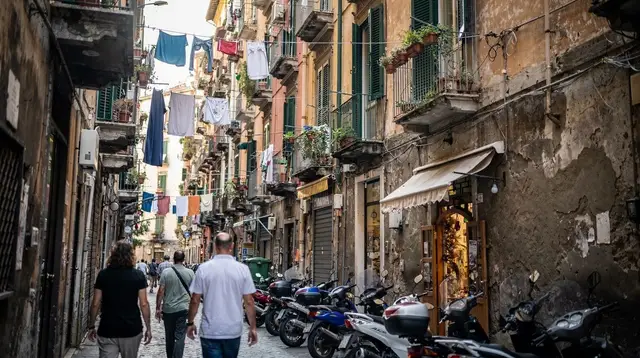
Compared to Amalfi or Positano, Minori carries noticeably less foot traffic, even during the busiest weeks of summer. It is a village most visitors pass through on a coastal itinerary rather than a headline stop, which is part of what makes it worth pausing in. A stroll through Minori’s compact center, its seafront promenade, and a stop at the pasta museum offer a slower pace than the crowds regularly found in Amalfi or Positano’s main piazzas.
What the Museum Actually Covers
The museum in Minori is a small, village-scale exhibit, and it should be approached with that scale in mind rather than expectations built around a major city’s museum collection. Inside, the focus stays on the mechanics and history of local pasta-making: traditional tools, milling equipment tied to the village’s past, and displays explaining how pasta was made here before industrial production reshaped the trade elsewhere in Campania.
This is not a hands-on cooking class or a demonstration kitchen, and it is not built around large crowds moving through timed slots the way major archaeological or art museums operate. It is closer in spirit to a local heritage room, documenting how a specific coastal village practiced a specific craft, tied to Minori’s own history rather than to the pasta industry that grew up around Gragnano. Visitors expecting an expansive, multi-floor museum experience comparable to what’s found in Naples should recalibrate: this is intentionally modest, and that modesty is the point rather than a shortcoming.
Plan on a short visit for the exhibit itself, well under an hour in most cases. That makes it easy to fold into a broader stop in Minori rather than treating it as a half-day destination on its own. Many visitors pair it with time on Minori’s beach, a coffee or pastry stop, or the start of a walk toward neighboring Maiori.
Getting to Minori
Since there is no station in Minori, arriving here means choosing between road and, in season, water.
By SITA bus: This is the most consistent year-round option. Buses run along the SS163 connecting Minori to Amalfi, Ravello (via a connecting route), Maiori, and onward toward Salerno in one direction, and toward Positano and Sorrento in the other. Details on routes, tickets, and timing are covered in the SITA bus guide.
By car: Minori sits directly on the SS163, the coast’s narrow, cliffside corridor. It is not a highway in the usual sense; it is a winding two-lane road with tight curves and, in peak season, added regulation through nearby villages. Anyone driving this stretch should read the SS163 driving guide before setting out, since parking in Minori itself is limited and fills quickly in summer.
By ferry: In season, ferries link the coastal villages, Capri, Salerno, and Sorrento, and Minori is sometimes included on these routes depending on the operator and month. This service is not guaranteed through the winter; several boat lines reduce or suspend service between November and March, so it should never be treated as a fallback available on demand year-round. Check current schedules through the ferry guide rather than assuming a fixed timetable.
Travelers arriving from further afield, such as Naples Airport, should expect a multi-step journey: into the region first, then onward to the coast by bus, train-plus-bus combination, or private transfer, covered in more detail in the Naples airport to Amalfi Coast guide.
How Minori Compares to Amalfi’s Craft Traditions
One of the clearest ways to understand what makes Minori’s museum distinct is to compare it with its closest counterpart on the coast: the Museo della Carta in Amalfi, dedicated to that town’s historic papermaking tradition using the region’s abundant water sources. Amalfi’s paper museum and Minori’s pasta museum are separate institutions in separate villages, each tied to a distinct local craft rather than sharing a theme or a parent organization.
This pattern repeats across the coast. Vietri sul Mare is known for its ceramic and majolica tradition, not Positano or Amalfi. Cetara is tied to its anchovy fishing and colatura di alici production. Each village guards its own specialty, and none of these traditions function as a branch of another town’s industry, whether that’s Gragnano’s pasta or a neighboring village’s ceramics. Understanding this pattern helps make sense of why a small coastal village like Minori has its own dedicated pasta museum in the first place: it reflects genuinely local history, not a marketing extension of a bigger industrial name inland.
What Else Minori Offers
Beyond the museum, Minori has built a reputation among coastal visitors as something of a food-focused village, particularly for its baking tradition. Pastries with roots in the sfogliatella family draw visitors from other parts of the coast specifically for Minori’s bakeries, and this culinary identity sits alongside, rather than replacing, its pasta-making history.
The village also holds Roman-era villa remains close to its seafront, adding a layer of ancient history to the walk from the pasta museum toward the water. Minori’s beach and promenade are notably calmer than the more built-up lidos found in Positano, making it a reasonable stop for travelers looking for a lower-key coastal afternoon.
Active travelers often use Minori as a trailhead or endpoint for walking routes along this stretch of coast. The lemon terraces above the village connect Minori to Maiori by a scenic path, and hiking routes from Ravello descend into Minori as well, offering a way to combine the museum stop with a longer day outdoors.
a guided walk along the lemon terraces between Maiori and Minori is one way to pair the museum with time in the surrounding landscape, following paths shaped by the same agricultural terraces that have supported village life here for generations. For those starting higher up the coast, a hike descending from Ravello’s center down to Minori covers a change in elevation and scenery in a single route, ending in the village where the pasta museum sits.
Travelers who prefer a wider loop covering several villages in one outing can consider a private tour linking Vietri, Cetara, Maiori, and Minori, which puts Minori’s pasta-making history in context alongside Vietri’s ceramics and Cetara’s anchovy tradition on the same day. For a faster-paced way to see Minori together with Ravello or Positano, a Vespa-guided tour departing from Minori offers a different pace along the same coastal roads.
Planning a Stop at Minori
| Detail | What to know |
|---|---|
| Location | Minori village center, between Amalfi and Maiori |
| Train access | None; nearest stations are Salerno or Sorrento |
| Typical visit length | Under an hour for the museum exhibit |
| Best paired with | Minori’s beach, bakeries, or a hike to Maiori or from Ravello |
| Crowd level | Noticeably quieter than Amalfi or Positano |
| Access | SITA bus, SS163 by car, or seasonal ferry |
Because Minori sits off the busiest tourist circuit, it works best as a deliberate stop on a longer coastal day rather than a rushed add-on. Travelers building a broader plan around this stretch of coast may find it useful to read the Amalfi Coast without a car guide or the wider itinerary for public transport along the coast, both of which cover how a village like Minori fits into a day that also includes Amalfi, Ravello, or Maiori.
For travelers weighing where to spend limited time on this part of the coast, Minori and Maiori’s beaches offer a natural complement to a museum visit, and the Valle delle Ferriere hike starting near Amalfi provides another outdoor option within easy reach by bus.
Minori Pasta Museum: Frequently Asked Questions
Is the Minori pasta museum related to Gragnano?
No. They tell different stories. Gragnano, in the Neapolitan hinterland outside the Amalfi Coast, built an industrial-scale dried pasta trade shipped worldwide. Minori’s museum is dedicated to the village’s own, smaller artisanal pasta-making tradition, tied to local mills and hand-rolled techniques rather than factory production.
How big is the Minori pasta museum?
It is modest, sized to Minori itself rather than to a major city collection. Expect a compact space with a handful of rooms covering traditional tools, milling equipment, and the local history of pasta-making, not the scale of a large urban museum.
How do I get to Minori without a car?
Minori has no train station. The village is reached by SITA bus along the SS163 coastal road, from Amalfi, Ravello, Salerno, or other coastal towns, or by seasonal ferry when boat services are running.
Is Minori as crowded as Amalfi or Positano?
No. Minori sees noticeably less foot traffic than Amalfi or Positano, even in high season, which makes a stop at the pasta museum and a walk through the village a calmer alternative to the coast’s busiest hubs.
How much time should I set aside for the museum?
Plan for a short visit, generally well under an hour for the exhibit itself, which pairs naturally with time spent on Minori’s seafront, its bakeries, or a walk toward Maiori rather than filling a half day on its own.
Is the Minori pasta museum the same as Amalfi’s paper museum?
No, they are separate museums in separate villages. Amalfi’s Museo della Carta documents the town’s historic papermaking tradition, while Minori’s museum documents pasta-making. Each Amalfi Coast village preserves a distinct craft rather than sharing one museum theme.
What is Minori best known for besides pasta?
Minori is known for its baking tradition, notably sfogliatella-style pastries, its Roman-era villa remains near the seafront, and as one of the quieter beach towns on the coast between Amalfi and Maiori.
Museum Tours on the Amalfi Coast on GetYourGuide
Verified deep-linked GetYourGuide tours. Book through these links and we earn a small commission at no cost to you.
GetYourGuide does not provide a product photo for this activity — the image shows the meeting point, photographed by us.