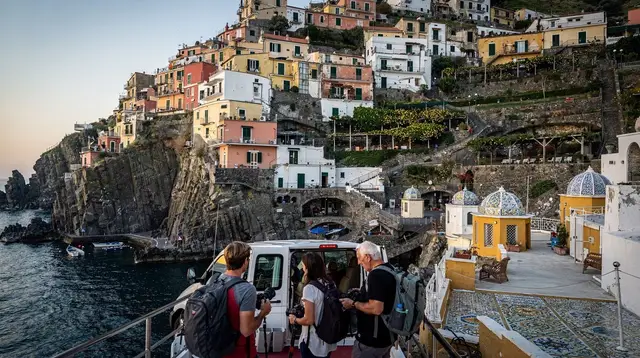
Amalfi Coast by Public Transport: A 4-Day No-Car Itinerary
Four towns, four days, zero rental cars: this itinerary strings together Sorrento, Positano, Amalfi and Ravello using nothing but the SITA bus network, the occasional seasonal ferry, and the Circumvesuviana train that gets you here from Naples in the first place. It is built for travellers who want to see the highlights of the Amalfi Coast on a tight budget, without the stress of the SS163 or the near-impossibility of parking in high season.
The trade-off is honest: this is not a leisurely week where you linger for two nights in each place. It is four focused days, one town at a time, moving by bus or boat rather than by rental car. If that sounds too rushed, the 5-day version of this route adds breathing room; if you want the full case against driving here, read why there is no train on the Amalfi Coast before you go.
Why public transport works better here than a rental car
The single fact that shapes this whole itinerary is this: Positano, Amalfi and Ravello have no train station. The only town in this itinerary connected to the national rail network is Sorrento, reached from Naples by the Circumvesuviana line. Everywhere else on the coast, you arrive by SITA bus, by seasonal ferry, or by car — and the car option comes with narrow lanes, summer ZTL zones in Amalfi, Positano and Ravello, and parking that is either scarce, expensive, or both.
For a budget-focused trip, that changes the math. A SITA ticket costs a few euros; a day of parking in Positano in August can cost more than a night’s accommodation elsewhere on the coast, when a spot is available at all. This itinerary treats the bus network not as a compromise but as the actual most efficient way to see four towns in four days.
For the full breakdown of routes, tickets and timetables, see the SITA bus guide and the general primer on doing the Amalfi Coast without a car.
Day 1: Arrive in Sorrento
Start in Naples. From Naples Centrale, take the Circumvesuviana train toward Sorrento — it is the same line that serves Pompeii and Herculaneum, so double-check you are on a Sorrento-bound service rather than one terminating earlier. If you are landing at Naples Airport, see the airport-to-Amalfi-Coast guide for the connection details before you leave the terminal.
Sorrento is your base for the next four nights, and the only stop in this itinerary with a proper train station, which is exactly why it works as a hub. Spend the afternoon getting oriented in the old town: the lemon-scented lanes near Piazza Tasso, the clifftop views over the Bay of Naples, and the harbour at Marina Grande. Sorrento is also where the SITA buses toward the Amalfi Coast originate, so use part of the day to locate the bus stop near Piazza Tasso and confirm tomorrow’s schedule.
In the evening, settle into something hands-on rather than another restaurant table: a hands-on pizza-making class in Sorrento is a low-key way to spend your first night without needing to plan transport anywhere at all.
Overnight: Sorrento.
Day 2: Positano by SITA bus
This is the day the itinerary earns its name. From Sorrento, catch the SITA bus heading east along the SS163 toward Positano. The distance is short on a map, but the road is not: narrow, cliff-hugging, and prone to slow single-file traffic in summer when tour buses and rental cars queue at the tightest bends. Budget significantly more time than the timetable suggests, especially between June and September, and get to the stop early — buses fill up and will not wait for stragglers.
Once in Positano, the SITA drops you at the upper part of town; the walk down toward the water is mostly downhill on the way in and a real climb on the way back, so pace your day accordingly. Spend the morning wandering the stacked lanes and boutiques, then head down to the water. Positano’s beaches are not free public sand in the way visitors sometimes expect — most of the best stretches are paid lidos — so factor that into your budget for the day.
In the afternoon, join a guided walk through Positano’s old town to see the layout of the village properly, including corners you would likely miss navigating alone on a single-day visit. Before returning, confirm the last SITA bus back to Sorrento, or check whether a seasonal ferry connection suits your evening better — Positano’s ferry dock links to Sorrento and beyond roughly from Easter through October.
Overnight: Sorrento (via SITA bus or seasonal ferry back from Positano).
Day 3: Amalfi by bus or ferry
Today’s destination is the town that gives the whole coast its name. From Sorrento, the most direct route to Amalfi by public transport during the warmer months is often the seasonal ferry, which cuts out the winding road entirely and delivers coastal views most SITA passengers never get. If you are travelling outside the roughly Easter-to-October ferry window, or if sea conditions cancel the crossing, the SITA bus remains the reliable fallback — see the ferry guide for exactly which months and routes actually run.
In Amalfi, spend the day around the Piazza Duomo and the cathedral steps, then take in the town’s two lesser-known traditions: this is where Amalfi’s paper craft (carta bambagina) originated, not Positano or elsewhere on the coast, and it is worth an hour in the paper museum if you enjoy that kind of detail. In the afternoon, join a walking exploration of Amalfi’s old town and harbour to get context on the town beyond the main square.
For a comparison of how Amalfi and Positano actually differ day to day — not just in postcard shots — see Positano vs Amalfi, useful context if you are deciding how to split your remaining time.
Overnight: Sorrento (return by the SITA bus from Amalfi’s bus terminal, or by ferry if conditions allow).
Day 4: Ravello, then back to Sorrento
Ravello sits roughly 350 metres above the coastline, perched on a ridge rather than at the water’s edge, which is exactly why it has no beach of its own — swimmers head down to Amalfi or Minori instead. The most practical route today is Sorrento to Amalfi by SITA bus, then a connecting SITA bus up the switchbacks to Ravello; direct services from Sorrento are limited, so plan the connection rather than expecting a single through bus.
Once in Ravello, the gardens are the reason most visitors come: spend the morning at Villa Rufolo and Villa Cimbrone, both known for terraces that look straight out over the Gulf of Salerno. If you would rather have the connections handled for you on this last full day, a guided day tour to Ravello covers the same ground with the transport built in, which can be a useful way to close out the trip if you are tired of timing bus connections by this point.
In the late afternoon, retrace the route down to Amalfi and catch the SITA bus back toward Sorrento, allowing extra time given the winding descent and likely traffic. For a longer soak in Ravello and Amalfi rather than a single fast day, the Ravello vs Positano guide is worth reading before your next visit.
Overnight: Sorrento, ready for departure the next morning via the Circumvesuviana back to Naples.
Budget notes for a car-free trip
Keeping this itinerary car-free is also what keeps it a budget trip. A few concrete points:
| Item | Typical cost (per person) | Notes |
|---|---|---|
| SITA single ticket | A few euros | Buy at tabacchi or ticket machines before boarding |
| SITA day pass | Moderate, cheaper than 3+ single tickets | Worth it on days with multiple rides |
| Seasonal ferry (short hop) | More than a SITA ticket, less than a private boat | Runs roughly Easter to October only |
| Circumvesuviana (Naples-Sorrento) | Low cost, standard regional fare | Buy at the station, validate before boarding |
| Rental car + parking (for comparison) | Often exceeds bus/ferry costs combined | Add ZTL risk and difficulty finding spots |
The temptation, especially if a bus is delayed or a ferry is cancelled, is to book a last-minute rental car to “save time.” Resist it. A car picked up mid-trip still has to navigate the same SS163, the same ZTL restrictions in Amalfi, Positano and Ravello, and the same parking scarcity that made public transport the sensible choice in the first place — the apparent time saved rarely survives contact with the actual road. The more reliable fix is the boring one: buy SITA tickets a little ahead of when you need them rather than assuming you can sort it out on the spot, and build slack into your schedule on travel days rather than on sightseeing days.
For a fuller cost breakdown across accommodation, food and activities, see the Amalfi Coast budget guide.
Frequently asked questions about doing the Amalfi Coast by public transport
Is it possible to see the Amalfi Coast without renting a car?
Yes, and for first-time visitors it is usually the easier option. SITA buses connect every coastal town along the SS163, ferries add a seasonal alternative between Positano, Amalfi and Salerno, and the Circumvesuviana train links Naples to Sorrento. A car adds parking stress and ZTL restrictions without saving real time.
Do I need to book SITA bus tickets in advance?
Tickets can be bought at tabacchi shops, some bars and ticket machines, but they cannot be reserved for a specific departure. In July and August, buses from Sorrento and Positano fill up well before the scheduled time, so arrive at the stop at least 20-30 minutes early rather than assuming a seat.
Which town should I use as a base for this itinerary?
Sorrento. It is the only town in this itinerary with a train station, has the widest range of budget accommodation, and sits at the end of the SITA bus line, which makes it a practical hub for day trips to Positano, Amalfi and Ravello.
Can I reach Amalfi by ferry instead of by bus?
Only seasonally. Ferries run between Positano, Amalfi, Salerno and Capri roughly from Easter to October, with services thinning out or stopping entirely in poor weather and disappearing in winter. Always have the SITA bus as a backup plan rather than treating the ferry as guaranteed.
Is 4 days enough to cover Sorrento, Positano, Amalfi and Ravello by public transport?
It is enough for one full day in each place, which suits a first visit focused on orientation rather than deep exploration. Travellers who want to slow down, hike, or add Capri should look at a 5-day or one-week version of this itinerary instead.
Is public transport cheaper than a rental car on the Amalfi Coast?
In most cases, yes, once fuel, parking, ZTL fines and rental insurance are added up. A SITA day pass or single tickets cost only a few euros per ride, while parking in Positano or Amalfi in high season can run into tens of euros a day, when a space is available at all.
What is the biggest mistake first-time visitors make with SITA buses?
Underestimating both the queue and the road. Because the SS163 is narrow and winding, a scheduled 40-minute ride can take well over an hour in August traffic, and buses that look full will still leave without latecomers. Build in buffer time and do not schedule a tight connection immediately afterward.
Do Positano, Amalfi and Ravello have train stations?
No. None of them do. The nearest stations are in Sorrento and Salerno, both outside the coastal stretch itself, which is why SITA buses and seasonal ferries carry almost all visitor traffic along the coast.
tours.4 days
Verified deep-linked GetYourGuide tours. Book through these links and we earn a small commission at no cost to you.
GetYourGuide does not provide a product photo for this activity — the image shows the meeting point, photographed by us.