Amalfi Coast in a Week: A Realistic 7-Day Itinerary
Why a week means fewer stops, not more
A full week on the Amalfi Coast tempts a lot of travellers into overreaching: Naples, Pompeii, Herculaneum, Vesuvius, Sorrento, Positano, Amalfi, Ravello and Capri all fit on a map that looks small. They do not fit into seven days of unhurried travel. This itinerary treats Naples as the entry point, gives Pompeii or Herculaneum its own day rather than a rushed half-day bolt-on, and reserves a full day each for Positano, Amalfi and Ravello together, and for Capri. The trade-off is real: you will not see Vesuvius’s crater and Pompeii’s ruins on the same day, and you will not add Herculaneum on top of Pompeii without cutting something else. That restraint is what keeps a week on this coast enjoyable instead of exhausting.
If seven days still feels long for your trip, compare this plan against a tighter 3-day itinerary or a 5-day version before committing.
Day 1: Arrive in Naples, walk the historic center
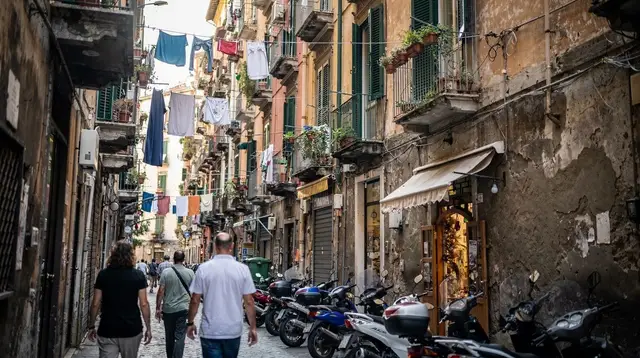
Fly or arrive by train into Naples and spend the afternoon in the historic center rather than rushing straight to the coast. Naples is the gateway to this region, not part of the Amalfi Coast itself — it sits over an hour’s drive away on the Bay of Naples, and treating it as a destination in its own right, even briefly, pays off. Walk the narrow lanes of Spaccanapoli, and if you have any appetite left after the flight, a hands-on pizza lesson is a good way to understand why Neapolitan pizza has its own DOP rules. A guided pizza-making class booked for a later evening in Sorrento works just as well if today is a travel day only.
Day 2: Pompeii OR Herculaneum, not both
Pick one archaeological site for today — Pompeii and Herculaneum are two distinct towns destroyed by two different mechanisms, and cramming both into a single day means seeing neither properly. Pompeii is the larger, more famous site, buried under falling ash and pumice; Herculaneum is smaller and denser, preserved by a pyroclastic flow that carbonized wood, furniture and food in a way ash never could. Whichever you choose, do not add a Vesuvius crater hike on top: the volcano’s summit trail requires a timed, numbered ticket and deserves its own half-day, and trying to see the crater, plus Pompeii, plus travel time back to Naples in one day means rushing all three. Save Vesuvius for a dedicated day trip on a future visit, or trade it for one of the two ruin sites this time.
Day 3: Circumvesuviana to Sorrento
Take the Circumvesuviana train from Naples to Sorrento — this is the only direct rail link into the region, and it does not touch a single Amalfi Coast village itself; Positano, Amalfi and Ravello have no railway station at all. The ride passes through Pompeii’s and Herculaneum’s own stops, which is worth knowing if you want to swap today’s order. Once in Sorrento, settle into the old town, walk the clifftop gardens above the marina, and use the rest of the day to slow down after two dense city days. Sorrento is also the easiest base in the region for day trips without a car, so it earns its own night here rather than a same-day pass-through.
Day 4: SITA bus to Positano
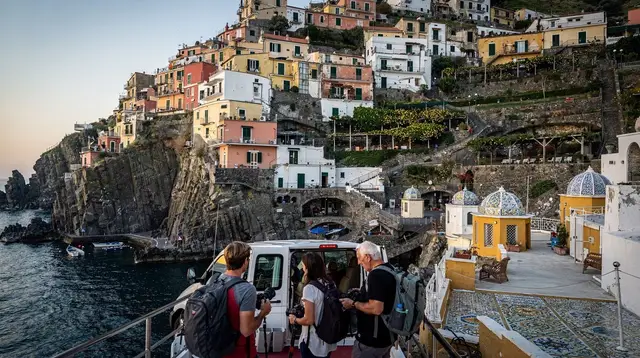
From Sorrento, catch the SITA bus toward the coast — the SS163 corniche road is narrow, cliff-hugging, and subject to ZTL traffic restrictions and one-way alternation in high season, which is exactly why almost everyone takes the bus rather than a rental car. Positano is your first coastal stop: its cliffside houses look striking from the water, and its beaches — Spiaggia Grande and Fornillo — are mostly paid lidos rather than free stretches of sand, so plan for that if beach time matters to you. An afternoon boat excursion is a good way to see the village from the sea and continue along toward Capri’s coastline the next day; a boat trip along the coast toward Capri fits well here if you want to combine sightseeing with a swim stop.
Day 5: Amalfi and Ravello
Continue by SITA bus to Amalfi town, the coast’s namesake and a UNESCO World Heritage site, known for its striped cathedral and its centuries-old paper-making tradition — the Museo della Carta here, not in Positano or elsewhere, is where that craft survives. In the afternoon, head up to Ravello, perched roughly 350 meters above the sea; it has no beach of its own, and reaching the shore means a steep road or staircase down to Amalfi or Minori. Ravello’s gardens and clifftop views more than make up for the missing beach. A guided walk through the two towns, such as a walking tour of Ravello’s gardens and viewpoints, or a boat-based day covering the coastline with an Amalfi Coast sightseeing tour, both work well for this stretch.
Day 6: Capri by hydrofoil from Sorrento
Base yourself back in Sorrento or the coast for an early hydrofoil to Capri — the fastest connection to the island from this side of the bay. On Capri, the funicular carries you from Marina Grande up to Capri town, while Anacapri is reached separately by bus or by the Monte Solaro chairlift. If the Blue Grotto is on your list, know that it depends entirely on tide and sea conditions and closes without notice; morning light is generally best, but nothing is guaranteed in advance, so build in a backup plan rather than anchoring the whole day around it. A half-day Capri excursion departing from Sorrento covers the ferry crossing and the funiculars in one booking, which simplifies the logistics considerably.
Day 7: Return to Naples for departure
Head back toward Naples for your flight or onward train, either via Sorrento’s Circumvesuviana connection or by bus to Salerno and rail from there, depending on which end of the coast you finish at. Build in more transfer time than feels necessary — ferries between the villages, Capri and Naples run frequently in high season but thin out sharply, or stop altogether, outside roughly April to October, so never treat a boat connection on departure day as guaranteed. If your flight is in the evening, a last walk through Naples or a stop in Salerno, a useful transport hub in its own right, rounds out the week without adding pressure.
Where this itinerary leaves things out
This plan deliberately skips Vesuvius’s crater trail, Paestum’s Greek temples, and a second archaeological site beyond your Day 2 choice. All three are worth a trip, but not at the cost of rushing Positano, Amalfi, Ravello or Capri. If you have an extra day or two, look at an Amalfi Coast and Paestum extension or swap Day 2’s single site for a Naples–Pompeii–Vesuvius two-day plan before you start the coastal leg.
FAQ: planning a week on the Amalfi Coast
Can I fit Pompeii, Herculaneum and Vesuvius into one day?
Not comfortably. Pompeii and Herculaneum are separate archaeological sites in separate towns, and Vesuvius requires a timed, numbered ticket for its crater trail. Combining all three into a single day usually means rushing each one and missing the numbered-entry window for the volcano.
Related reading
For the transport logistics behind these transfers, see the Circumvesuviana train guide and the SITA bus guide. If you land at Naples airport, check getting from Naples airport to the Amalfi Coast before you go. For Day 2’s choice, Herculaneum vs Pompeii breaks down the difference, and the Vesuvius crater hike explains the numbered-ticket system for a future visit. Before booking the Blue Grotto stop on Day 6, read the Blue Grotto guide, and for Ravello’s cathedral, see the Ravello Duomo guide.
Do I need a rental car for this itinerary?
No. The SS163 coastal road is narrow, congested in summer, and subject to ZTL restrictions in Amalfi, Positano and Ravello. This itinerary relies on the Circumvesuviana train, SITA buses, and ferries or hydrofoils, which is how most visitors get around without a car.
Is Ravello worth visiting if it has no beach?
Yes. Ravello sits about 350 meters above the sea and has no beach of its own — you’d descend by road or staircase to Amalfi or Minori for that — but its gardens, clifftop views and quieter pace are a deliberate contrast to the busier coastal towns.
Can I do a Blue Grotto visit on a fixed schedule?
Not reliably. The Blue Grotto’s access depends on tide height and sea conditions, and it closes without advance notice. Treat it as a bonus if conditions allow, not as a guaranteed stop on your Capri day.
Is Naples worth two days, or should I go straight to the coast?
Two days lets you see the historic center and fit in one archaeological site without rushing either. Going straight to the coast is faster, but you’d then need to backtrack for Pompeii or Herculaneum later, which usually costs more time than it saves.
Do ferries run between the coastal towns year-round?
No. Ferry and hydrofoil connections between the villages, Capri, Sorrento and Naples are frequent from around April to October and thin out sharply, or stop entirely, in the off season. Never plan a winter itinerary around a boat connection without a bus or train backup.
What’s the biggest mistake people make planning a week here?
Trying to visit all seven area highlights — Naples, Pompeii, Herculaneum, Vesuvius, Sorrento, the coast towns and Capri — as if each deserved only a few hours. Cutting the list to five stops, each with a proper half or full day, produces a far better trip than a rushed tour of everything.
tours.7 days
Verified deep-linked GetYourGuide tours. Book through these links and we earn a small commission at no cost to you.
GetYourGuide does not provide a product photo for this activity — the image shows the meeting point, photographed by us.