Cetara and Its Anchovy Sauce
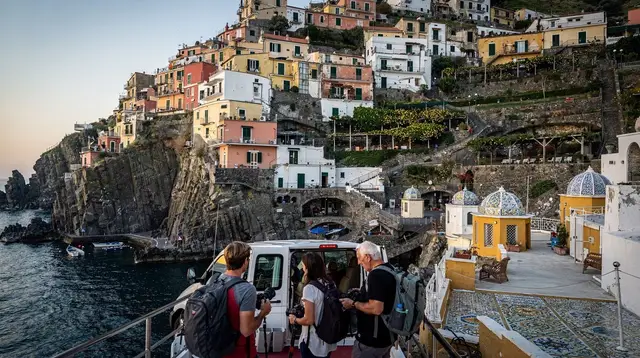
I almost skipped Cetara. On my first trip along the coast, I’d already ticked off Positano’s photo spots, wandered Amalfi’s cathedral steps, and figured I’d seen the range of what these villages had to offer. Cetara looked, from the bus window, like one more cluster of pastel houses on a cliff. I’m glad the bus happened to stop there long enough for me to get off and look around, because it turned out to be one of the few places on this coast that isn’t really trying to be pretty for anyone. It’s a fishing village first, and everything else is secondary.
That distinction matters more than it sounds. A lot of the coast between Vietri sul Mare and Atrani has reinvented itself, in one way or another, around visitors — boutique hotels, view-focused restaurants, boat rental stands. Cetara still has a working harbor with actual fishing boats coming and going, nets stacked on the quay, and a rhythm that has nothing to do with tour schedules. If you want a sense of what a coastal town here looked like before this stretch became a bucket-list destination, this is closer to it than most.
The village behind the anchovies
Cetara sits in a narrow valley between Vietri and Maiori and Minori, tucked in tight enough that you can walk from one end to the other in a few minutes. There’s a small beach, a watchtower, and a church, but none of it is the reason people who know the coast well seek the village out. The reason is what happens to the anchovies that come off those boats.
Cetara is specifically known for colatura di alici, a fermented anchovy sauce. I want to be careful here, because it’s tempting to describe this as some ancient unbroken tradition with a precise recipe passed down for centuries — and I genuinely don’t know that, so I won’t claim it. What I can tell you is that the sauce exists because of the anchovy fishing this harbor has long depended on, and that it’s treated locally as something distinct, not just a byproduct of the catch.
The process, broadly, involves salting anchovies and letting them ferment over time, with the resulting liquid drawn off as the sauce itself — clear, amber-colored, and intensely savory. It bears more resemblance to a fish sauce you’d find in Southeast Asian cooking than to anything jarred and sold as “anchovy paste” elsewhere in Italy. I won’t give you a specific recipe or claim to know the exact method any one producer uses, because that level of detail varies and I don’t want to pass off a guess as fact. What I will say is that it’s used with restraint — a spoonful stirred into pasta at the end of cooking, not a sauce you’d ladle on generously.
Why I wouldn’t call this “the Amalfi Coast flavor”
Here’s where I think a lot of quick coverage of this coast gets sloppy: it’s easy to read about colatura di alici in Cetara and walk away assuming it’s some coast-wide specialty, the way limoncello gets treated as if every village makes it identically. It isn’t. This is specifically a Cetara thing, tied to this particular fishing village and its particular relationship with the sea. Vietri sul Mare, a short distance away, has its own entirely separate identity built around hand-painted ceramics — it has nothing to do with anchovies. Amalfi has its own tradition in papermaking. Positano trades on its beaches and its color-coordinated shopfronts. None of that overlaps with what Cetara does.
I think that’s actually the more interesting way to think about this stretch of coast: not as one uniform “Amalfi Coast experience,” but as a string of villages that each ended up specializing in something different, often for reasons tied to their geography — a valley good for paper-drying, a harbor good for fishing, a cliffside good for terracing lemon groves. Cetara’s version of that specialization happens to be edible.
What I actually did there
I didn’t have a grand itinerary in Cetara — I don’t think the village really invites one. I walked the small waterfront, watched a couple of boats come in, and had lunch at a place that put colatura into a simple spaghetti dish rather than anything elaborate. It was good, but I’d be lying if I said it was a life-changing meal. What made it worth the stop was the context: knowing what the sauce was, where it came from, and how specific it is to this one harbor, rather than eating it as an anonymous line on a menu somewhere else on the coast.
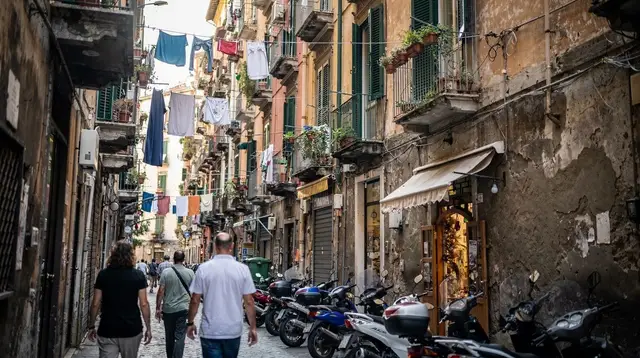
If you’re staying in Amalfi, Salerno, or even further along in Sorrento, Cetara works well as a short stop rather than a full day. There’s no train here — like most of this stretch, it depends on the SITA bus or, in season, the ferry — so I’d build it into a coastal bus or boat day rather than a dedicated round trip. If your base is further out, in Naples, it’s also easy to combine an anchovy-sauce detour with time in the city itself; I did a version of this where I paired a morning walk through Naples’ old center with an afternoon along the coast, and it worked better than trying to cram everything into one long day. A guided walking tour through Naples’ historic center is a reasonable way to structure that first half if you’re not confident navigating on your own.
A village, not a flavor for the whole coast
I keep coming back to this because I think it’s the easiest mistake to make when reading about Cetara secondhand: treating colatura di alici as some general “coastal specialty” you’ll find everywhere, rather than something specifically rooted in this one fishing village. It isn’t shared by Positano, Ravello, or Praiano the way, say, lemon groves are common up and down the coast. It’s Cetara’s, tied to its boats and its harbor, and I think that specificity is exactly what makes it worth a stop rather than a footnote.
If you’re spending time in Naples before or after the coast, an evening out is an easy way to bookend a day trip — I’d pair the daytime detour to Cetara with a different pace in the evening, like a nighttime walking tour of Naples once you’re back. And if you’re building your route around Naples generally, a combined day tour to Sorrento from Naples or a catamaran cruise around the Gulf of Naples can help fill in the transport gaps on a coast where there’s no train linking these towns directly.
Cetara isn’t going to be the highlight of most people’s Amalfi Coast trip, and I don’t think it needs to be. It’s a good corrective, though, to the idea that every village here is selling the same postcard. If you want to understand the difference, it helps to also see what Vietri sul Mare, Cetara, and Atrani each do differently, or to compare it against the beach-first villages covered in the Minori and Maiori beaches guide, the ceramics tradition detailed in the Vietri sul Mare ceramics guide, or the quieter character described in the Atrani traditional village guide.
Read together, they make the case better than I can in one post: this coast isn’t one town repeated twelve times, it’s twelve different answers to the same stretch of cliff and sea, and Cetara’s answer happens to taste like anchovies. For the fuller picture of the village itself, the Cetara fishing village guide and the dedicated colatura di alici guide go deeper than I have room for here, and if you’re mapping out where Cetara fits on a longer trip, the SITA bus guide and the ferry guide between the coast, Sorrento, and Capri cover how to actually get there without a car, since driving the SS163 isn’t something I’d recommend for a first-timer squeezing in a quick stop.
Frequently asked questions about Cetara and its anchovy sauce
What makes Cetara different from other Amalfi Coast villages?
Cetara is a working fishing village, not a resort town, and it’s specifically known for colatura di alici, a fermented anchovy sauce made from local anchovy fishing. That culinary identity sets it apart from villages known instead for ceramics, paper, or beach clubs.
Is colatura di alici the same thing as regular anchovy paste?
No. Colatura di alici is a clear, amber liquid made by fermenting salted anchovies over time, closer in concept to a fish sauce than to a paste or fillet. It’s used sparingly, usually stirred into pasta at the last minute rather than cooked.
Can I watch colatura being made in Cetara?
Some small producers in the village work with anchovies and colatura, and you may see barrels, nets, or fishing boats around the harbor, especially early in the day. I’d rather not point you to a specific producer or workshop here, since availability and access change and I don’t want to send you somewhere that may not welcome drop-in visitors.
Is colatura di alici made all along the Amalfi Coast?
No — it’s specifically associated with Cetara. Other villages on the coast have their own distinct traditions instead: Vietri sul Mare is known for ceramics, and Amalfi for handmade paper, not anchovy sauce.
Is Cetara worth visiting if I’m not interested in food?
It’s still a genuinely different stop from the more photographed villages, since it’s a real working fishing harbor rather than a village built around tourism. If your main interest is beaches, photo spots, or nightlife, other villages on the coast may suit you better.
How do I get to Cetara?
Like the rest of the coast between Vietri sul Mare and Amalfi, Cetara has no train station. It’s reached by the SITA bus along the SS163, by seasonal ferry, or by car, keeping in mind the road is narrow and winding.
Where can I try colatura di alici if I’m not staying in Cetara?
It shows up on menus in restaurants along the coast, often in a simple spaghetti dish, so you don’t necessarily need to visit Cetara itself to taste it, though I think the village is worth the stop regardless.
tours.Culture
Verified deep-linked GetYourGuide tours. Book through these links and we earn a small commission at no cost to you.
GetYourGuide does not provide a product photo for this activity — the image shows the meeting point, photographed by us.