Why Go Beyond Vietri sul Mare
Every itinerary along the Amalfi Coast eventually reaches its southern edge at Vietri sul Mare, the ceramics town where the coastal road hands off to the wider Gulf of Salerno. Most visitors stop there. Pushing further south, past Vietri, leads to two places that do not belong to the Amalfi Coast at all, geographically or historically, but that reward the detour precisely because they are so different from it.
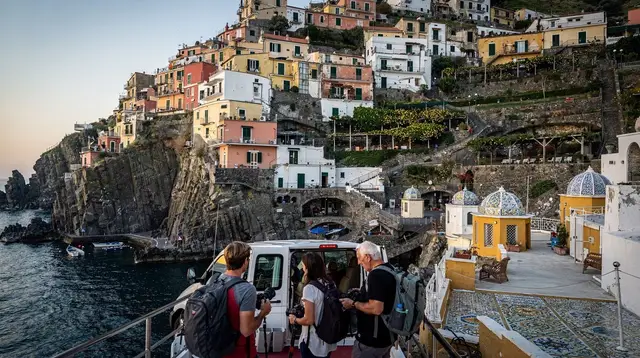
Paestum and Salerno sit south of the Sorrentine Peninsula, south of Amalfi, and outside the UNESCO-listed Costiera Amalfitana boundary. That distinction matters, because it explains what you find there. The Amalfi Coast’s architectural identity is medieval and Baroque: cathedrals like the Amalfi Cathedral, majolica-tiled domes, cliffside villages built in stacked terraces from the 9th century onward. Nothing on the coast itself predates the medieval maritime republics by any meaningful stretch. Paestum breaks that pattern completely. It offers a layer of antiquity, three Greek Doric temples still standing largely intact, that the Amalfi Coast simply does not have and was never going to have. This is not a curiosity tacked onto a coastal itinerary; it is one of the most important Greek archaeological sites in Europe, and it deserves to be visited on its own terms rather than as an afterthought squeezed between beach days.
Salerno adds a second, more practical reason to head this way. Every village on the Amalfi Coast proper, from Positano to Minori and Maiori, has no railway station at all; the coast is served only by the SS163 corniche road, SITA buses, and seasonal ferries, as covered in the guide to getting around without a car. Salerno breaks that isolation. It has a proper regional train station on the main line, with connections toward Naples, Battipaglia, and further south into Cilento. For anyone arriving or departing by rail rather than by car or transfer, Salerno functions as a genuine alternative gateway to Naples or Sorrento.
Two Places, Two Very Different Reasons to Visit
It helps to treat Paestum and Salerno as separate destinations that happen to sit close together, rather than as a single stop. Salerno is a working regional city with a historic center, a seafront promenade, and a transport hub function. Paestum is an archaeological park roughly 40 minutes further south, set among flat agricultural land in the Cilento area, with none of the vertical drama of the coast you have just left behind.
Paestum: Greek Temples, Not a Roman Ruin
Paestum was founded by Greek colonists from Sybaris around the 6th century BC under the name Poseidonia, later becoming Roman Paestum. The site preserves three Doric temples in a remarkable state of conservation: the Temple of Hera, the so-called Temple of Neptune (actually also dedicated to Hera), and the Temple of Athena. Their scale and completeness put them among the best-preserved Greek temples anywhere, including mainland Greece. A dedicated guide to the temples covers layout, opening hours, and the on-site museum, which holds the famous Tomb of the Diver frescoes.
The surrounding Cilento countryside, part of the Cilento, Vallo di Diano and Alburni National Park, is also known for buffalo mozzarella production and small-scale wine estates, which is why food and wine experiences cluster around Paestum rather than around the coastal villages further north.
Salerno: A City With a Station
Salerno is not a coastal resort town in the Amalfi Coast sense. It is a regional capital with its own walkable historic center, a medieval cathedral, and a long seafront lungomare. Its practical value for travelers comes from its train station: unlike Amalfi, Positano, or Ravello, Salerno sits on the regional and national rail network, which makes it a workable arrival or departure point for anyone connecting onward to Naples, Rome, or the airport, as detailed in the comparison of transport options from Naples to Sorrento and the broader SITA bus guide for the coast itself.
Because the two places serve such different purposes, the order in which you visit them matters. Travelers coming from the coast by bus or ferry typically pass through Salerno on the way south anyway, which makes it natural to treat Salerno as a brief staging point on the outbound leg and save a proper look at its old town for the return, once the temples are done and there is no more train or bus to catch that day. Trying to fit a full Salerno visit and the Paestum site into the same tight window usually shortchanges one or the other; travelers who want both done justice are generally better off with the two-day structure described later in this guide, or splitting the pair across two separate outings from a coastal base.
How to Get There From the Amalfi Coast
There is no direct coastal road link from Amalfi or Positano to Paestum; the SS163 corniche does not continue south to Cilento. The practical route runs through Salerno first.
| From | To | Method | Approx. time |
|---|---|---|---|
| Amalfi | Salerno | SITA bus or ferry (seasonal) | 45–75 minutes |
| Positano | Salerno | SITA bus (via Amalfi) or ferry | 70–100 minutes |
| Salerno | Paestum | Regional train or Cilento bus | 35–45 minutes |
| Sorrento | Salerno | Train via Naples, or road via Amalfi Coast | 1.5–2.5 hours |
The Salerno-to-Paestum leg is a separate journey on a separate corridor from the SS163: it runs inland and south along the coastal plain toward Battipaglia and Cilento, not along the cliffside route used by driving guides to the SS163. Regional trains from Salerno’s station reach Paestum in well under an hour, and Cilento-bound buses cover the same ground at a similar pace. This is a genuinely different transport system from the one used along the coast itself, which is worth planning for rather than assuming will connect seamlessly.
For a day trip planned from the coast rather than from Salerno, the dedicated day trip from Salerno to Paestum guide lays out timetables and a same-day return structure in more detail.
What a Day (or Two) Looks Like
A single focused day works well if the goal is the temples and museum: an early regional train or bus from Salerno to Paestum, three to four hours at the archaeological park and museum, lunch nearby, and a return in the afternoon. Several tour operators combine the temples with a Cilento meal or wine tasting to fill out that structure, such as a Cilento food and culture experience built around local producers.
Travelers who want context without organizing transport themselves often prefer a guided orientation walk through the Paestum site, which covers the three temples and the museum with a local guide rather than a self-paced visit.
For those extending the day, or combining Paestum with a wider Campania itinerary, an option like a combined Paestum and Pompeii day with a wine-tasting lunch links the Greek temples to the Roman sites covered separately in the guide to Pompeii and Herculaneum, useful for anyone building a longer loop through the Naples day-trip circuit rather than staying purely on the coast.
Two days allow Salerno’s old town and seafront to be treated properly rather than rushed through as a transit point, with the second day given entirely to Paestum and the Cilento countryside. Food-focused travelers sometimes add a hands-on session such as a pasta-making class at a countryside villa near Paestum, or a tasting focused on the area’s DOC wines.
Cilento’s Food and Wine Identity
Cilento is agriculturally distinct from the Amalfi Coast’s terraced lemon groves and vineyards. The flatter land around Paestum supports buffalo dairy farming, the source of true buffalo mozzarella, alongside olive groves and small wine estates producing whites and reds under Cilento DOC designation. This is a different culinary landscape from the limoncello tradition further north, built instead around dairy, olive oil, and wine rather than citrus. A structured outing such as a Cilento wine-tasting tour through local estates is a reasonable way to sample that identity without arranging visits independently.
Salerno’s Old Town in More Detail
The historic center sits inland from the seafront, a compact grid of narrow streets built around the Duomo di Salerno, a cathedral with origins predating most of what stands along the Amalfi Coast today. The walking tour guide covers the cathedral, the medieval quarter, and the Lungomare Trieste, the palm-lined seafront promenade that runs along the harbor. Salerno’s archaeological holdings are smaller and less internationally known than the Naples Archaeological Museum, which houses many of the finds from Pompeii and Herculaneum, but the city’s own museums focus specifically on the medieval and Lombard period, giving Salerno a historical identity distinct from both the Greek antiquity at Paestum and the Roman-era sites clustered around Naples.
Because Salerno functions as a transit hub as much as a destination, it also tends to absorb travelers moving between the coast and points further south, including those continuing on to explore Cilento’s coastline or countryside beyond Paestum itself. That dual role, city and junction, is part of what separates it from every town covered in the guide to visiting the Amalfi Coast without a car, none of which offer a comparable rail connection.
Practical Tips for the Detour
A few planning details make the difference between a smooth day and a rushed one. Regional trains and Cilento buses between Salerno and Paestum run on their own timetable, separate from the SITA bus schedule that governs the coastal villages, so it is worth checking both before committing to a same-day round trip; the guide to the SITA bus network explains how that coastal schedule works, but it does not extend to the Salerno–Paestum corridor. Because the archaeological park at Paestum is largely open and shaded only in patches, the same seasonal advice that applies elsewhere on the coast holds here too: the guides to visiting in May and visiting in October both flag shoulder-season months as the more comfortable choice for time spent outdoors, and the same logic applies at Paestum’s exposed temple grounds even more than along the coast itself.
Travelers deciding how much time to allocate to this detour within a broader stay should also weigh it against the question addressed in how many days does the Amalfi Coast need, since adding Paestum and Salerno properly means subtracting a day, or two, from time spent on the coast itself rather than treating the detour as free.
Where This Fits in a Wider Trip
For travelers building a full Amalfi Coast itinerary, Paestum and Salerno work best as a clearly bounded addition rather than folded into the standard coastal loop, which is why the Amalfi Coast and Paestum extension itinerary treats it as a separate leg. For anyone arriving or departing by train rather than through Naples airport, Salerno’s station is worth checking against the more commonly used Naples and Sorrento routes before booking transfers. It is a genuinely different corridor from the one used by the Circumvesuviana line toward Sorrento, Pompeii, and Herculaneum, and confusing the two is a common planning mistake, one of several covered in why there is no train on the Amalfi Coast.
Anyone weighing whether this detour is worth the extra day should also browse the full list of day trips from the coast and the broader destinations overview to see how Paestum and Salerno compare with closer options like Capri or the Sorrentine Peninsula.
Paestum and Salerno: Frequently Asked Questions
Is Paestum part of the Amalfi Coast?
No. Paestum sits in the Cilento area of Campania, well south of Vietri sul Mare and outside the UNESCO-listed Amalfi Coast boundary. It is best treated as a distinct destination reachable via Salerno, not as an extension of the coastal villages themselves.
How do I get from the Amalfi Coast to Paestum?
There is no direct route. Travelers first reach Salerno by SITA bus or seasonal ferry from the coastal villages, then continue to Paestum by regional train or Cilento bus, a journey on a separate corridor from the SS163 coastal road.
Does Salerno have a train station?
Yes, and it is the only true railway station serving this part of the region. Amalfi, Positano, Ravello, and the other coastal villages have no station at all, which makes Salerno a practical alternative arrival or departure point for rail travelers.
What makes the temples at Paestum significant?
The three Doric temples at Paestum, dedicated to Hera and Athena, are among the best-preserved Greek temples in existence, comparable in condition to major sites in mainland Greece. They represent Magna Graecia architecture that predates the medieval and Baroque buildings found along the Amalfi Coast by well over a thousand years.
Can Paestum be visited as a day trip from the Amalfi Coast?
Yes, though it requires an early start given the combined bus or ferry leg to Salerno and the further train or bus leg to Paestum. A single day is enough for the temples and museum; adding Salerno’s old town comfortably pushes the visit to two days.
Is Paestum worth visiting if I’ve already seen Pompeii?
Yes, because the two sites are historically and architecturally unrelated. Pompeii is a Roman town preserved by volcanic ash; Paestum is a Greek and later Roman city known specifically for intact temple architecture that Pompeii does not have.
What food is Cilento known for near Paestum?
Buffalo mozzarella, olive oil, and Cilento DOC wines, produced on the flatter agricultural land around Paestum. This is a distinct culinary identity from the citrus-based limoncello tradition of the Amalfi Coast further north.
Should I stay overnight in Salerno or day-trip from the coast?
Either works. A day trip from an Amalfi Coast base is straightforward given Salerno’s bus and ferry connections, but an overnight in Salerno suits travelers arriving or departing by train, or anyone wanting unhurried time in both Salerno’s old town and the Paestum archaeological park.