Wine Tasting Near Paestum: A Different Terroir From the Amalfi Coast
Is the wine tasted near Paestum the same as Amalfi Coast wine?
No. The Amalfi Coast grows grapes on narrow cliffside terraces around villages like Furore and Tramonti, while the Paestum and Cilento area south of Salerno spreads across open plains and rolling hills. They are two distinct wine landscapes within Campania, not one shared style.
Two Different Wine Landscapes, Not One
It is easy to assume that a glass of wine poured near the Paestum temples comes from the same vines you might have seen clinging to the cliffs above Furore or Amalfi. It does not. The Amalfi Coast and the Paestum-Cilento area, though both part of the wider Campania region, grow grapes in landscapes that could hardly be more different from one another.
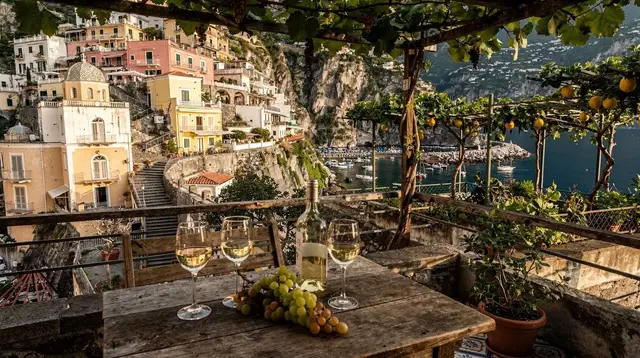
On the Amalfi Coast, vineyards are carved into narrow terraces on near-vertical slopes, most famously around Furore and Tramonti, well back from the main coastal villages. These are low-volume, hand-worked parcels, often reached on foot along steps and paths rather than by tractor. The Fiordo di Furore area is one of the more visible examples of this cliffside pattern, where terracing has been shaped by centuries of adapting to a coastline with almost no flat ground.
South of Salerno, around Paestum and the broader Salerno area, the terrain opens up into plains and gently rolling hills that border the Cilento coast. This is a different kind of agricultural land entirely, closer in character to open countryside than to the stacked terraces above Positano or Amalfi. Vines here are planted across wider fields, not squeezed onto ledges, and the growing conditions — more sun exposure across open ground, different soil composition, easier mechanical access — produce a distinct style of wine from what comes off the Amalfi cliffs.
None of this means one area is better than the other. It means a “one wine of the Amalfi Coast” idea, imagined as a single homogeneous product you could taste anywhere from Amalfi to Paestum, does not match the reality on the ground. The geography draws a clear line between the two.
Why Campania’s Native Grapes Matter Here
Campania as a whole has a long-standing reputation for native, indigenous grape varieties rather than the international grapes grown widely elsewhere in Italy and beyond. This regional identity runs through both the Amalfi Coast terraces and the Cilento plains, even though the specific vines, blends, and finished wines differ from one area to the next.
Rather than quoting production volumes or specific vintages here — figures that shift year to year and quickly go out of date — it is more useful to know what to ask when you visit a producer directly: which grape varieties are native to their specific plot, how long that variety has been grown in the area, and how the local soil and slope (or lack of slope) shape the finished wine. A good small producer, whether on an Amalfi Coast terrace or a Cilento hillside, is usually glad to walk you through this in detail during a tasting.
Pairing a Paestum Wine Tasting With the Temples
The most natural way to fit a wine tasting into your trip is to treat it as a second stop on a day already built around the Paestum archaeological site, rather than as an extra activity squeezed into an Amalfi- or Positano-centered itinerary. Paestum sits south of Salerno, at some distance from the Amalfi Coast villages themselves, so it makes more sense logistically to treat “temples plus tasting” as one combined excursion.
A typical version of this day starts with the Greek temples in the morning, when the light is good for photography and the site is less crowded, followed by lunch and a tasting at a nearby winery or agriturismo in the early afternoon. Several tour operators build exactly this combination into a single guided experience, which removes the need to arrange separate transport between the two stops.
a guided wine tour and tasting through the Cilento countryside is one straightforward way to do this without renting a car, since it includes transport to the vineyard itself. For a more in-depth, guided walk through the tasting process, a Cilento tasting led by a professional sommelier adds structured commentary on the wines poured rather than a self-guided sip-and-move-on format.
If you would rather have the temples and the tasting bundled into one single booking, a combined Paestum and Pompeii tour that includes a wine tasting lunch covers archaeology and wine in one outing, though note that it also folds in Pompeii, which makes for a longer day than a Paestum-only combination.
What to Expect: Small, Family-Run, Not Always Open
Wine tourism around Cilento is largely a small-scale, family-run affair. Unlike a large commercial estate with a public tasting room and posted hours, many of the wineries in this area are working farms first and visitor destinations second. That has a few practical consequences worth planning around.
There is no reliable walk-in access. Most cellar doors are not staffed for casual drop-in visitors, and a tasting typically has to be arranged ahead of time, either directly with the producer or through a tour operator who has an existing relationship with them. Do not plan a Cilento wine stop the way you might plan a stop at a large winery elsewhere, with the assumption that a tasting room will simply be open when you arrive.
Group sizes tend to be small, and the format is often conversational rather than a scripted, ticketed tour. You may taste in a converted barn, a courtyard, or a small room attached to the family home rather than a purpose-built visitor center. This is generally part of the appeal for travelers looking for something more personal than a large-scale tasting operation, but it does mean flexibility and advance booking matter more than they would at a bigger, more tourist-oriented estate.
Because these are working farms, some tastings extend naturally into food. Several experiences pair a wine tasting with local cheese, cured meats, or a full meal built around the farm’s own produce. If cheese is more of a draw for you than wine specifically, an e-bike ride through a Cilento village with wine and food tastings along the way covers both in a single, moderately active outing rather than a seated tasting alone.
Getting There From the Amalfi Coast
Paestum and the Cilento wine country are not reachable directly from the Amalfi Coast villages themselves; there is no direct road or transit link running from Amalfi, Positano, or Ravello straight down to this area. Salerno functions as the practical hub for this side trip, since it sits at the point where road, rail, and coastal transport options converge.
From Salerno, Paestum is reached by regional train or by car along the coastal road south. If you are not driving, a day trip to Paestum from Salerno lays out the transport options in more detail, including how to structure the day around train timetables. Travelers without a rental car sometimes prefer a private driver for this leg; a private driver arranged for Amalfi Coast excursions can extend to a Paestum day if you would rather not manage public transport connections through Salerno.
If you are staying on the Amalfi Coast for several days and want to build in a full excursion south rather than a rushed half-day, the Amalfi Coast and Paestum extension itinerary sketches out how to add this area onto a longer stay without cutting into time in Amalfi or the other coastal villages.
Comparing the Two Wine Areas at a Glance
| Amalfi Coast (Furore, Tramonti) | Paestum & Cilento | |
|---|---|---|
| Terrain | Steep cliffside terraces | Open plains and rolling hills |
| Typical scale | Very small, hand-worked parcels | Small to mid-sized family farms |
| Access | Often on foot, along terraced paths | By car or organized tour, easier ground access |
| Best paired with | A coastal village stay | A day trip to the Paestum temples |
| Visitor experience | Limited, appointment-based tastings | Family-run tastings, often with food |
Combining a Tasting With Other Cilento Activities
A wine tasting near Paestum does not have to stand alone. Because the Cilento area is agricultural rather than densely touristic, several experiences combine a tasting with another local activity in the same outing. For travelers who enjoy cycling, an e-bike tour through the Cilento countryside with a food tasting stop covers more ground than a seated winery visit and works well if you would rather move through the landscape than sit through a single long tasting.
If dairy interests you as much as wine, a visit to a working goat farm rounds out the picture of Cilento’s food and drink traditions, since cheesemaking here is as much a part of the local economy as wine production. This kind of stop tends to sit well alongside a temple visit and a wine tasting on the same day, without needing a separate trip back to the area.
Where This Fits in a Longer Amalfi Coast Stay
A Paestum wine tasting is a full-day proposition once travel time to and from Salerno is factored in, so it fits more comfortably into a longer stay than into a short one. Visitors following an Amalfi Coast in 3 days itinerary generally have little room to spare for a trip this far south without cutting into time in Positano, Amalfi, or Ravello. An Amalfi Coast in 5 days plan, or especially an Amalfi Coast in a week itinerary, has more slack to absorb a Salerno-and-Paestum day without displacing the coastal towns themselves.
Where you base yourself also matters for how far this excursion feels. A stay closer to Salerno shortens the approach considerably compared with a base further along the coast toward Positano. If you are still deciding where to stay, the Sorrento vs Amalfi Coast comparison and the broader where to stay on the Amalfi Coast guide both cover how base location changes the length of day trips like this one. Travelers building their first trip around the region may also find the Amalfi Coast first-time visitor guide useful for deciding how many “away from the coast” days like this one to budget for, and those watching costs closely can check the Amalfi Coast budget guide for how a paid tasting and transport to Salerno fit into an overall trip budget.
Other Day Trips From the Same Southern Direction
Paestum is not the only excursion that pulls travelers away from the coastal villages toward Salerno and beyond. Several other day-trip destinations sit along the same general axis, and some travelers combine more than one of them across a longer stay rather than treating each as a separate trip south.
Pompeii and Herculaneum are the two best-known archaeological day trips from the Amalfi Coast, though both sit north of Salerno, toward Naples, rather than south toward Paestum — they are a different direction of travel, not an add-on to a Paestum day. For travelers curious about the region’s other major cultural stop, the Naples Archaeological Museum holds many of the finds excavated from Pompeii and Herculaneum, and pairs naturally with a Naples-focused day rather than a Cilento one. Keeping these directions straight matters when planning: a single day cannot comfortably combine Paestum wine country with Pompeii or Naples, since they pull a traveler in opposite directions from the coastal villages.
Other Campania Food and Drink Traditions Worth Knowing
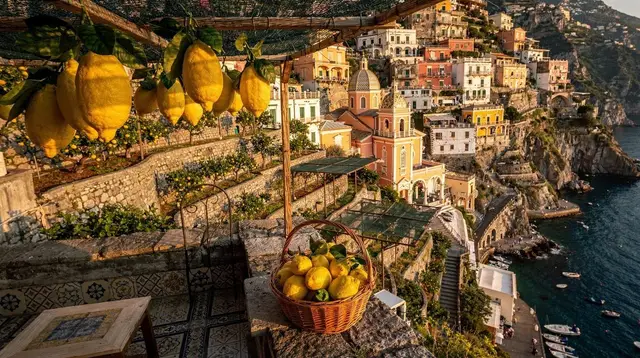
Wine is only one thread in Campania’s food and drink identity, and travelers who enjoy tracking down a region’s small, specific traditions will find several others worth knowing about even though none of them sit in Cilento itself. On the Amalfi Coast proper, limoncello is the better-known local product, made from the region’s lemons rather than from grapes, and it is worth understanding as a genuinely separate tradition from wine rather than a variation on it. Toward the eastern end of the coast, Cetara’s anchovy-based colatura is another single-village specialty, produced nowhere else in the same way, that rounds out the picture of how hyper-local Campania’s food traditions tend to be. And in Sorrento’s lemon groves, the same citrus that goes into limoncello is grown and, on some visits, can be seen and tasted at the source.
None of these other traditions are wine, and none of them are grown or produced near Paestum, but they underline the same point that runs through this guide: Campania is not one homogeneous food-and-drink region, and treating any single product — wine, limoncello, or anchovy sauce — as representative of “the whole coast” misses how specific each of these traditions is to its own small patch of ground.
Setting Expectations Before You Go
A few points are worth keeping in mind so the day goes smoothly. First, do not expect the polish of a large commercial winery: tastings here are informal, often held in working farm buildings, and shaped around what the family running the place has available that day rather than a fixed, repeatable script. Second, do not expect fixed hours you can simply show up to; book ahead, whether through a tour operator or directly with the producer, since drop-in visits are unreliable at best. Third, remember that this is a genuinely separate wine region from the Amalfi Coast itself — a bottle poured here will not taste like, and should not be sold to you as, “Amalfi Coast wine.” It is Cilento wine, from Cilento vines, grown on Cilento ground.
Treated this way, a stop in Paestum wine country becomes less of an add-on and more of a natural second half to a day that starts among the Greek temples — a look at two very different sides of what grows, and gets made, south of Salerno.
Wine Tasting Tours on the Amalfi Coast on GetYourGuide
Verified deep-linked GetYourGuide tours. Book through these links and we earn a small commission at no cost to you.
GetYourGuide does not provide a product photo for this activity — the image shows the meeting point, photographed by us.