Naples Cruise Port Shore Excursions: What You Can Really Do in a Day
Can I take a train from the Naples cruise port to Positano and back in one shore excursion?
No. No Amalfi Coast village has a train station, so there is no direct rail link from Naples to Positano at all. Reaching the coast from the cruise port means a first leg to Sorrento or Salerno, then a road or seasonal ferry connection, which eats heavily into the time available before you must be back at the ship.
Setting expectations before you leave the ship
If your cruise itinerary lists a Naples port call and you’ve been picturing a relaxed morning in Positano followed by lunch on a cliffside terrace, it’s worth correcting that picture before you plan anything else. No village on the Amalfi Coast — not Amalfi, not Positano, not Ravello — has a train station. The only railway in the area is the Circumvesuviana, and it runs from Naples to Sorrento via Pompeii and Herculaneum, never reaching the coast road itself. There is no direct rail option from the Naples cruise port to the coast, full stop.
That single fact changes how a shore excursion to the Amalfi Coast actually works. From the port, you first need to reach either Sorrento or Salerno — by train, bus, or private transfer — and only then pick up a second leg by road on the SS163 or, in season, by ferry. Two legs and a connection is a very different proposition from a single direct hop, and it’s the reason a lot of cruise passengers end up disappointed by how little time they actually get on the ground once the travel is accounted for.
This guide walks through what a realistic shore excursion from Naples looks like, which destinations are genuinely compatible with a fixed return time, and which ones you should treat as a “next time, on a longer trip” item rather than something to squeeze into a single port call.
Why there’s no train to Positano — and why it matters for your timing
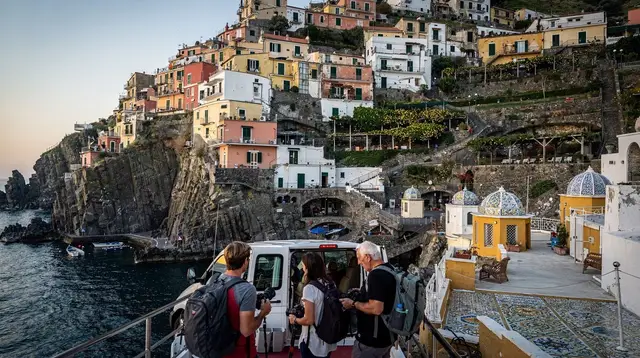
It helps to understand why the coast road villages are so disconnected from the rail network in the first place. The Amalfi Coast is a roughly 50 km strip of cliffside settlements — Amalfi, Positano, Ravello, Praiano, Conca dei Marini, Furore, Scala, Minori, Maiori, Vietri sul Mare, Cetara, and Atrani — built into terrain too steep and narrow for a railway to have ever been laid along it. The only way in and out by land is the SS163 coast road, supplemented by SITA buses, plus seasonal ferries along the water. There has never been a station at Amalfi or Positano, and there isn’t likely to be one; the geography simply doesn’t allow it.
Sorrento, on the Sorrentine Peninsula, is the one town in the wider area with a direct rail connection to Naples, via the Circumvesuviana. That’s useful context, but it doesn’t shorten your trip to Positano — Sorrento is itself a transfer point, not the coast road. From Sorrento, you’d still need a SITA bus or a private transfer over the mountain pass to reach Positano or Amalfi, adding real time on top of the train ride you’ve already taken. For the practical details of that train — where to catch it at the port side, what the ride is like, and what to expect from crowding and luggage space — this Circumvesuviana train guide is worth a read before you commit to that leg, and this Naples-to-Sorrento transport guide covers the same route from the other direction, useful if Sorrento itself is your actual destination rather than a mere transfer point.
Salerno, at the coast’s eastern end, is the other common transfer hub, with its own regional train station and bus and ferry connections onward. Either way — via Sorrento or via Salerno — you’re looking at a first leg plus a second leg plus a connection, and each of those pieces carries its own possibility of delay: a late train, a queue for the SITA bus, traffic backed up on the SS163 in high season. None of this is a problem if you have a week on the coast. It becomes a real constraint when a ship’s all-aboard time is the hard deadline.
What a Naples-based Amalfi Coast excursion actually costs you in time
Rather than pin an exact number of hours on this — travel times shift with traffic, ferry schedules, and the day of the week — it’s more useful to think about where the time goes. A shore excursion built around reaching the coast road from Naples breaks down into roughly three blocks: getting from the port to Sorrento or Salerno, the connecting leg onward to the coast itself, and then, whatever’s left, your actual time in Positano, Amalfi, or Ravello before you have to turn around and reverse the whole trip.
Because two of those three blocks are pure transit, the portion of your day actually spent at the destination shrinks fast — often to a fraction of what a similar excursion feels like from a hotel base already on the coast. Guided tours that specialize in this route exist precisely because they compress the logistics using a private vehicle rather than public transport, which removes bus timetables and transfer waits from the equation. If you’d rather not manage the Sorrento-or-Salerno routing yourself, an option like a coast tour designed specifically for cruise passengers departing from the Naples port is built around exactly this constraint, with a fixed return time factored into the plan.
Even with a private vehicle, though, the SS163 itself is a limiting factor. It’s a narrow, winding corniche road, not a highway, and it runs an alternating-direction traffic system and ZTL restrictions through Amalfi, Positano, and Ravello during high season. A tour operator can’t route around a queue on that single road any more than you could driving yourself. Budget generously, and treat any “same-day round trip to Positano” plan as something to attempt only if your port call is unusually long or your ship departs late in the evening.
The excursions that actually fit a normal port call
If your priority is making the most of a single day without gambling on a tight coastal connection, a shorter list of destinations lines up much better with the Naples cruise port’s own transport links.
Pompeii and Herculaneum are the standout choices. Both sites sit directly on the Circumvesuviana line from Naples, with no coastal transfer required at all — you’re on one train, headed to one destination, with a predictable return. It’s worth remembering that Pompeii and Herculaneum are two separate archaeological sites and two separate ancient towns, destroyed by different mechanisms: ash and pumice fall buried Pompeii, while a pyroclastic flow at Herculaneum preserved organic material — wood, carbonized food — that Pompeii lost. A guided option covering both, such as a Pompeii and Vesuvius excursion timed to depart from the Naples port, keeps the day within the compact geography around Naples rather than stretching toward the coast road.
Mount Vesuvius is the other strong fit. It’s a short drive from Naples rather than a multi-leg trip down the coast, and combining it with Pompeii is common precisely because both sit close to the city. Keep in mind that Vesuvius is an active volcano under permanent monitoring, with its last eruption in 1944; access is by numbered ticket along the crater-rim path only, with no access to the crater floor itself. That numbered-ticket system means a shore excursion built around Vesuvius should be booked ahead rather than arranged on arrival.
Capri deserves a mention on its own terms, since a direct boat from Naples sidesteps the Sorrento-or-Salerno transfer that a coast road trip requires. It’s still a full day out, and Capri’s own internal logistics — the funicular from Marina Grande up to Capri town, a separate bus or the Monte Solaro chairlift over to Anacapri — take real time, so it isn’t a shortcut so much as a different kind of full-day excursion. A transport option like a direct boat transfer from Naples to Capri at least removes the road-and-transfer variable that makes coast road plans harder to time precisely.
If you’d prefer to stay on the water without committing to a full island excursion, a shorter option such as a short sunset cruise around the Bay of Naples is worth considering for an afternoon or evening port call, since it starts and ends at Naples itself with no onward transfer at all.
If Capri does make your list, it’s worth reading up on it before you board the boat rather than deciding on the spot. A one-day guide to Capri’s highlights lays out how to sequence the funicular, Capri town, and Anacapri within a single visit, and if the sea is calm that day, the Blue Grotto is the one stop worth checking tide and opening times for in advance, since it closes without warning when conditions aren’t right.
Don’t overlook Naples itself
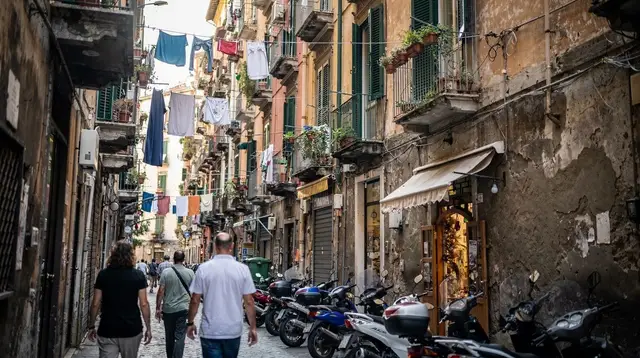
It’s easy to treat the cruise port purely as a gateway to somewhere else, but Naples is a legitimate destination in its own right, and for a short call it removes every transfer-time problem this guide has been describing. A walking tour through the historic center covers a compact, walkable core packed with centuries of layered history, and the Naples Archaeological Museum holds a large share of the finds excavated from Pompeii and Herculaneum, which makes it a natural pairing if you’re not making it out to either site in person. No shore excursion to Naples is complete without at least one stop for pizza, and this guide to Naples pizza points to where the tradition actually comes from rather than the tourist-trap version of it.
Comparing your realistic options at a glance
| Destination | Rail link from Naples port | Transfer required | Fit for a fixed return time |
|---|---|---|---|
| Pompeii / Herculaneum | Direct, Circumvesuviana | None | Strong |
| Mount Vesuvius | No direct rail; short drive | None (numbered ticket) | Strong, book ahead |
| Capri | No rail; direct boat available | None if boat is direct | Good |
| Sorrento | Direct, Circumvesuviana | None to reach the town | Good, coast road onward is separate |
| Amalfi / Positano / Ravello | None | Yes — via Sorrento or Salerno | Weak for a short call |
Why the ferry isn’t a fallback you can count on
It’s tempting to treat a seasonal ferry as the fast lane to the coast, and in the middle of summer it often is. But Amalfi Coast ferry lines connecting Naples, Sorrento, Capri, and the coast villages are seasonal by design, and service drops off sharply from November through March, with many routes suspended outright. If your cruise call falls outside the Easter-to-October window, don’t build a shore excursion around the assumption that a boat to Positano or Amalfi will be running — check the current schedule rather than assuming continuity with a summer itinerary you’ve seen online, and have a Naples- or Sorrento-based backup plan ready.
Even within the sailing season, weather and sea conditions can cancel a scheduled crossing with little notice, which is one more reason a coast road excursion from a cruise port carries more risk than the same trip planned from a hotel with no fixed departure time.
Paestum: a different direction entirely
Most cruise passengers thinking about a shore excursion default to the coast road or Capri, but Paestum, with its well-preserved Greek temples, sits in the opposite direction, past Salerno rather than toward Sorrento. It’s a longer haul from the Naples port than Pompeii, so it suits a longer port call more than a short one, but it avoids the coast road entirely, which means none of the SS163 traffic or ZTL timing concerns that complicate an Amalfi or Positano plan. This guide to the Greek temples at Paestum and this Paestum day trip guide from Salerno both lay out what the site involves if it’s on your shortlist; travelers building it into a longer land stay rather than a single port call sometimes pair it with wine tasting near Paestum as well.
If you do want to attempt the coast road from Naples
For travelers determined to see the coast itself rather than the sites closer to Naples, it is possible — with the right setup. A private, pre-booked transfer or guided tour removes the guesswork of SITA bus timetables and Circumvesuviana connections, and a driver familiar with the SS163’s ZTL windows and seasonal traffic patterns can plan the route more precisely than you could on the fly. This guide to hiring a private driver on the Amalfi Coast explains what that arrangement typically covers, and if you’d rather use scheduled public transport instead, the SITA bus guide covers the timetable and ticketing quirks that catch first-time riders off guard. An option covering the coast road together with Pompeii in a single itinerary, such as a combined Pompeii and Amalfi Coast tour departing from the Naples port, is one way operators try to balance the two priorities of seeing the archaeological sites and getting a glimpse of the coast road within one day.
Whatever you book, confirm the stated return time against your ship’s all-aboard time with real margin — cruise lines are generally unforgiving of shore excursions that miss departure, including ones booked independently rather than through the ship. If your itinerary allows for a longer land stay before or after the cruise, it’s worth reading about how many days you actually need to see the Amalfi Coast properly or getting around without a car — both make more sense as planning references for a future multi-day trip than for a single afternoon squeezed between disembarking and reboarding.
The bottom line for a Naples shore excursion
There’s no train from the Naples cruise port to Positano, and there never will be, because no coast road village has a station. Reaching the coast means a transfer through Sorrento or Salerno, by road or seasonal ferry, which meaningfully cuts into the time you’ll actually spend there before heading back. For a single, time-boxed port call, Pompeii, Herculaneum, and Mount Vesuvius line up far better with the transport links running directly out of Naples, while Capri offers a workable middle ground via a direct boat. Save the full Amalfi, Positano, and Ravello experience for a trip where your return time isn’t set by a ship’s horn.
Shore Excursions on the Amalfi Coast on GetYourGuide
Verified deep-linked GetYourGuide tours. Book through these links and we earn a small commission at no cost to you.
GetYourGuide does not provide a product photo for this activity — the image shows the meeting point, photographed by us.