Naples Pizza: The City's Own Tradition, Not an Amalfi Coast Dish
Is pizza an Amalfi Coast tradition?
No. Pizza, in its Margherita and Marinara forms, is a Naples tradition, born in the city itself. The Amalfi Coast has its own food culture built around seafood, lemons, and colatura, and there is no separate category of 'Amalfi Coast pizza.'
A City Tradition, Not a Coastal One
Pizza is one of the most photographed meals in southern Italy, and it is very easy to end up eating it in Positano or Amalfi and assuming it belongs to the coast the same way colatura di alici belongs to Cetara or lemons belong to Sorrento. It does not. Pizza, in the form recognized worldwide, is a Naples tradition: born in the city’s bakeries and pizzerias, refined over generations of Neapolitan cooks, and tied to a specific dough technique and a very specific oven temperature. The Amalfi Coast has its own food identity, built on seafood, citrus, and cured fish, and pizza is not part of that inheritance. This guide sets out what makes Neapolitan pizza what it is, and where it fits into a trip that also includes the coast.
The confusion is understandable. Most visitors to the Amalfi Coast fly into Naples, because it is the region’s main airport and rail hub, and many spend a night or two in the city before continuing south. A pizza eaten in Naples on the first evening of a trip and a seafood dinner eaten in Amalfi a few days later can blur together into a single “Amalfi Coast food memory,” even though they come from two distinct culinary traditions separated by more than an hour of driving.
Naples: Gateway to the Coast, Not Part of It
It is worth restating plainly: Naples is not on the Amalfi Coast. It sits on its own gulf, the Gulf of Naples, and functions as the entry point to the wider region rather than as one of its towns. From Naples, travelers typically continue toward the coast either through Sorrento, reached by the Circumvesuviana train, or through Salerno, reached by regional rail, before picking up a bus, ferry, or private transfer to reach Amalfi, Positano, or Ravello.
This geography is exactly why the two food traditions get mixed up on itineraries. A typical trip looks something like: arrive at Naples airport, spend an evening eating pizza in the historic center, then travel on to the coast for several days of grilled fish, lemon desserts, and colatura-dressed pasta. Both halves of that trip are excellent, but they are not the same cuisine, and treating “Naples food” and “Amalfi Coast food” as interchangeable does a disservice to both.
The Birth of the Margherita and the Marinara
Neapolitan pizza’s two canonical styles are the Marinara and the Margherita, and both were fixed as specific, named dishes in Naples itself, well before pizza spread anywhere else. The Marinara is the older and simpler of the two: tomato, garlic, oregano, and olive oil, with no cheese at all. Despite the name, it has no direct connection to seafood; it takes its name from the fishermen’s wives who were said to have prepared it.
The Margherita followed later, built around tomato, fresh mozzarella, basil, and olive oil, chosen so that the colors would echo the Italian flag. Both pizzas remain the reference points against which Neapolitan pizzerias are judged today, and both are strictly city dishes: there is no coastal variant, no “Positano-style” or “Amalfi-style” version recognized as part of the tradition.
What Makes a Pizza Neapolitan
A handful of features distinguish true Neapolitan pizza from other styles served across Italy and abroad. Understanding them helps explain why the dish is treated as a defined, almost codified, city specialty rather than a loose category.
- Thin center, puffed rim: the dough is stretched by hand so the middle stays thin while a raised, airy edge, known as the cornicione, forms around the outside during baking.
- Very high, very fast baking: traditional wood-fired ovens reach temperatures far beyond a home oven’s range, so a pizza cooks in well under two minutes, developing characteristic blistered, leopard-spotted char on the crust.
- A short, defined ingredient list: canonical styles use a small number of ingredients, each with recognized sourcing, rather than an open list of toppings.
- Eaten with a knife and fork: because the center stays soft and slightly wet, Neapolitan pizza is traditionally cut and eaten at the table rather than folded and carried.
- Soft, not crisp, throughout: unlike thin, cracker-style crusts found elsewhere, the base stays pliable, which surprises visitors expecting a fully crisp bite.
| Feature | Neapolitan pizza | Common expectation elsewhere |
|---|---|---|
| Crust texture | Soft, pliable center, puffed rim | Fully crisp base |
| Bake time | Under two minutes | Eight to twelve minutes or more |
| Oven type | Wood-fired, very high heat | Gas or electric, moderate heat |
| Classic toppings | Short, defined list (tomato, mozzarella, basil, or none) | Wide, open-ended list |
| Eating method | Knife and fork | Folded or hand-held |
No Such Thing as “Amalfi Coast Pizza”
It is worth being direct about this, because it is a common assumption that does not hold up: there is no distinct “Amalfi Coast pizza” tradition. Pizza is served throughout the coast, in Amalfi, Positano, Ravello, and every town in between, because it is popular across Italy and visitors expect to find it. But it did not originate there, it is not built from ingredients specific to the coast, and it does not carry the same weight in the region’s food identity that it carries in Naples.
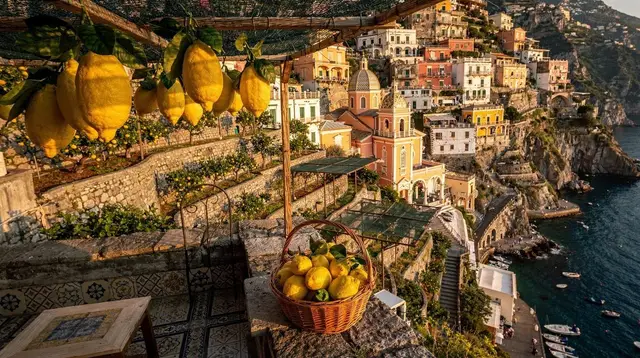
What the Amalfi Coast does have, in its own right, is a food culture built around very different raw materials. Cetara’s colatura di alici, a fermented anchovy sauce, is a genuine local specialty tied to a single fishing village. The Sfusato Amalfitano lemon, grown on terraced groves from Sorrento through Amalfi, underpins limoncello and a long list of citrus-based dishes found nowhere else in the same form. Seafood pulled from the Tyrrhenian Sea, dressed simply with olive oil and lemon, is the backbone of most coastal menus. None of this overlaps meaningfully with pizza, and treating pizza as a coastal dish tends to crowd out attention to what actually is distinctive about the coast’s food.
Where Pizza Fits Into Your Trip
Given all this, the practical question is not whether pizza belongs on your Amalfi Coast trip, but where in the trip it belongs. The most straightforward answer is Naples itself, either on arrival or before you head south. If you are flying in, an evening or two in the historic center gives you a reasonable window to try both a Marinara and a Margherita before continuing on.
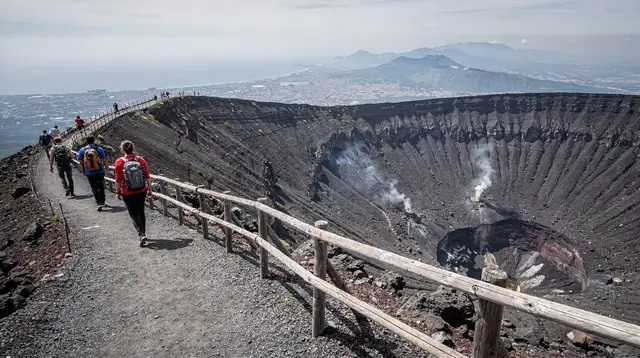
Naples also works well as a base for reaching two other stops that are often paired with a pizza-focused stay: Pompeii and Herculaneum, reached via the Circumvesuviana train, and Mount Vesuvius, the still-active volcano that destroyed both towns in 79 AD. A common structure is to spend an evening eating in Naples, a day exploring Pompeii’s ruins or hiking the crater rim, and only then continue on toward Sorrento or Salerno to pick up transport to the coast. For a packaged version of this sequence, see a two-day Naples, Pompeii, and Vesuvius itinerary, or a focused day trip to Pompeii from the Amalfi Coast if you are already based further south.
For visitors who want a structured introduction to the city’s food rather than picking a pizzeria at random, a guided food tour or a hands-on class is a practical way to cover the basics in a single outing. A guided food tour through Naples that centers on pizza and other local specialties pairs the eating with context on where each style comes from. For a more hands-on introduction, a two-hour pizza-making class in Naples walks through the dough technique and toppings directly with a local instructor. If you would rather combine food with orientation to the historic center, a guided walking tour of Naples is a useful way to see the old town’s layout before or after eating.
Practical Notes for a Naples Pizza Stop
A few points are worth keeping in mind when planning this part of a trip. First, Naples is best treated as a distinct stop rather than a stretch of the coast itself: it has its own historic center, its own transport hubs, and its own food identity, all separate from Amalfi, Positano, or Ravello. Second, because the city sits at the start of most itineraries, it is easy to rush through it on the way to the coast; giving it even one full evening for food alone tends to be worthwhile given how specific and city-bound the tradition is. Third, if your itinerary already runs through Sorrento on the way south, note that Sorrento’s food identity leans toward citrus and seafood rather than pizza, so Naples remains the more logical place to prioritize it.
For visitors arriving by cruise ship or with limited time in the city, a shorter guided outing focused on neighborhoods and street food, such as a guided street food tour through central Naples, can cover pizza alongside other quick bites without requiring a full evening. Whichever format you choose, treating the pizza stop as a deliberate part of the Naples leg of your trip, rather than an incidental bite on the way to the coast, makes it easier to appreciate what is genuinely a distinct and long-standing culinary tradition.
Questions About Naples Pizza and the Amalfi Coast
Is there such a thing as Amalfi Coast pizza?
No. Pizza is a Neapolitan specialty, not a dish native to the Amalfi Coast. Restaurants along the coast serve pizza because it is popular across Italy, but the tradition, the technique, and the recognized styles all originate in Naples.
What is the difference between a Margherita and a Marinara?
The Margherita is topped with tomato, mozzarella, basil, and olive oil. The Marinara has no cheese at all, built instead on tomato, garlic, oregano, and olive oil. Both are considered the two canonical Neapolitan styles.
Why does Naples get grouped with the Amalfi Coast on trip itineraries?
Naples is the main gateway to the region, with the closest major airport and train station, so most visitors pass through it before continuing to Sorrento or Salerno and on to the coast itself. Geographically, though, Naples sits on its own gulf and is not part of the Amalfi Coast.
What makes Neapolitan pizza dough different from other pizza styles?
The dough is stretched thin at the center while the outer rim is left thicker, so it puffs up into a soft, blistered edge, the cornicione, during baking. It is meant to be eaten with a knife and fork, not folded like a slice.
How hot is a traditional Neapolitan pizza oven?
Traditional wood-fired ovens run at extremely high temperatures, well above what a standard home oven can reach, which is why a Neapolitan pizza bakes in well under two minutes rather than the ten or more minutes typical elsewhere.
Should I eat pizza in Naples or wait until the Amalfi Coast?
If pizza matters to your trip, eat it in Naples, where the tradition originates and where the ovens, dough technique, and ingredient sourcing are most consistent. On the coast, you are more likely to find seafood-driven menus, lemon-based dishes, and colatura di alici rather than pizza specialists.
Can I combine a Naples pizza stop with a Pompeii or Vesuvius day trip?
Yes. Naples, Pompeii, Herculaneum, and Vesuvius sit close together on the same side of the gulf, so a food-focused morning or evening in Naples pairs naturally with an archaeological or volcano excursion on the same trip.
Is Naples part of the Amalfi Coast?
No. Naples is a separate city on the Gulf of Naples, more than an hour’s drive from the Amalfi Coast itself. It functions as the region’s main entry point by air and rail, not as one of the coast’s towns.
Food Tours on the Amalfi Coast on GetYourGuide
Verified deep-linked GetYourGuide tours. Book through these links and we earn a small commission at no cost to you.
GetYourGuide does not provide a product photo for this activity — the image shows the meeting point, photographed by us.