Amalfi, Not Positano, Invented the Paper
I got corrected on this one by a shopkeeper in Amalfi, and I still think about it every time I see a Positano tote bag with “handmade paper” printed on it somewhere online. I’d asked, half out loud, whether the woven-looking paper in her window was a Positano thing. She didn’t even look up from what she was doing. “Amalfi,” she said. Not rude, just correcting a fact she’d clearly corrected a hundred times before.
That’s the confusion I want to untangle here, because it’s a small one but a real one, and it says something about how we sort facts onto the wrong town when two places sit twenty minutes apart on the same road.
Why the mix-up happens in the first place
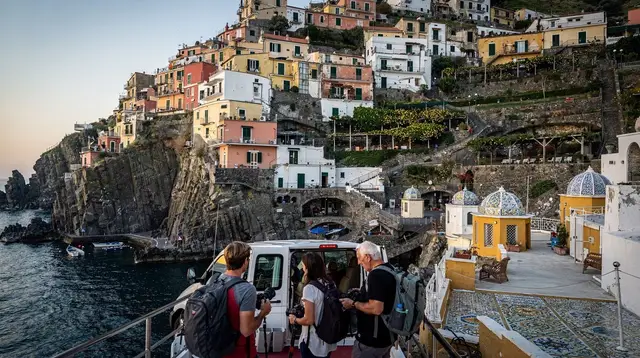
Positano is the town most people picture when they think “Amalfi Coast.” It’s the one on the postcards, the one with the stacked pastel houses, the one that shows up first in every search result and every influencer reel. So when a visitor hears “this coast has a paper tradition,” their brain reaches for the town they already know, and that town is usually Positano.
But the paper tradition isn’t Positano’s. It’s Amalfi’s. Full stop, no shared custody, no “well, technically both.” I don’t say that to be pedantic — I say it because if you go looking for this history in Positano, you’ll find nothing, and you’ll come away thinking the story was exaggerated or made up. It wasn’t. You were just looking in the wrong town.
What actually belongs to Amalfi
The tradition in question is carta bambagina, a handmade cotton-rag paper associated with the town of Amalfi specifically. I’m not going to tell you when it started, because I don’t actually know a firm founding date I’d trust myself to repeat, and I’d rather leave a gap than fill it with a number that sounds authoritative and isn’t. I’m also not going to walk you through the manufacturing process step by step, because that’s not something I watched happen with my own eyes, and secondhand descriptions of old crafts tend to get flattened into something cleaner and more romantic than the reality. What I can tell you, plainly, is this: the tradition is Amalfi’s, it’s called carta bambagina, and it’s tied to the town’s identity in a way that no other village on this coast can claim.
That last part matters more than it sounds like it should. This coast has a habit of getting its towns blurred together by outsiders — one long postcard image instead of a dozen distinct places. Ceramics get pinned on the wrong town too: majolica pottery is a Vietri sul Mare tradition, not an Amalfi one and not a Positano one, and I’ve written separately about why Vietri, not Positano, is the ceramics town. Paper deserves the same clarity. It’s Amalfi’s, and it stays Amalfi’s — I’m not going to stretch it to cover Praiano, Ravello, or anywhere else along the coast just because they’re neighbors.
Where to actually see it
If you want the real reference point rather than a secondhand story, the Museo della Carta in Amalfi is it. That’s the museum dedicated to this specific history, and it’s the place I’d send anyone who wants more than a shopkeeper’s correction and my own secondhand account. I won’t pretend I remember every display in detail months later, but I remember it being unmistakably about paper, unmistakably about Amalfi, and not diluted into a generic “coastal crafts” exhibit that tries to cover six towns at once.
It sits comfortably alongside the rest of an Amalfi walking day — the Duomo is a short walk from the paper museum, and if you’re already threading through town on foot, there’s no real detour involved. I wouldn’t build an entire day around the museum alone, but as one stop among several in Amalfi, it earns its place.
How this fits into a coast trip
Most people aren’t visiting the Amalfi Coast to trace one craft history town by town — they’re stringing together a few villages, maybe a boat ride, maybe a day trip inland. That’s fine, and it’s honestly the more realistic way to see this stretch of coast. If you’re weighing Positano against Amalfi for where to spend your limited hours, know that they offer genuinely different things: Positano for the view and the beach scene, Amalfi for the Duomo, the harbor, and yes, the paper history that gets misattributed so often.
A lot of visitors handle both towns in a single day through an organized tour rather than juggling the SITA bus schedule or driving the SS163 themselves, and I don’t blame them — this isn’t a road you want to be white-knuckling in August traffic. If that’s your plan, a guided route like the day tour from Naples covering Positano and the Amalfi Coast puts both towns on the same itinerary without you having to manage the logistics. There’s also a boat-based option, the relaxed boat trip between Amalfi and Positano, if you’d rather see the coastline from the water than from the switchbacks above it.
If you’re coming from further afield and want to fold in more than just these two towns, a combined itinerary such as the guided day trip pairing Pompeii with the Amalfi Coast is worth a look, and there’s a version that adds the Emerald Grotto, the Naples day tour through Positano, the Emerald Grotto, Amalfi, and Ravello, for a longer day covering more ground.
Whatever way you slot it in, my point stands on its own regardless of the itinerary: when someone tells you paper is a Positano tradition, that’s the moment to gently correct them the way that shopkeeper corrected me. It’s Amalfi’s. If you want to plan how many days you’d need to properly cover both towns and the rest of the coast, this breakdown of days needed and a sample 3-day coastal itinerary are good starting points, and for logistics once you’ve picked your towns, where to stay along the coast and a broader first-time visitor guide round out the planning. Positano will still get most of the photos. Amalfi keeps the paper.
Amalfi’s paper tradition, answered directly
Is Amalfi or Positano known for paper?
Amalfi is the papermaking town, not Positano. The tradition of carta bambagina belongs to Amalfi, and it’s documented at the Museo della Carta in Amalfi, not in Positano or any other village on the coast.
What is carta bambagina?
It’s the name of the traditional handmade paper associated with Amalfi. It’s a cotton-rag paper, which is why it has that soft, slightly textured feel compared to ordinary wood-pulp paper.
Where can I see this paper tradition in person?
At the Museo della Carta in Amalfi. It’s the reference site for this history, not a shop display or a stall on the seafront.
Does Positano have any paper tradition of its own?
No. Positano is a separate town on the coast with its own identity, but the paper tradition is specific to Amalfi and shouldn’t be extended to Positano or to any other village along the coast.
Why do people confuse Positano and Amalfi on this point?
Positano is the more photographed and more frequently name-checked village on the coast, so visitors default to attaching coastal traditions to it. The paper history simply isn’t one of them.
Is the paper tradition the same as the ceramics tradition?
No, and this is a separate mix-up. Ceramics (majolica) is a Vietri sul Mare tradition, not a Positano or Amalfi one. Paper is Amalfi’s; ceramics is Vietri’s. Neither belongs to Positano.
Can I combine a visit to Amalfi’s paper history with a Positano day out?
Yes, since Amalfi and Positano sit along the same stretch of coast and are commonly visited together by bus, boat, or on an organized coastal tour.
tours.History
Verified deep-linked GetYourGuide tours. Book through these links and we earn a small commission at no cost to you.
GetYourGuide does not provide a product photo for this activity — the image shows the meeting point, photographed by us.