Is the Amalfi Coast Too Touristy? My Honest Take
I’ve walked the SS163 shoulder more times than I’d like to admit, pressed against a stone wall while a SITA bus and a delivery van tried to pass each other on a hairpin, and each time I’ve asked myself the same question: is this place actually too touristy, or am I just annoyed at a bad ten minutes? After several visits in different seasons, I’ve landed on an answer I’m willing to defend: in peak season, yes, the Amalfi Coast has a real overtourism problem, and it’s not just a mood, it’s built into the geography.
Why “too touristy” isn’t just a feeling here
Overtourism is usually described as a perception problem — too many people in your photos, too long a wait for a table. On the Amalfi Coast, the complaint has a physical cause you can point to on a map. This is not a sprawling region where crowds spread out. It’s a roughly 50km ribbon clinging to a cliff, and the SS163 is the only road running its length. There’s no bypass, no second route, no direct train into Amalfi, Positano, or Ravello. When demand spikes, it has exactly one channel to pass through, and that channel doesn’t get wider just because July arrived.
I think this distinction matters more than most coverage of the region admits. A crowded museum can add timed entries. A crowded beach town can be crowded and still functional if cars can circulate. Here, when the SS163 backs up, everything backs up with it: the bus you’re relying on to get from Positano to Amalfi, the taxi trying to reach your hotel, the ambulance that occasionally needs the same lane. That’s the part that pushes me from “busy” to “structurally strained.”
The road is the whole argument
I keep coming back to the fact that there is no fallback here. Read anything about driving the SS163 and you’ll see the same warnings repeated: it’s narrow, it switches back constantly, and in high season it runs seasonal ZTL restrictions and alternating traffic control in Amalfi, Positano, and Ravello. Those controls exist because the road already can’t absorb peak demand smoothly — that’s not speculation, it’s the reason the restrictions were put in place at all.
Compare that to how most visitors actually get around, using SITA buses rather than a rental car, precisely because the road punishes anyone trying to drive it themselves in July or August. Ferries help spread some of that load in season, connecting the coast to Sorrento, Capri, and Naples, but I’d be misleading you if I called that a year-round solution — those ferry links thin out dramatically or stop altogether once winter arrives. So the honest picture is: one overloaded road for most of the year, and a partial, seasonal escape valve that only works when the weather cooperates.
Where I think the “just perception” argument fails
I’ve seen the case made that overtourism talk here is overblown, that plenty of destinations are busier and don’t get this label. I don’t think that argument holds once you factor in why there’s no train. It isn’t an oversight — nobody laid tracks along a 50km cliff edge, and nobody is going to. That’s a permanent structural fact, not a temporary inconvenience waiting on infrastructure investment. Every other tourist region I can think of that manages high demand well does it by adding capacity: more trains, a ring road, a second bridge. The Amalfi Coast structurally cannot do that. Its appeal — the cliffs, the narrow lanes, the villages stacked on the slope — is the same thing that caps its capacity. That’s a much harder problem than “it’s popular right now,” and I think it deserves to be named as such rather than softened into a seasonal grumble.
What I won’t claim
I want to be careful here, because it’s easy for an opinion piece to reach for numbers that sound authoritative and aren’t. I’m not going to tell you how many million visitors pass through Positano each August or cite a precise year-over-year growth rate, because I don’t have reliable figures to back that up, and inventing them would undercut the actual argument. The case for a real overtourism problem doesn’t need a manufactured statistic. It’s carried entirely by structural facts: one road, no direct rail access to any coastal village, and seasonal traffic controls that exist because the region’s own authorities recognized the strain.
So, is it worth visiting anyway?
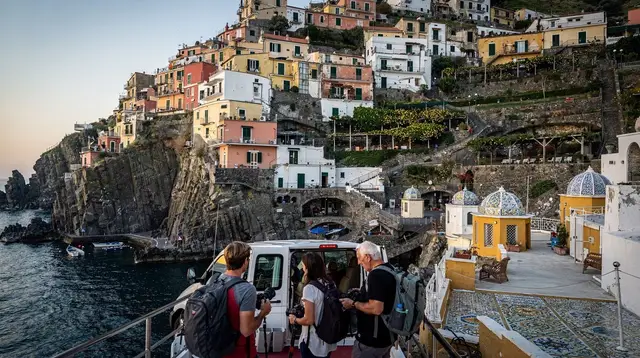
I still think so, and I keep going back. But I’ve changed how I plan a trip because of everything above. I no longer try to see five villages in a day. I check when to visit rather than defaulting to summer, and I’ve had genuinely better trips in May and October than I ever did in August, when the same view came with an hour of standing in a bus aisle attached to it. If you’re set on visiting at the peak, I’d rather you go in with eyes open about the SS163’s limits than arrive expecting the easy, cinematic version of the coast that photos promise. A guided day trip that handles the driving, like a full-day Amalfi Coast tour from Naples, at least removes one point of friction, even if it can’t remove the crowd itself.
Where I land
Overtourism on the Amalfi Coast isn’t a myth invented by cranky travel writers, and it isn’t purely a matter of managing your expectations either. It’s the predictable result of pairing a UNESCO-level draw with a single-lane, single-road, no-train geography that was never built to move today’s peak-season volume. I don’t think that makes the coast a mistake to visit. It makes timing the single most important decision you’ll make about the trip, well before you pick a hotel or a village to stay in.
a guided day that pairs Pompeii’s ruins with an Amalfi Coast drive, letting someone else navigate the SS163 can take the edge off a peak-season visit, and if you’d rather spread the coast over two days without wrestling a rental car through the switchbacks yourself, this two-day Sorrento, Amalfi Coast, and Pompeii itinerary from Naples is built around exactly that constraint. For a simpler arrival, a private transfer from Naples or Salerno with a Pompeii stop at least keeps you off the SITA bus queue on travel day.
None of this fixes the underlying bottleneck. But it’s the honest, practical version of “too touristy”: not a reason to skip the coast, but a reason to stop pretending the SS163 can absorb whatever July throws at it. If you want a structured way to avoid the worst of it, my guide to skipping the crowds and the off-season itinerary are where I’d start, along with understanding why there’s no train in the first place — once that clicks, the rest of the coast’s quirks make a lot more sense.
tours.Opinion
Verified deep-linked GetYourGuide tours. Book through these links and we earn a small commission at no cost to you.
GetYourGuide does not provide a product photo for this activity — the image shows the meeting point, photographed by us.