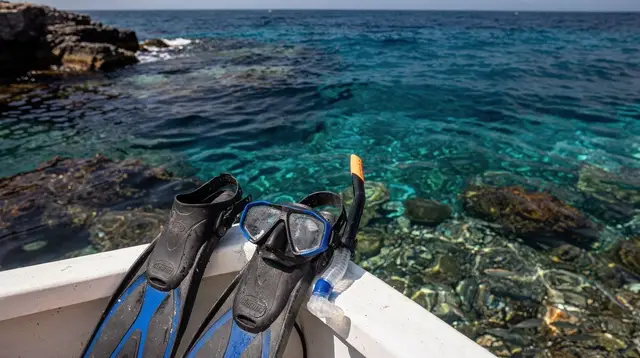
Diving and Snorkeling Around Capri: What to Expect
Can you dive and snorkel around Capri's Faraglioni all year round?
Not in practice. Diving and snorkeling around Capri follow the same calendar as the island's other boat traffic: dense from Easter to late October, peaking in July and August, and very limited in winter when boat rotations from Marina Grande and Marina Piccola become scarce or stop. Most of the best spots, including the waters around the Faraglioni, are only reachable by boat.
Does the Faraglioni season ever really close?
The short answer is that diving and snorkeling around Capri are not a year-round activity in practice, even though the water never technically freezes over. The pattern follows the same rhythm as every other boat-based activity on the island: dense from Easter through the end of October, with a clear peak in July and August, and then a sharp drop-off once November arrives. Boat rotations out of Marina Grande and Marina Piccola multiply in high season and thin out fast in winter, sometimes stopping altogether for weeks at a time depending on weather. Anyone planning a trip specifically around getting in the water near the Faraglioni should treat this seasonal pattern as the starting point, not an afterthought.
This matters because Capri’s geography does most of the deciding for you. The island is ringed by limestone cliffs that drop straight into the sea, and the water around the Faraglioni, three dramatic rock stacks off the southeastern coast, sits well beyond anything you could reach by wading in from a beach. There is no boardwalk, no beach entry, no path down the rock face to those waters. The only realistic way in is by boat, and boats are exactly what becomes scarce once the season turns.
Where the interesting water actually is
Capri’s coastline is not built around long sandy beaches the way some Mediterranean islands are. Instead, the coast is a sequence of cliffs, coves, and rock formations, and the most talked-about diving and snorkeling spots sit in and around a handful of these features:
- The waters around the Faraglioni — the three limestone stacks (Faraglione di Terra, di Mezzo, and di Fuori) rising out of the sea off the island’s southeastern tip. The channel between them and the shallower rock around the base are the most photographed snorkeling water on the island, but they are only accessible by boat.
- Small coves along the southern and eastern coast — pockets of clear water tucked beneath the cliffs, often with no name that appears on a standard map, reachable only as a stop on a longer boat circuit.
- The area around the Blue Grotto (Grotta Azzurra) — visited primarily as a sightseeing destination by rowboat rather than a swimming stop, and its own access depends heavily on tide and sea state, closing without warning when conditions are unfavorable.
- Anacapri’s western coastline — quieter, less crowded water on the far side of the island from the main harbor, usually included only on longer or more customized boat itineraries.
None of these are places you stumble into from a public beach. Capri’s shoreline geography, cliffs meeting sea with almost no flat access, is exactly why the boat is not an optional upgrade here. It is the only door in.
Why a beach approach does not work on Capri
Visitors coming from destinations where snorkeling means walking off a beach sometimes assume Capri works the same way. It does not. The island’s edge is a wall of rock in most places, and the handful of spots where you can enter the water directly from land, like the small public area near Marina Piccola, are swimming areas rather than the sites people mean when they talk about diving around the Faraglioni. If the goal is to see the water around the Faraglioni stacks or reach one of the hidden coves, a boat trip from Marina Grande or Marina Piccola is not a convenience, it is the only method that exists.
This is worth stating plainly because it changes how you plan the day. You are not choosing between “walk to the water” and “take a boat for a nicer view.” You are choosing among different boat tours, because the water itself is off-limits any other way.
a boat tour around Capri that builds in swimming and snorkeling stops along with a sunset aperitif is one straightforward way to combine the logistics: transport around the island, access to swimming spots you cannot reach on foot, and a fixed schedule that removes the guesswork of chartering something independently.
Getting to Capri before you even get in the water
Because Capri is an island, every diving or snorkeling day starts with a maritime crossing of its own. Ferries and hydrofoils (aliscafi) run to Capri from Naples, Sorrento, and seasonal points along the Amalfi Coast, and this crossing time has to be counted as part of your day, not treated as a footnote. A same-day round trip from Naples or Sorrento that also includes a multi-hour boat tour around the island is a full day, not a half-day add-on.
| Departure point | Typical crossing time to Capri | Notes |
|---|---|---|
| Sorrento | Around 20-25 minutes by hydrofoil | Shortest and most frequent crossing in season |
| Naples | Around 40-50 minutes by hydrofoil | More departures, but longer transit |
| Amalfi Coast ports (seasonal) | Varies by port, often 45-75 minutes | Reduced or suspended outside high season |
Ferry and hydrofoil frequency itself follows the same seasonal curve as the boat tours: dense in summer, reduced in shoulder months, and thin or suspended in winter. This is worth checking before booking a diving or snorkeling trip rather than assuming a boat will simply be waiting when you arrive, especially outside the Easter-to-October window. For the crossing logistics specifically, it helps to look at how the Sorrento-to-Capri ferry schedule changes month to month, and how it compares with departures covered in a broader guide to ferries between the Amalfi Coast, Sorrento, and Capri.
What actually shapes the water on a given day
It is tempting to look for a single number, a visibility rating in meters, that tells you what to expect underwater around Capri. That number does not exist in any form worth repeating, because conditions shift with wind direction and swell on a day-by-day basis rather than following a fixed monthly average. A calm morning after a still night can offer noticeably clearer water than a breezy afternoon the same week, and a spell of southerly wind can churn up the coves around the Faraglioni regardless of what the calendar says.
What can be said with more confidence is the general seasonal pattern rather than a specific figure: the sea tends to be at its warmest and calmest on average from June through September, while the shoulder months of May and October often bring cooler but frequently clearer conditions with fewer boats sharing the same coves. None of this substitutes for checking the forecast and talking to your boat operator on the day itself, since a operator who runs the same route daily will know current conditions better than any general guide.
Boat tours versus certified diving
Most of what falls under “diving and snorkeling around Capri” for typical visitors is actually snorkeling from a boat rather than scuba diving with tanks. A standard boat tour that stops at coves and the waters near the Faraglioni is built around swimming and snorkeling with a mask and fins, suitable for people with reasonably comfortable swimming ability rather than certified divers only.
Scuba diving with equipment and depth is a separate activity, arranged through dedicated dive centers on the island rather than general sightseeing boats, and it comes with its own certification requirements. If snorkeling from a boat is what you are after, options include a private boat charter around Capri with snorkeling stops and drinks included, which gives more control over which coves you stop at and how long you linger at each one, compared with a shared group departure.
Combining a boat tour with the Blue Grotto
Many visitors want to pair a swimming stop near the Faraglioni with a look inside the Blue Grotto on the same day, but the two are usually handled as separate stops rather than one continuous swim. The Blue Grotto is entered by small rowboat through a narrow opening and is a sightseeing visit rather than a place to swim, and its opening depends on tide height and sea calm, closing without notice when conditions are wrong. For a full rundown of how that access works, see the dedicated Blue Grotto guide. If you want both the Blue Grotto and open-water snorkeling in one outing, a tour built around exactly that combination removes the coordination problem: a small-group Blue Grotto tour handles the grotto entry logistics directly, while a separate swimming-focused tour covers the Faraglioni side.
Building diving and snorkeling into a Capri day
If a day trip to Capri needs to fit around a broader Amalfi Coast or Sorrento stay, it helps to look at how others structure the timing. A two-day Capri and Sorrento itinerary is a useful reference for how much time a boat tour with swimming stops realistically takes once the ferry crossing, lunch, and any Blue Grotto detour are added in. Trying to compress a Faraglioni boat trip, the Blue Grotto, and a walk through Capri town into a single rushed afternoon usually means cutting one of the three short.
For travelers who also want a look at Anacapri and the Monte Solaro chairlift on the same island visit, it is worth checking the Anacapri chairlift guide separately, since that side of the island runs on a different schedule from the boat departures out of Marina Grande.
a boat tour that combines fishing with snorkeling and an on-board lunch is a longer alternative for travelers who want a fuller day on the water rather than a short swimming stop, and it typically includes more time in the water around multiple coves rather than a single Faraglioni pass.
Practical notes before booking
A few points worth keeping in mind rather than assuming:
- Confirm departure point in advance. Some tours leave from Marina Grande, others from Marina Piccola, and arriving at the wrong pier costs time you may not have.
- Bring your own mask and fins if you have a strong preference for fit; most boat tours provide basic gear, but quality varies.
- Do not assume the Blue Grotto will be open on a given day. Build a backup plan into your schedule rather than anchoring the whole day around it.
- Check the return ferry or hydrofoil schedule to Sorrento or Naples before you leave the mainland, particularly outside peak season when departures thin out.
- If traveling in winter, contact operators directly rather than relying on a general seasonal calendar, since availability can change week to week.
Category-wide options and evening plans
Beyond the tours already mentioned, browsing the broader diving and snorkeling category for Capri and the wider coast surfaces additional operators and combined itineraries as they become available. For a look at everything on offer specifically on the island, the things to do in Capri overview groups boat tours, walking routes, and evening options together.
After a day on the water, Capri’s evening scene shifts toward the Piazzetta and its cafés; the Capri nightlife guide covers what that looks like once the boats are back at the dock. And for anyone still deciding when in the year to schedule a diving or snorkeling day at all, cross-referencing the best time to visit the Amalfi Coast and the month-by-month weather guide is a more reliable planning step than guessing from a single blog post, since both boat frequency and sea conditions move together across the season.
Frequently asked questions about diving and snorkeling around Capri
Can you dive around the Faraglioni in winter?
Technically some local operators still run trips, but the regular boat excursions that most visitors rely on thin out sharply after October and often pause through the winter. If you are set on a winter dive, you need to contact a dive center directly rather than assume a seasonal tour will be running.
Do you need to book a boat to snorkel near the Faraglioni?
Yes, in almost all cases. The Faraglioni stacks and the coves around them sit below cliffs with no beach access, so reaching the water there means joining an organized boat tour or private charter from Marina Grande or Marina Piccola, not walking in from shore.
Is the water around Capri clear enough for snorkeling?
Visibility around Capri is generally good but changes with wind and swell on any given day, so it is not something a guide can promise as a fixed number. Calmer mornings in the shoulder months often give clearer water than windy midsummer afternoons.
How do you get to Capri for a diving or snorkeling day trip?
Capri is reached by ferry or hydrofoil (aliscafo) from Naples, Sorrento, or ports along the Amalfi Coast. There is no bridge or tunnel to the island, so the crossing time has to be built into whatever time you have set aside for a day on the water.
Can beginners snorkel near the Faraglioni?
Most boat tours that include swimming stops near the Faraglioni are designed for casual snorkelers with basic swimming ability, not certified divers only. Scuba diving at depth is a separate activity that requires booking with a certified dive center rather than a general sightseeing boat tour.
Is the Blue Grotto part of a diving or snorkeling itinerary?
The Blue Grotto (Grotta Azzurra) is a sightseeing stop by rowboat, not a swimming or diving site, and access depends on tide and sea conditions, closing without notice when conditions are unfavorable. It is usually visited separately from a swimming-focused boat tour.
What is the best time of year for calm water around Capri?
There is no single guaranteed calm window, since conditions shift with daily wind and swell, but the shoulder months of May, June, and September tend to combine warm water with lighter boat traffic than the July-August peak.
Diving & Snorkeling on the Amalfi Coast on GetYourGuide
Verified deep-linked GetYourGuide tours. Book through these links and we earn a small commission at no cost to you.
GetYourGuide does not provide a product photo for this activity — the image shows the meeting point, photographed by us.