Limoncello Is Not Wine (And That Mix-Up Bugs Me)
The first time I heard someone at a dinner table call limoncello “that lemon wine from Italy,” I let it slide. The second time, I didn’t. It’s a small thing, maybe, but it’s the kind of small thing that tells you something about how a place gets flattened into a single line on a menu somewhere far from here. Limoncello is not wine. It never was. And once you know why, you start noticing the mix-up everywhere — on drink lists, in gift shop descriptions, in the confident tone of people who’ve never actually stood in a lemon grove above Amalfi and smelled what a Sfusato Amalfitano peel smells like when it’s freshly cut.
What actually makes a drink a wine
Wine, by definition, comes from fermented grape juice. Yeast eats sugar, alcohol is the byproduct, and you end up somewhere between 11% and 14% ABV for most table wines, a bit higher for some fortified styles. That’s the whole category. Grapes, fermentation, a number in the low teens.
Limoncello doesn’t touch that process at all. It’s built by infusing lemon peel — not juice, the peel, where the aromatic oils live — in high-proof alcohol for days or weeks, then combining that infusion with a sugar syrup to bring it down to drinking strength. No fermentation step, no grape. The base spirit does the work that yeast does in wine, and the lemon peel supplies everything else: color, aroma, that sharp-sweet bite you get in the first sip.
Traditional limoncello lands around 25% to 32% ABV. Put that next to a glass of wine at 12% and the difference isn’t subtle — it’s roughly double to nearly triple the alcohol by volume. Calling something twice as strong as wine “a lemon wine” isn’t a stylistic shortcut, it’s just the wrong category, the same way you wouldn’t call gin “grain wine” because it happens to be clear.
The lemon matters more than people think
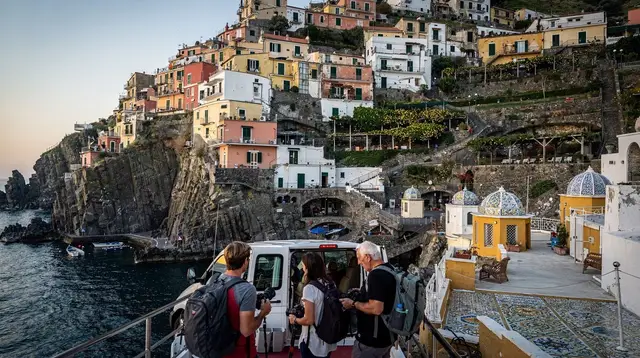
Part of why I care about getting this right is that the lemon itself is specific. Traditional limoncello from this coast uses Sfusato Amalfitano, a lemon variety with IGP protection tied to this stretch of coastline — the same designation system that protects things like Parmigiano-Reggiano. It’s not “a lemon,” generic and interchangeable. It’s a lemon grown on terraced groves that cling to the hillsides around Amalfi, Minori and Maiori, and the Sorrentine Peninsula, often under pergolas that shade the fruit and keep the peel thick and intensely fragrant.
That peel is the entire point. Sfusato Amalfitano lemons are prized specifically because their skin carries a strong concentration of essential oils, which is what gives good limoncello its perfume rather than just sourness. I’m not going to pretend I know the exact ratios or steeping times any given household or producer uses — those recipes vary, they’re often kept close, and I’d rather not invent details I can’t stand behind. What I can say with confidence is the category: alcohol-based infusion, lemon peel as the flavor source, sugar syrup to finish, no fermentation anywhere in the process.
If you want to see where that lemon actually grows and taste it close to the source, a limoncello tasting near Amalfi or a walk through the lemon groves near Sorrento does more to settle the “is it wine” question than any explanation I can give you here.
Where this confusion tends to start
I think the mix-up happens because limoncello is often served the way a dessert wine is served — chilled, in a small glass, after the meal rather than during it. It’s sweet. It’s usually a pale, glowing yellow that photographs beautifully next to a plate of dessert. All of that reads as “wine-adjacent” to someone who’s never actually checked the label.
But the serving ritual isn’t the category. A digestivo role — something poured at the end of a meal to settle things — is shared by all kinds of spirits and liqueurs that have nothing to do with wine. Grappa gets the same after-dinner treatment on this coast and nobody calls that a wine either.
It also doesn’t help that a lot of people’s first encounter with limoncello is a mass-produced bottle from an airport shop or a supermarket abroad, often thinner and sweeter than what you’d find on the coast itself, with a label design that leans into “sunny Italian summer drink” imagery without saying much about method or strength. That version can taste almost like a syrup, which nudges people further toward filing it under “sweet wine” in their heads.
Why I’d rather get it right than let it slide
None of this is really about correcting someone at a dinner party for sport. It’s that flattening limoncello into “lemon wine” erases the two things that actually make it interesting: the specific lemon this coast is known for, and the fact that it’s a proper spirit-strength liqueur, not a mild after-dinner sipper. If you’re planning to explore this region — say, pairing a walk through Amalfi’s old town with a stop at the Paper Museum, or working a day trip to Pompeii into your Amalfi Coast itinerary — it’s worth knowing that the drink you’ll be offered at the end of dinner belongs in the same rough category as a grappa or a gin, not a glass of local red.
If actual wine is more your interest on this trip, that’s a separate and genuinely rewarding thread to pull. The volcanic soils around Vesuvius and the plains near Paestum support their own wine traditions, distinct from anything lemon-based. You can combine a Pompeii ruins visit with a proper wine tasting in one day from Naples, or go further with a private tour that pairs Vesuvius and a working winery. There’s also a version built around Pompeii and Mount Vesuvius with lunch and wine tasting included, which at least keeps the two drinks — wine and limoncello — in their own separate, honest lanes.
For a broader look at what actually gets destroyed and preserved around here, it’s worth reading how Pompeii and Herculaneum are not the same disaster — another case where two things that look similar from a distance turn out to be genuinely different once you look closely. Limoncello and wine are the same kind of pair. Similar occasion, similar glass size, completely different drink.
Wrapping up the category question
So: not a wine, not a “lemon wine,” not a mutated or fortified wine either. Limoncello is a liqueur, built on infused Sfusato Amalfitano lemon peel and landing around 25% to 32% ABV, traditionally poured cold at the end of a meal. If you want to taste the difference for yourself rather than take my word for it, pair a Sorrento walking tour with a stop for a proper local pour, or extend the trip with a day tour of Sorrento from Naples that gives you time to look for it away from the souvenir shelves. And if the wine side of the region has your attention too, the Cilento food and wine experience or a full-day Amalfi Coast tour from Naples will get you there. Either way, next time someone reaches for “lemon wine,” you’ll know exactly why that’s not quite right.
tours.Explainer
Verified deep-linked GetYourGuide tours. Book through these links and we earn a small commission at no cost to you.
GetYourGuide does not provide a product photo for this activity — the image shows the meeting point, photographed by us.